Pharmacy Service, Geneva University Hospitals, Geneva, Switzerland.
School of Pharmaceutical Sciences, University of Geneva, University of Lausanne, Geneva, Switzerland.
Sci Rep. 2019 Mar 25;9(1):5078. doi: 10.1038/s41598-019-41532-3.
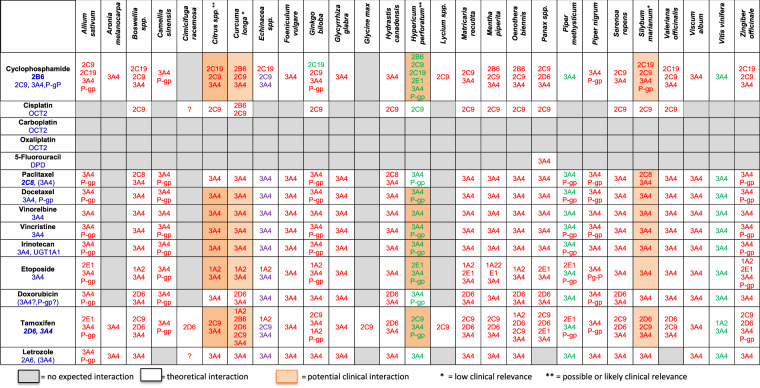
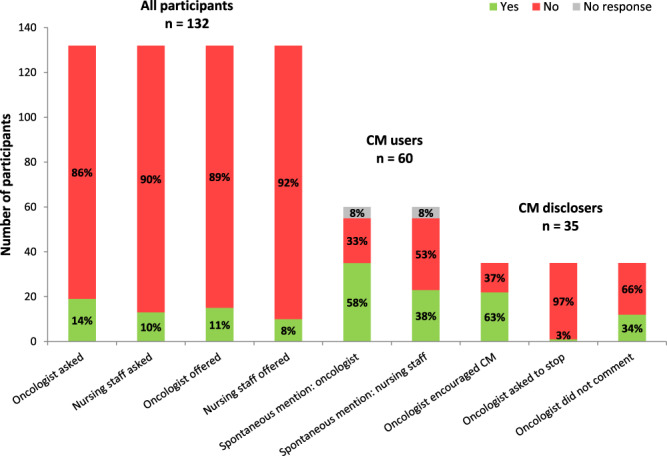
Complementary medicine (CM) is used by one third to one half of cancer patients throughout the world. The objective of this study was to describe the prevalence of CM use and the potential for interactions with cancer treatments in an academic oncology centre. A cross-sectional study was conducted among patients undergoing current cancer treatment. Among 132 included patients, 56% had used CM since their cancer diagnosis and 45% were using CM during cancer treatment at the time of the survey. The main CM used were green tea (35%), herbal tea (35%), homeopathy (27%), dietary supplements (27%), and herbal medicines (27%). A small majority of patients (58%) spontaneously mentioned the use of CM to their oncologist. Of 42 identified combinations of concomitant use of biologically based CM and anticancer agents among the study patients, the potential for pharmacokinetic interactions of clinical relevance was not expected in 17 combinations (40%), hypothetical and deemed unlikely in 23 (55%), and of probable low clinical relevance in 2 (5%). Considering the high prevalence of CM use, active enquiries should be made by healthcare professionals to detect symptoms that may relate to CM tolerance and effects or that suggest interactions between CM and cancer treatments.
补充医学(CM)在全球范围内被三分之一到一半的癌症患者使用。本研究的目的是描述学术肿瘤中心癌症患者使用补充医学的流行情况以及与癌症治疗相互作用的可能性。在正在进行当前癌症治疗的患者中进行了横断面研究。在纳入的 132 名患者中,56%的患者自癌症诊断以来就使用了补充医学,45%的患者在调查时正在接受癌症治疗时使用补充医学。主要使用的补充医学包括绿茶(35%)、草药茶(35%)、顺势疗法(27%)、膳食补充剂(27%)和草药(27%)。大多数患者(58%)会主动向肿瘤医生提及他们使用补充医学的情况。在研究患者中同时使用生物基础补充医学和抗癌药物的 42 种组合中,预计有 17 种组合(40%)不存在具有临床相关性的药代动力学相互作用,有 23 种组合(55%)具有假设性且不太可能发生,2 种组合(5%)可能具有较低的临床相关性。考虑到补充医学的高使用率,医疗保健专业人员应积极询问,以发现可能与补充医学耐受性和作用相关的症状,或提示补充医学与癌症治疗之间相互作用的症状。