Tang Min, Chen Rui, Wang Hao, Sun Guowei, Yin Fan, Liang Beibei, Yang Yang, Sharen Gaowa, Wei Huafeng, Zhou Xuyu, Huang Gang, Zhao Jian
Shanghai Key Laboratory for Molecular Imaging, Shanghai University of Medicine & Health Sciences, Shanghai 201318, China.
Division of Gastroenterology and Hepatology, Institution of Digestive Diseases, Tongji Hospital, Tongji University School of Medicine, Shanghai 200065, China.
Stem Cells Int. 2019 Feb 17;2019:1238153. doi: 10.1155/2019/1238153. eCollection 2019.
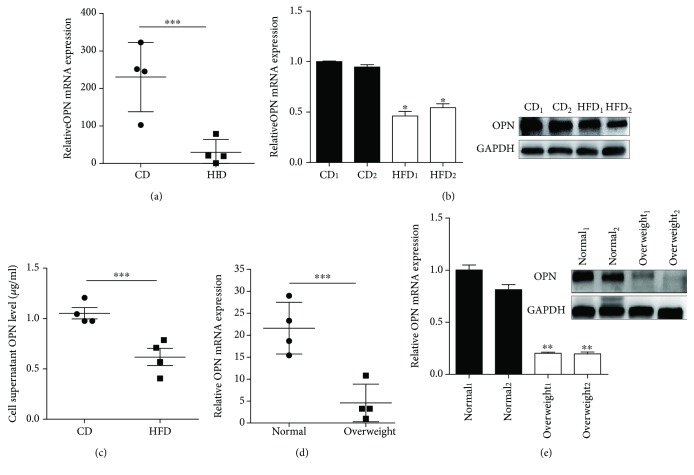
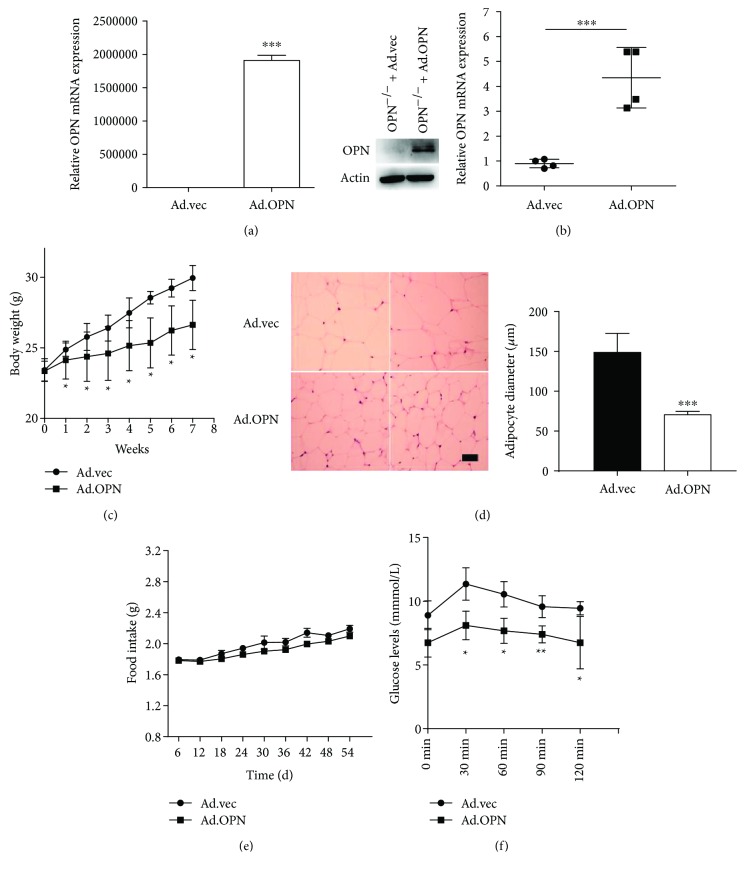
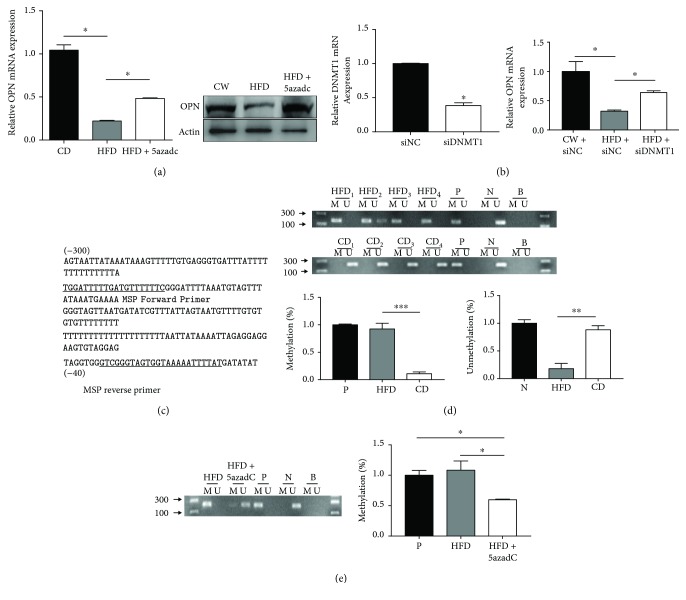
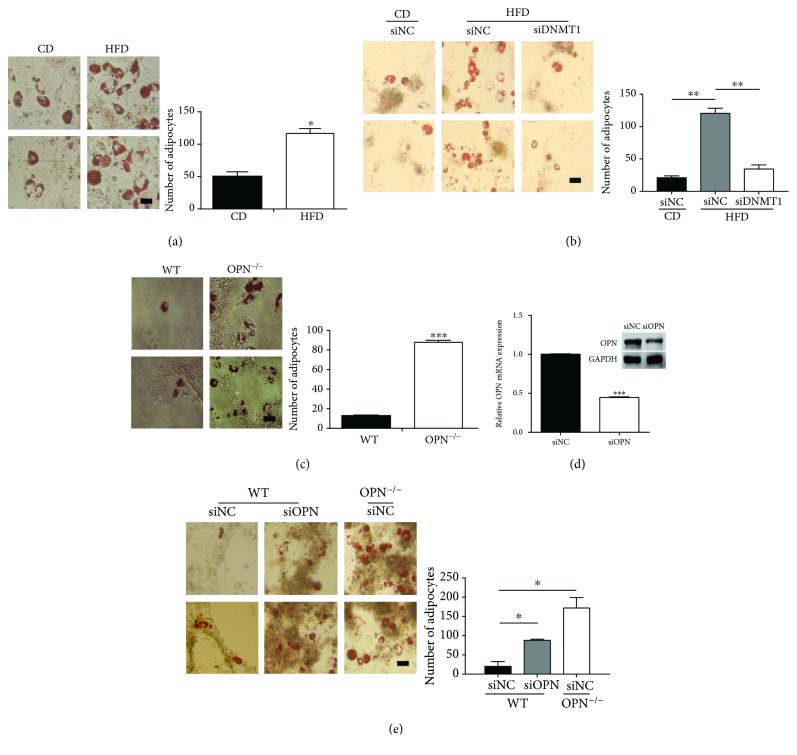
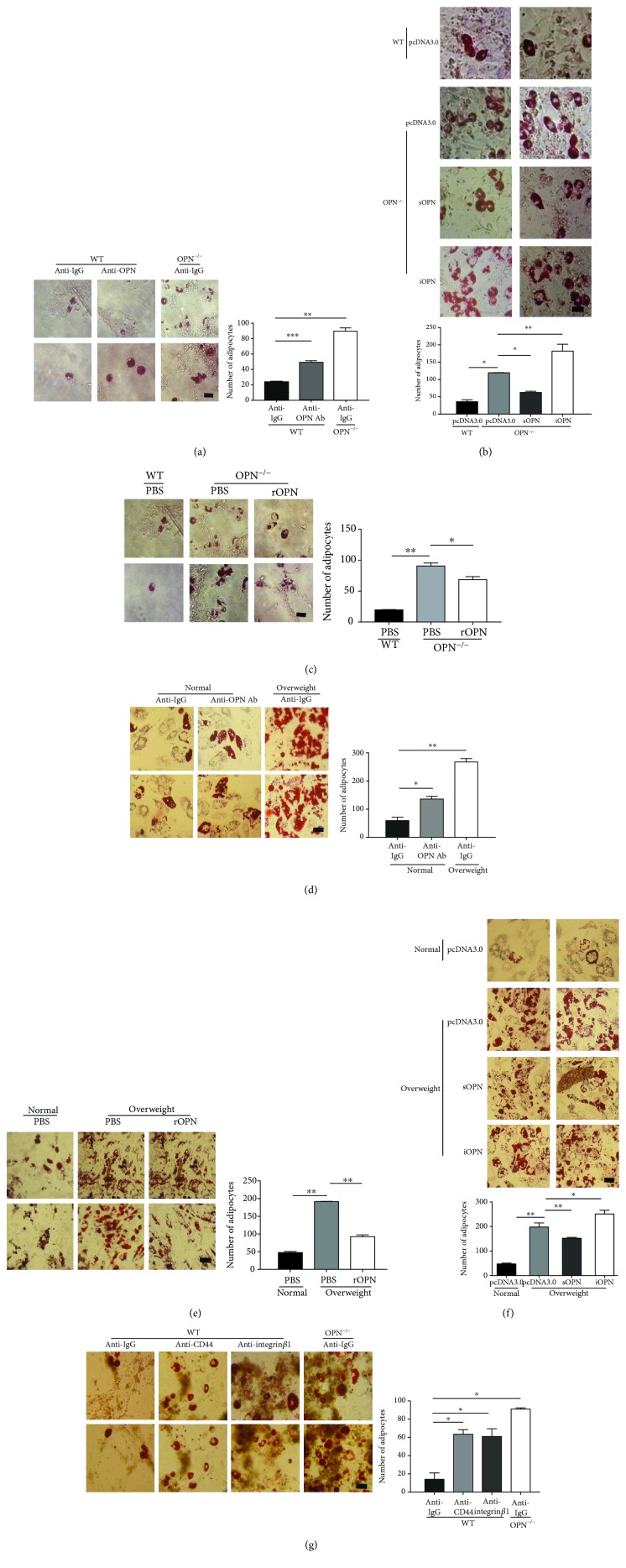
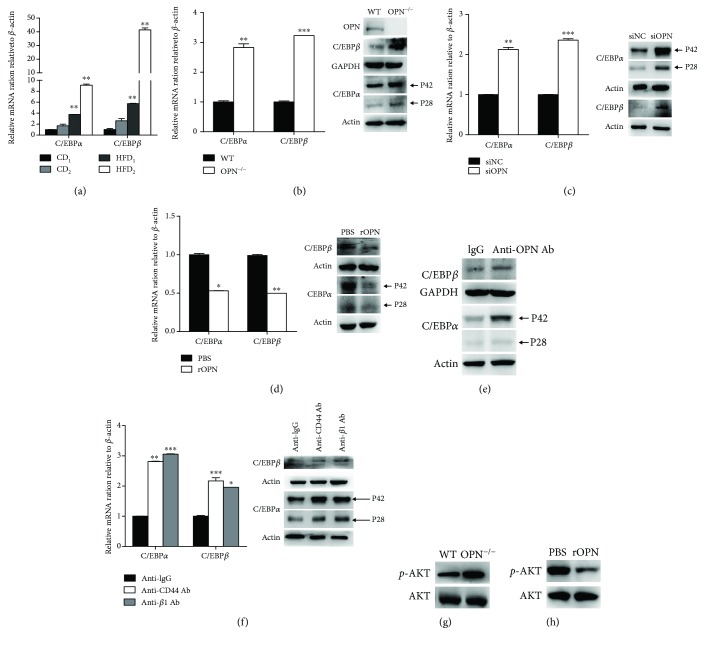
Obesity is a major risk factor for many chronic diseases, including diabetes, fatty livers, and cancer. Expansion of the adipose mass has been shown to be related to adipogenic differentiation of adipose-derived mesenchymal stem cells (ASCs). However, the underlying mechanism of this effect has yet to be elucidated. We found that osteopontin (OPN) is downregulated in ASCs and adipose tissues of obese mice and overweight human beings because of methylation on its promoter, indicating that OPN may affect the development of obesity. Silencing of OPN in wild-type ASCs promotes adipogenic differentiation, while reexpression of OPN reduced adipogenic differentiation in OPN ASCs. The role of extracellular OPN in ASC differentiation was further demonstrated by supplementation and neutralization of OPN. Additionally, OPN suppresses adipogenic differentiation in ASCs through the C/EBP pathways. Consistent with these results, by intravenous injection of OPN-expressing adenovirus to the mice, we found OPN can delay the development of obesity and improve insulin sensitivity. Therefore, our study demonstrates an important role of OPN in regulating the development of obesity, indicating OPN might be a novel target to attenuate obesity and its complications.
肥胖是许多慢性疾病的主要风险因素,包括糖尿病、脂肪肝和癌症。脂肪量的增加已被证明与脂肪来源的间充质干细胞(ASC)的成脂分化有关。然而,这种作用的潜在机制尚未阐明。我们发现,由于启动子甲基化,肥胖小鼠和超重人类的ASC及脂肪组织中骨桥蛋白(OPN)表达下调,这表明OPN可能影响肥胖的发展。在野生型ASC中沉默OPN可促进成脂分化,而在OPN缺失的ASC中重新表达OPN则可减少成脂分化。通过补充和中和OPN进一步证明了细胞外OPN在ASC分化中的作用。此外,OPN通过C/EBP途径抑制ASC中的成脂分化。与这些结果一致,通过向小鼠静脉注射表达OPN的腺病毒,我们发现OPN可以延缓肥胖的发展并改善胰岛素敏感性。因此,我们的研究证明了OPN在调节肥胖发展中的重要作用,表明OPN可能是减轻肥胖及其并发症的新靶点。