Department of Gynecology and Obstetrics, School of Medicine, J. W. Goethe-University, Theodor-Stern-Kai 7, D-60590, Frankfurt, Germany.
Stem Cell Res Ther. 2019 Aug 14;10(1):255. doi: 10.1186/s13287-019-1373-z.
Obesity impairs a variety of cell types including adipose-derived mesenchymal stem cells (ASCs). ASCs are indispensable for tissue homeostasis/repair, immunomodulation, and cell renewal. It has been demonstrated that obese ASCs are defective in differentiation, motility, immunomodulation, and replication. We have recently reported that some of these defects are linked to impaired primary cilia, which are unable to properly convey and coordinate a variety of signaling pathways. We hypothesized that the rescue of the primary cilium in obese ASCs would restore their functional properties.
Obese ASCs derived from subcutaneous and visceral adipose tissues were treated with a specific inhibitor against Aurora A or with an inhibitor against extracellular signal-regulated kinase 1/2 (Erk1/2). Multiple molecular and cellular assays were performed to analyze the altered functionalities and their involved pathways.
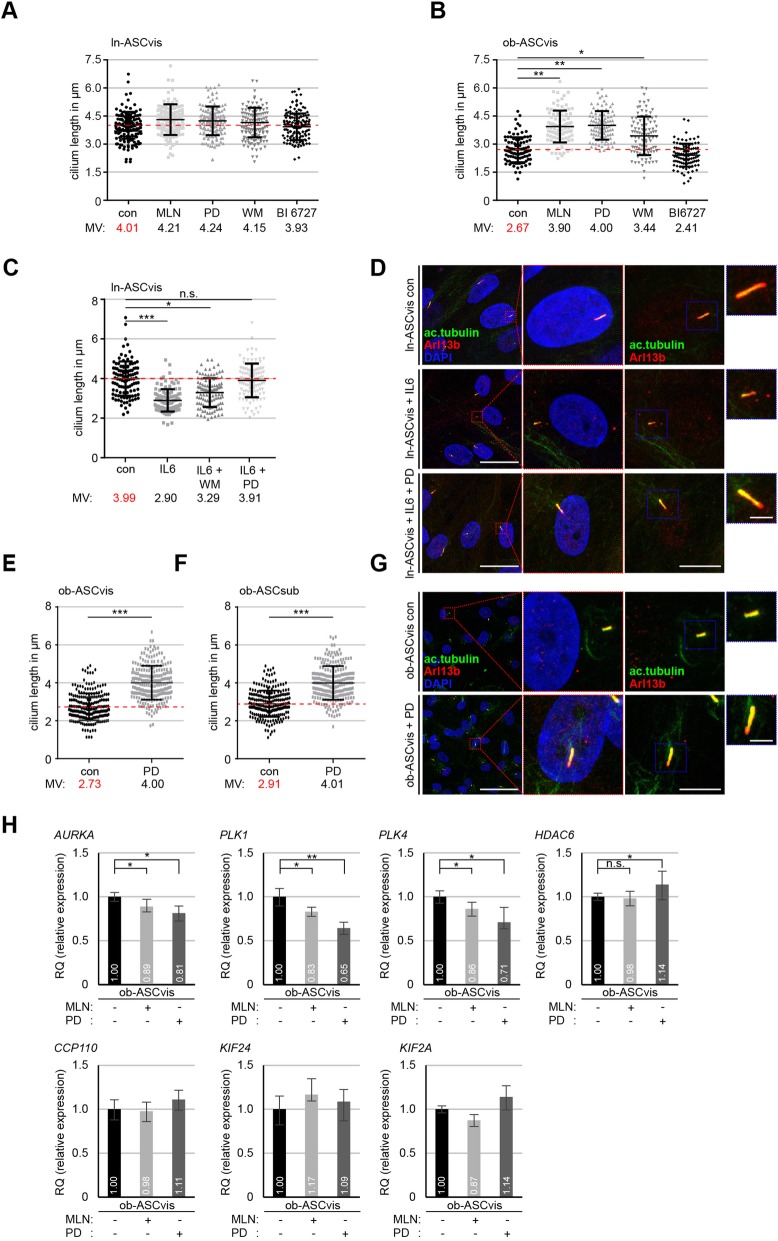
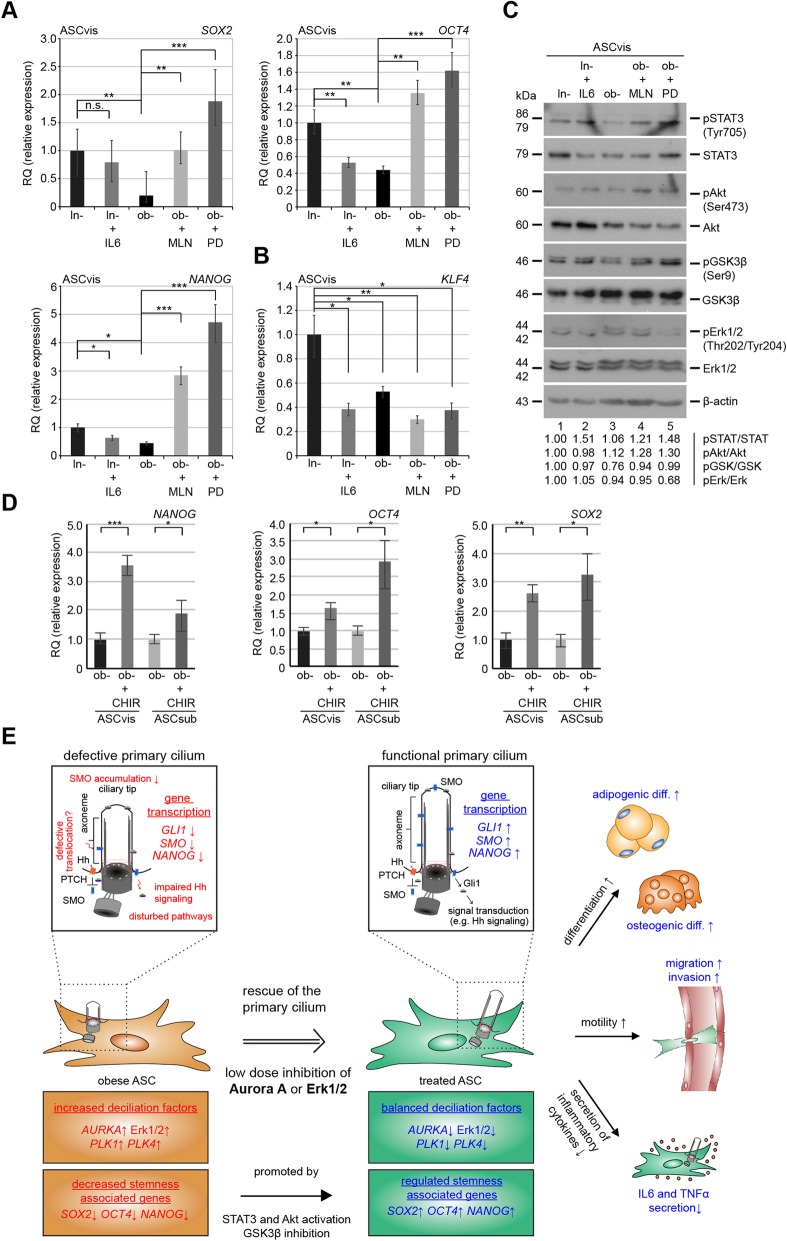
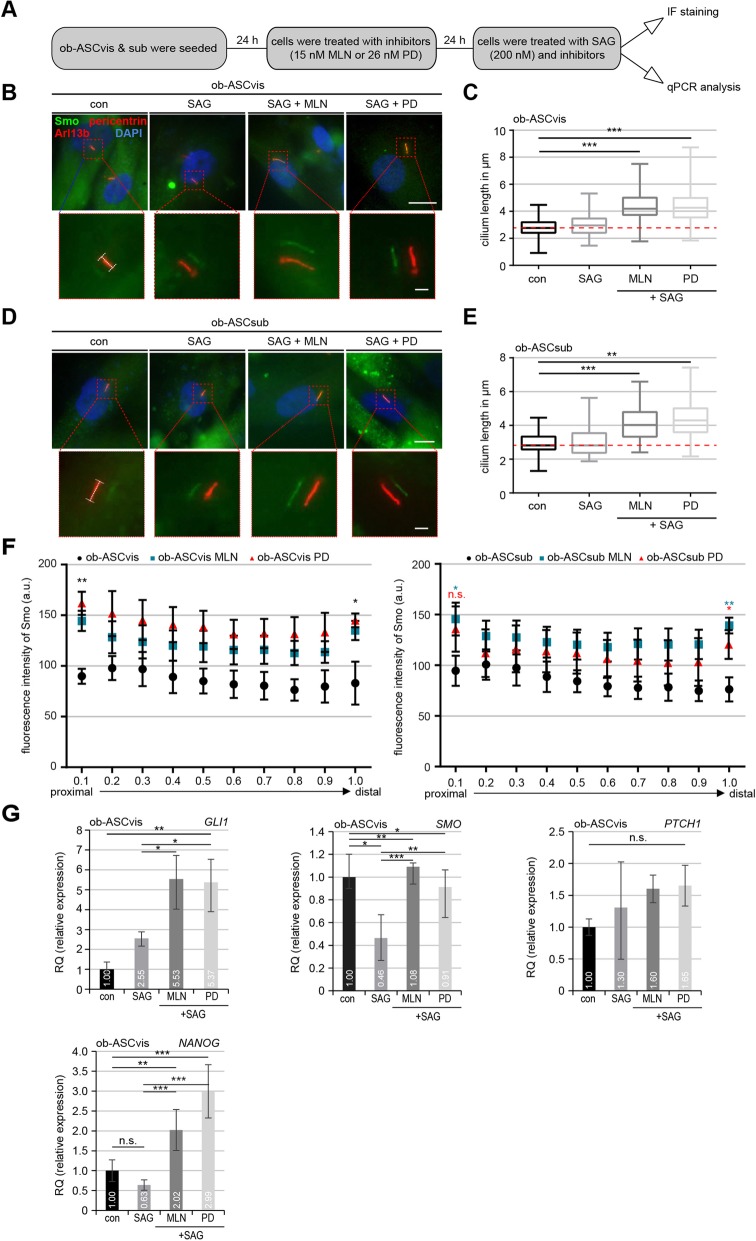
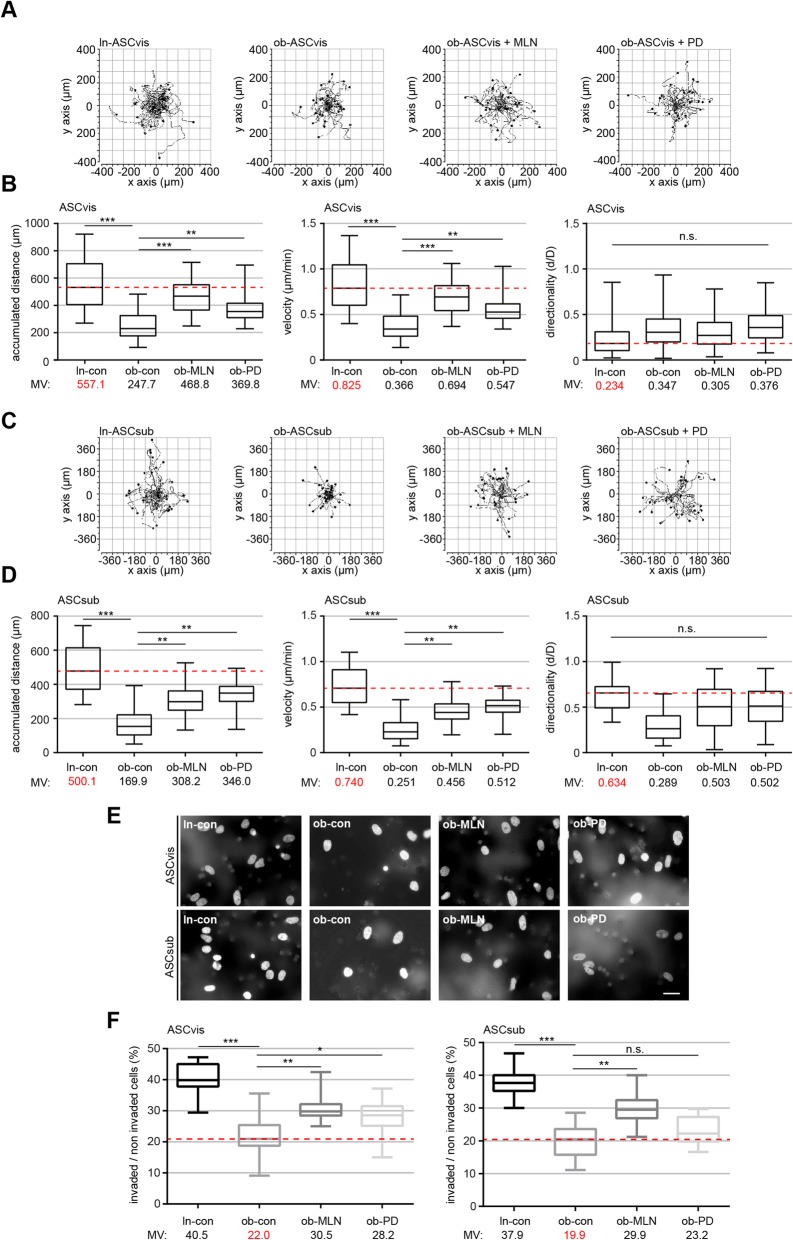
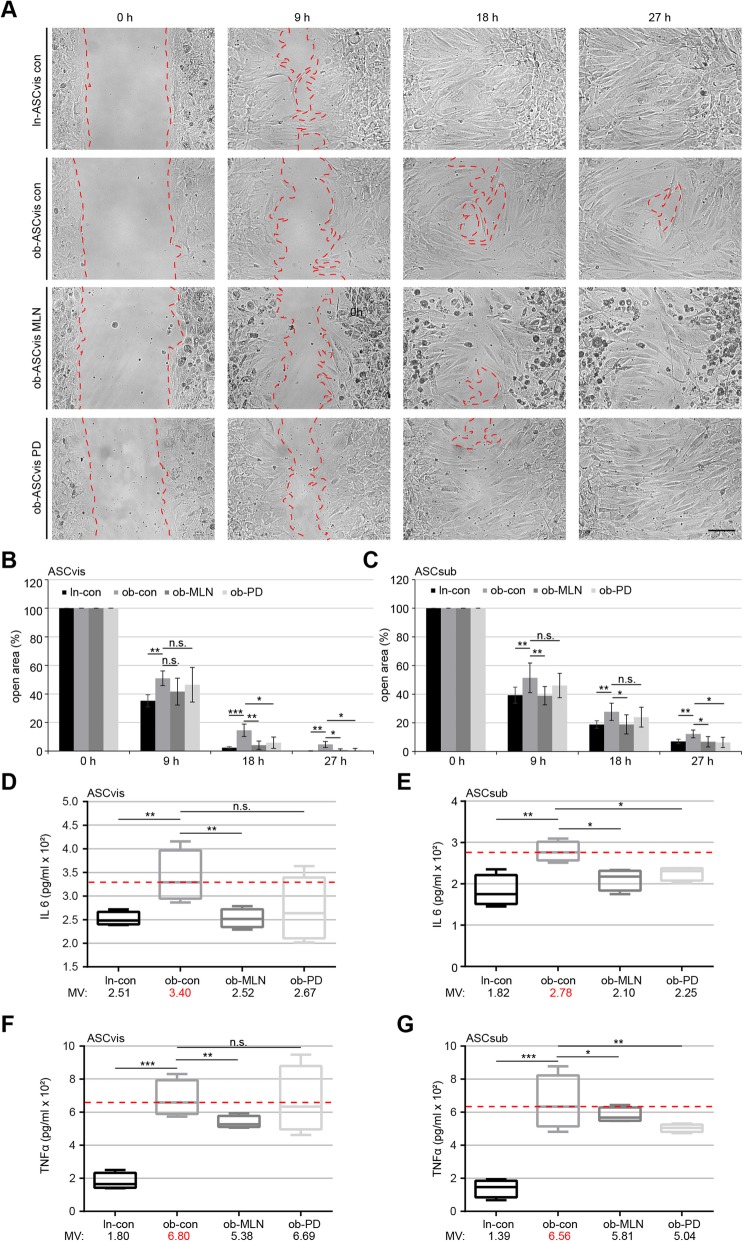
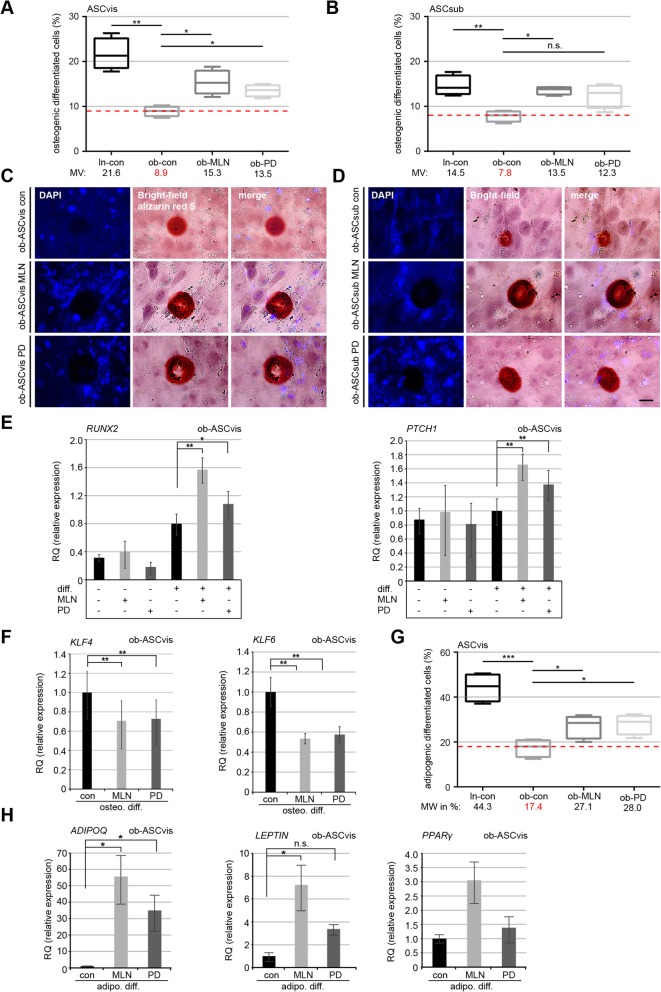
The treatment with low doses of these inhibitors extended the length of the primary cilium, restored the invasion and migration potential, and improved the differentiation capacity of obese ASCs. Associated with enhanced differentiation ability, the cells displayed an increased expression of self-renewal/stemness-related genes like SOX2, OCT4, and NANOG, mediated by reduced active glycogen synthase kinase 3 β (GSK3β).
This work describes a novel phenomenon whereby the primary cilium of obese ASCs is rescuable by the low-dose inhibition of Aurora A or Erk1/2, restoring functional ASCs with increased stemness. These cells might be able to improve tissue homeostasis in obese patients and thereby ameliorate obesity-associated diseases. Additionally, these functionally restored obese ASCs could be useful for novel autologous mesenchymal stem cell-based therapies.
肥胖会损害多种细胞类型,包括脂肪来源的间充质干细胞(ASCs)。ASCs 对于组织稳态/修复、免疫调节和细胞更新是不可或缺的。已经证明肥胖的 ASC 在分化、运动、免疫调节和复制方面存在缺陷。我们最近报道,其中一些缺陷与受损的初级纤毛有关,初级纤毛无法正确传递和协调各种信号通路。我们假设在肥胖的 ASC 中恢复初级纤毛将恢复其功能特性。
从皮下和内脏脂肪组织中分离出肥胖的 ASC,并用 Aurora A 的特定抑制剂或细胞外信号调节激酶 1/2(Erk1/2)抑制剂进行处理。进行了多种分子和细胞测定来分析改变的功能及其涉及的途径。
这些抑制剂的低剂量处理延长了初级纤毛的长度,恢复了肥胖 ASC 的侵袭和迁移能力,并改善了其分化能力。与增强的分化能力相关的是,细胞表现出自我更新/干细胞相关基因(如 SOX2、OCT4 和 NANOG)的表达增加,这是由活性糖原合酶激酶 3β(GSK3β)减少介导的。
这项工作描述了一种新现象,即肥胖 ASC 的初级纤毛可通过低剂量抑制 Aurora A 或 Erk1/2 来挽救,从而恢复具有增加的干性的功能性 ASC。这些细胞可能能够改善肥胖患者的组织稳态,并由此改善与肥胖相关的疾病。此外,这些功能恢复的肥胖 ASC 可用于新型自体间充质干细胞为基础的治疗方法。