Vigneron Aurélien, Jehan Charly, Rigaud Thierry, Moret Yannick
Department of Epidemiology of Microbial Diseases, Yale School of Public Health, New Haven, CT, United States.
UMR CNRS 6282 BioGéoSciences, Équipe Écologie Évolutive, Université Bourgogne-Franche Comté, Dijon, France.
Front Physiol. 2019 Mar 12;10:138. doi: 10.3389/fphys.2019.00138. eCollection 2019.
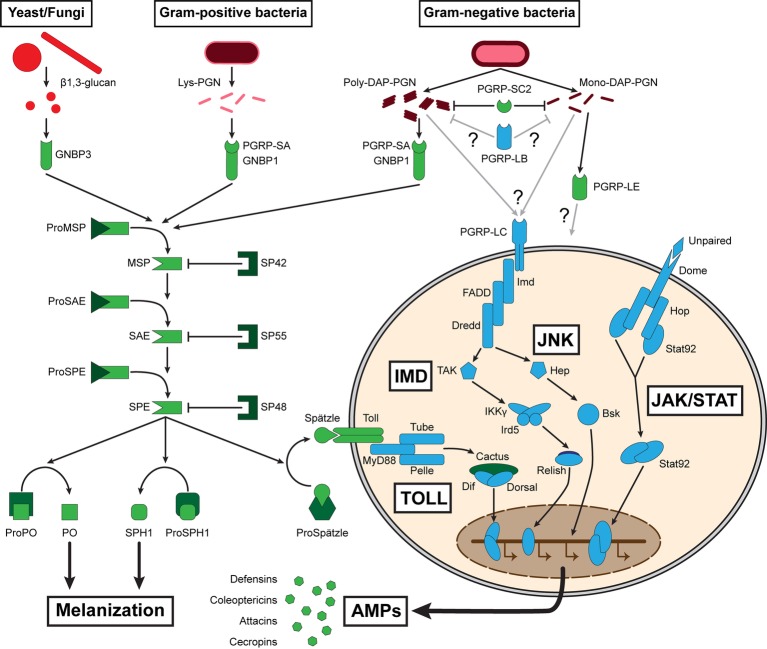
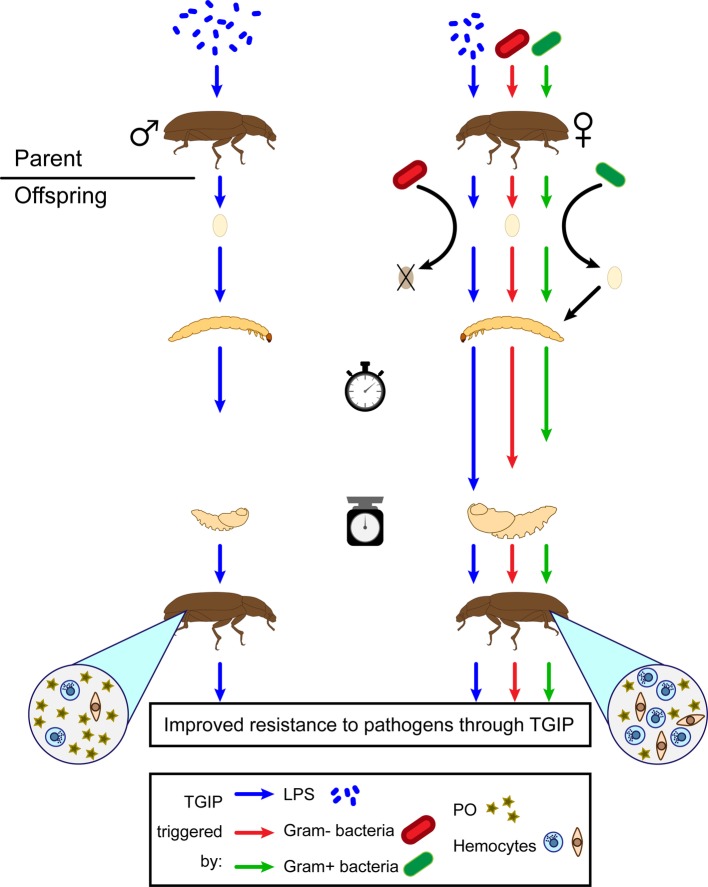
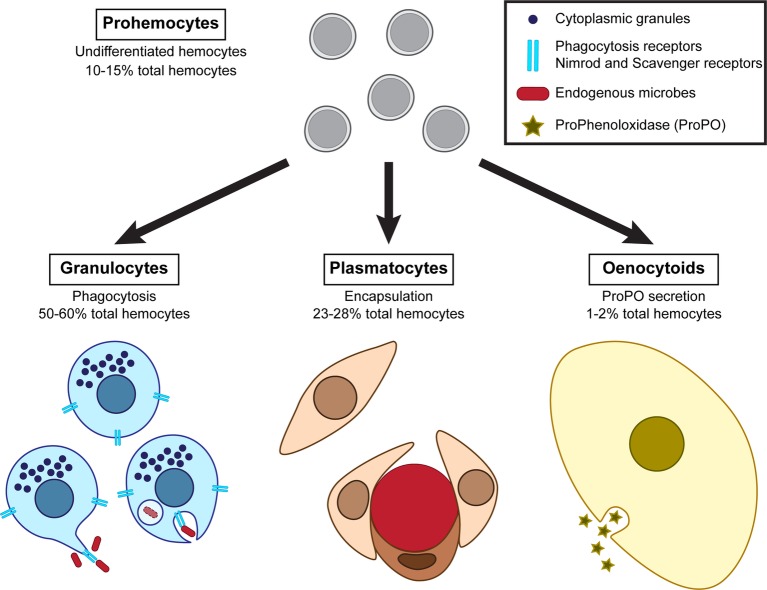
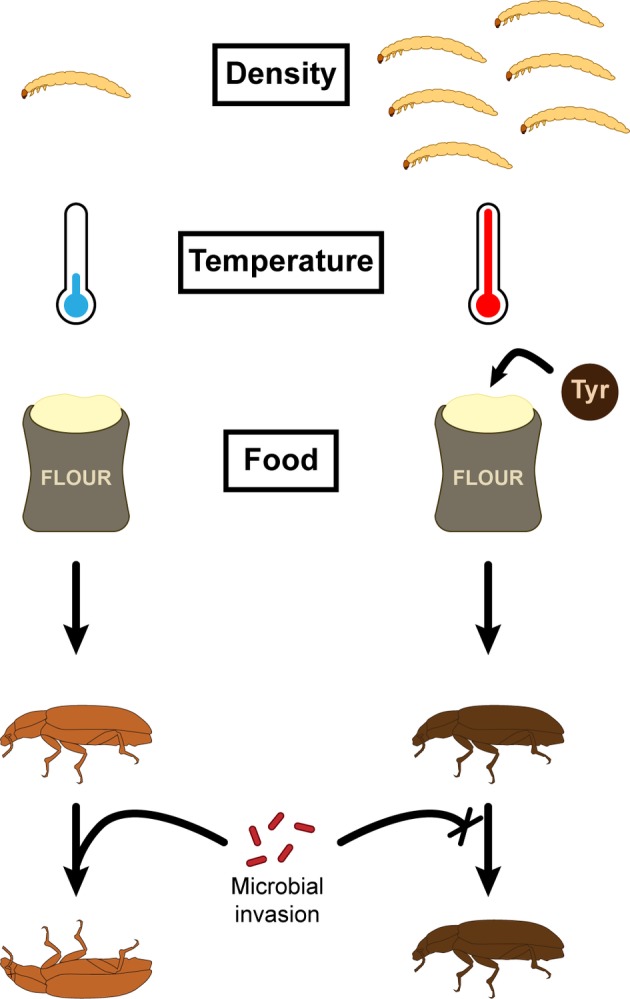
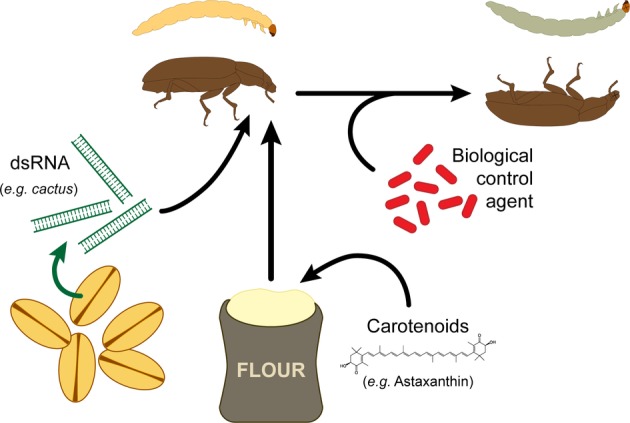
The mealworm beetle, , is currently considered as a pest when infesting stored grains or grain products. However, mealworms are now being promoted as a beneficial insect because their high nutrient content makes them a viable food source and because they are capable of degrading polystyrene and plastic waste. These attributes make attractive for mass rearing, which may promote disease transmission within the insect colonies. Disease resistance is of paramount importance for both the control and the culture of mealworms, and several biotic and abiotic environmental factors affect the success of their anti-parasitic defenses, both positively and negatively. After providing a detailed description of 's anti-parasitic defenses, we review the main biotic and abiotic environmental factors that alter their presentation, and we discuss their implications for the purpose of controlling the development and health of this insect.
黄粉虫,目前在侵染储存谷物或谷物制品时被视为一种害虫。然而,黄粉虫现在正被推广为一种益虫,因为它们的高营养含量使它们成为一种可行的食物来源,并且因为它们能够降解聚苯乙烯和塑料垃圾。这些特性使得黄粉虫对于大规模饲养具有吸引力,而这可能会促进昆虫群体内的疾病传播。抗病性对于黄粉虫的控制和养殖都至关重要,并且一些生物和非生物环境因素对它们抗寄生虫防御的成功有着积极和消极的影响。在详细描述了黄粉虫的抗寄生虫防御之后,我们回顾了改变其表现的主要生物和非生物环境因素,并讨论它们对于控制这种昆虫的发育和健康的意义。