Kumar Manoj, Yusuf Mohd Aslam, Yadav Pooja, Narayan Shiv, Kumar Manoj
Department of Biosciences, Integral University, Lucknow, India.
Department of Biotechnology, CSIR-National Botanical Research Institute, Lucknow, India.
Front Plant Sci. 2019 Mar 12;10:290. doi: 10.3389/fpls.2019.00290. eCollection 2019.
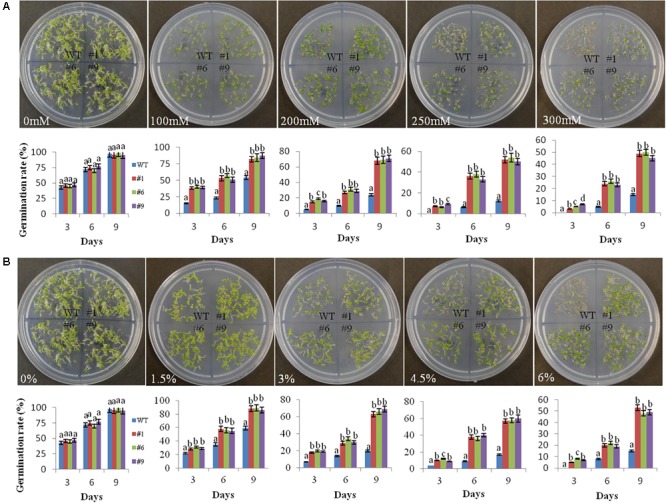
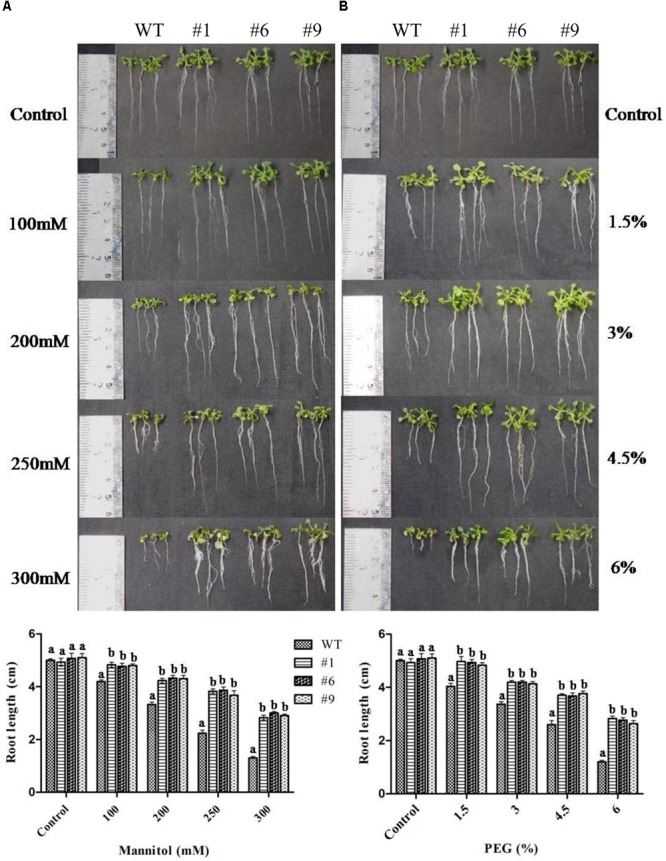
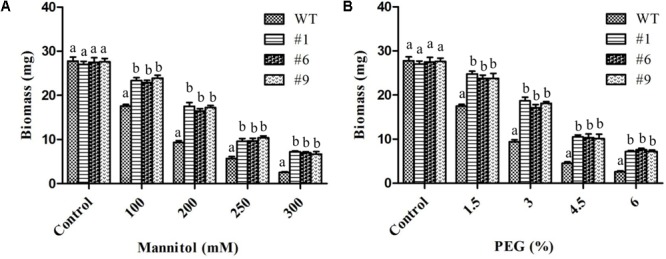
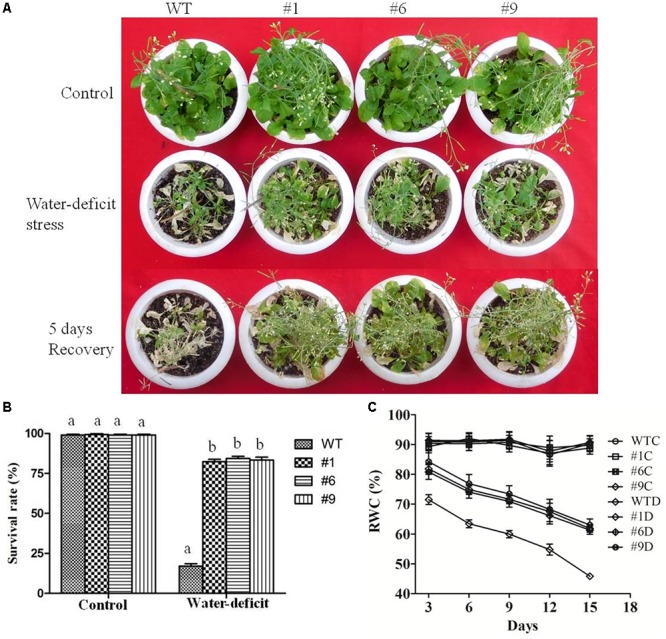
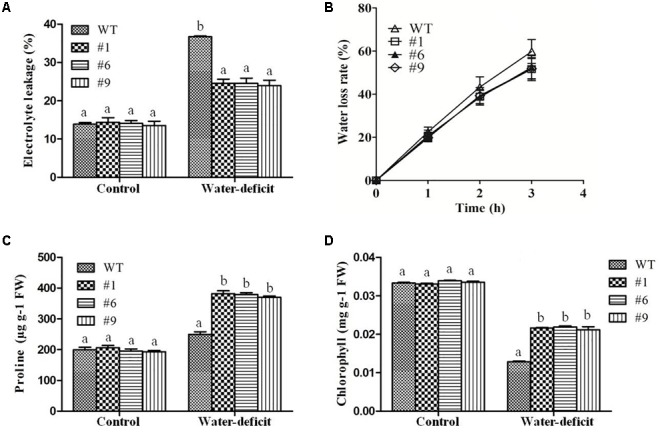
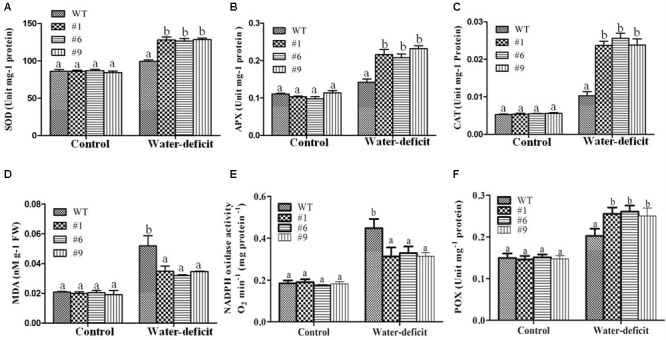
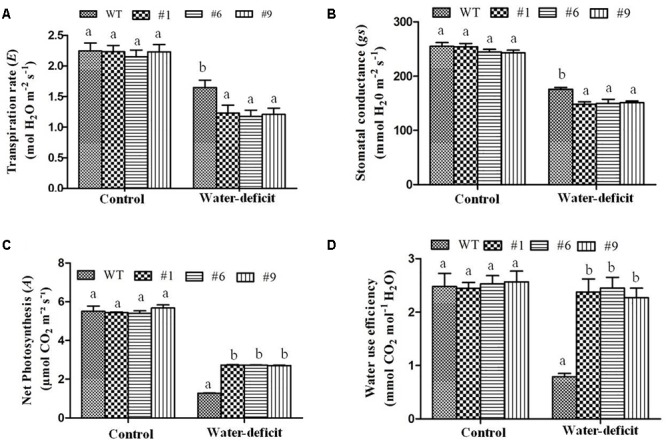
Plant defensins are mainly known for their antifungal activity. However, limited information is available regarding their function in abiotic stresses. In this study, a defensin gene, , from , commonly known as chickpea, was cloned and transformed in for its functional characterization under simulated water-deficit conditions. Under simulated water-deficit conditions (mannitol and polyethylene glycol-6000 induced), the transgenic plants had higher accumulation of the transcript compared to that under non-stress condition and showed higher germination rate, root length, and biomass than the wild-type (WT) plants. To get further insights into the role of in conferring tolerance to water-deficit stress, we determined various physiological parameters and found significant reduction in the transpiration rate and stomatal conductance whereas the net photosynthesis and water use efficiency was increased in the transgenic plants compared to that in the WT plants under water deficit conditions. The transgenic plants showed enhanced superoxide dismutase, ascorbate peroxidase, and catalase activities, had higher proline, chlorophyll, and relative water content, and exhibited reduced ion leakage and malondialdehyde content under water-deficit conditions. Overall, our results indicate that overexpression of could be an efficient approach for conferring tolerance to water-deficit stress in plants.
植物防御素主要因其抗真菌活性而闻名。然而,关于它们在非生物胁迫中的功能信息有限。在本研究中,从通常被称为鹰嘴豆的植物中克隆了一个防御素基因,并将其转入植物中,以在模拟水分亏缺条件下对其进行功能表征。在模拟水分亏缺条件下(甘露醇和聚乙二醇-6000诱导),与非胁迫条件下相比,转基因植物中该转录本的积累更高,并且与野生型(WT)植物相比,显示出更高的发芽率、根长和生物量。为了进一步深入了解该基因在赋予水分亏缺胁迫耐受性中的作用,我们测定了各种生理参数,发现与水分亏缺条件下的野生型植物相比,转基因植物的蒸腾速率和气孔导度显著降低,而净光合作用和水分利用效率增加。转基因植物在水分亏缺条件下表现出超氧化物歧化酶、抗坏血酸过氧化物酶和过氧化氢酶活性增强,脯氨酸、叶绿素和相对含水量更高,并且离子渗漏和丙二醛含量降低。总体而言,我们的结果表明,该基因的过表达可能是赋予植物水分亏缺胁迫耐受性的一种有效方法。