Butt Hamama Islam, Yang Zhaoen, Gong Qian, Chen Eryong, Wang Xioaqian, Zhao Ge, Ge Xiaoyang, Zhang Xueyan, Li Fuguang
State Key Laboratory of Cotton Biology, Institute of Cotton Research of Chinese Academy of Agricultural Science (ICR, CAAS), Anyang, 455000, China.
BMC Plant Biol. 2017 Aug 22;17(1):142. doi: 10.1186/s12870-017-1078-3.
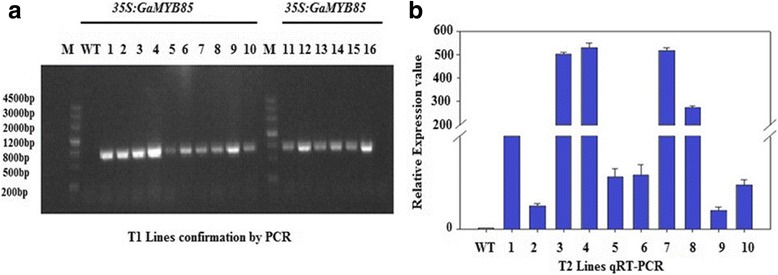
MYB transcription factors (TFs) are one of the largest families of TFs in higher plants and are involved in diverse biological, functional, and structural processes. Previously, very few functional validation studies on R2R3 MYB have been conducted in cotton in response to abiotic stresses. In the current study, GaMYB85, a cotton R2R3 MYB TF, was ectopically expressed in Arabidopsis thaliana (Col-0) and was functionally characterized by overexpression in transgenic plants.
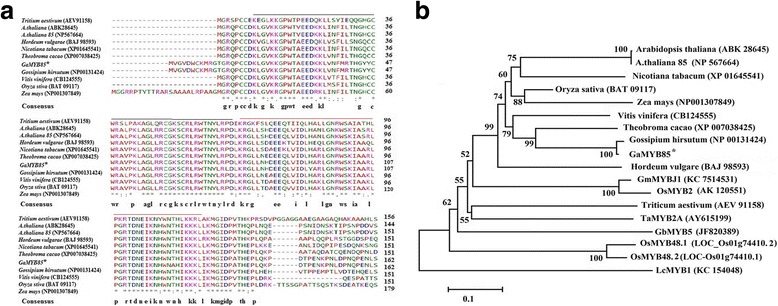
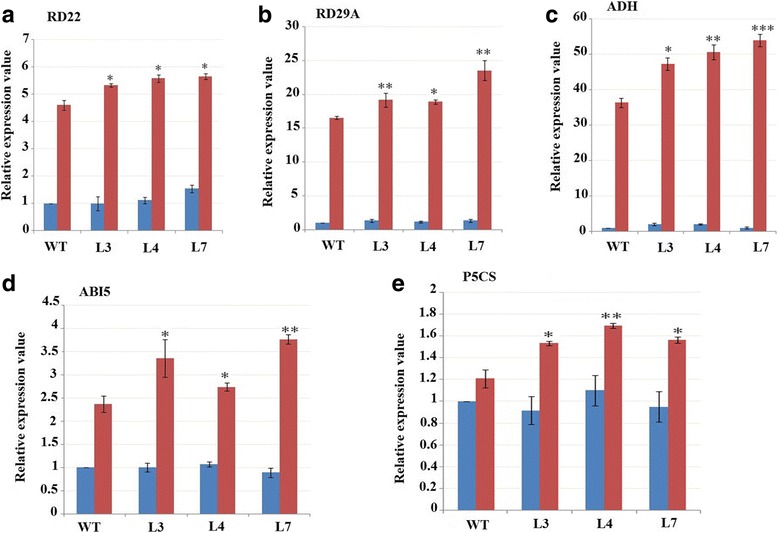
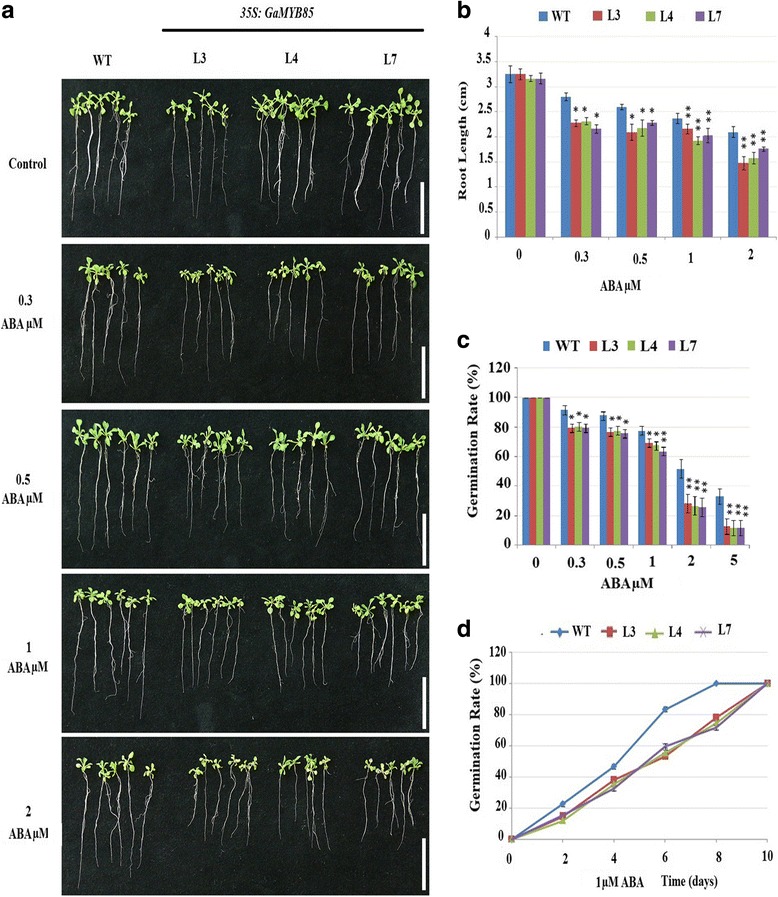
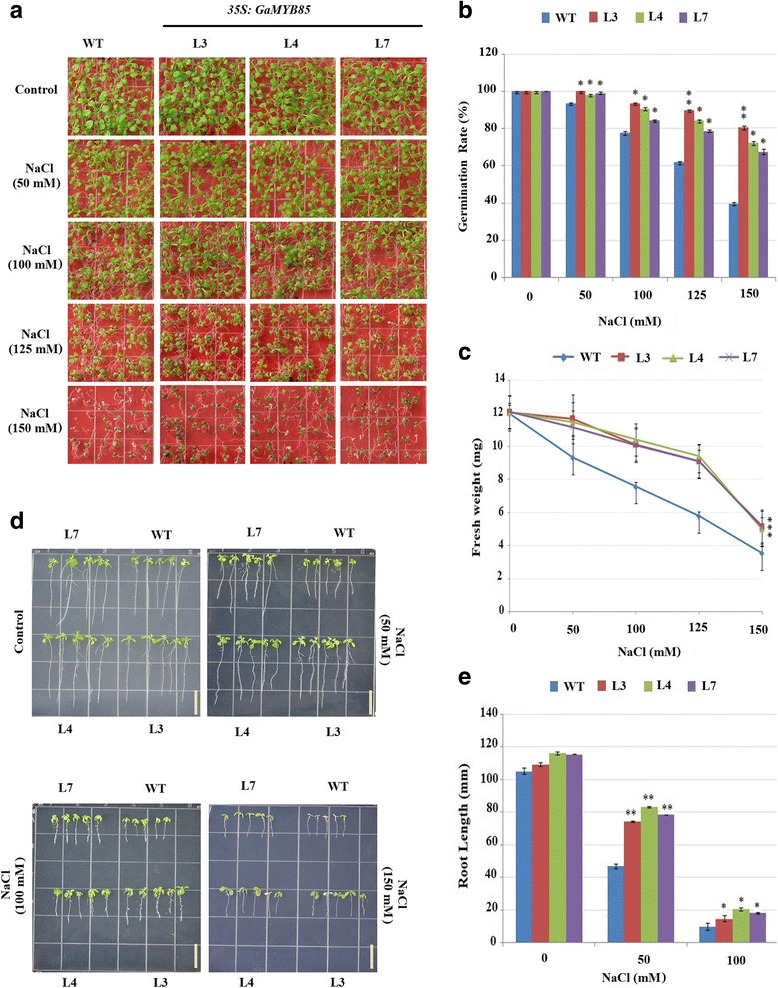
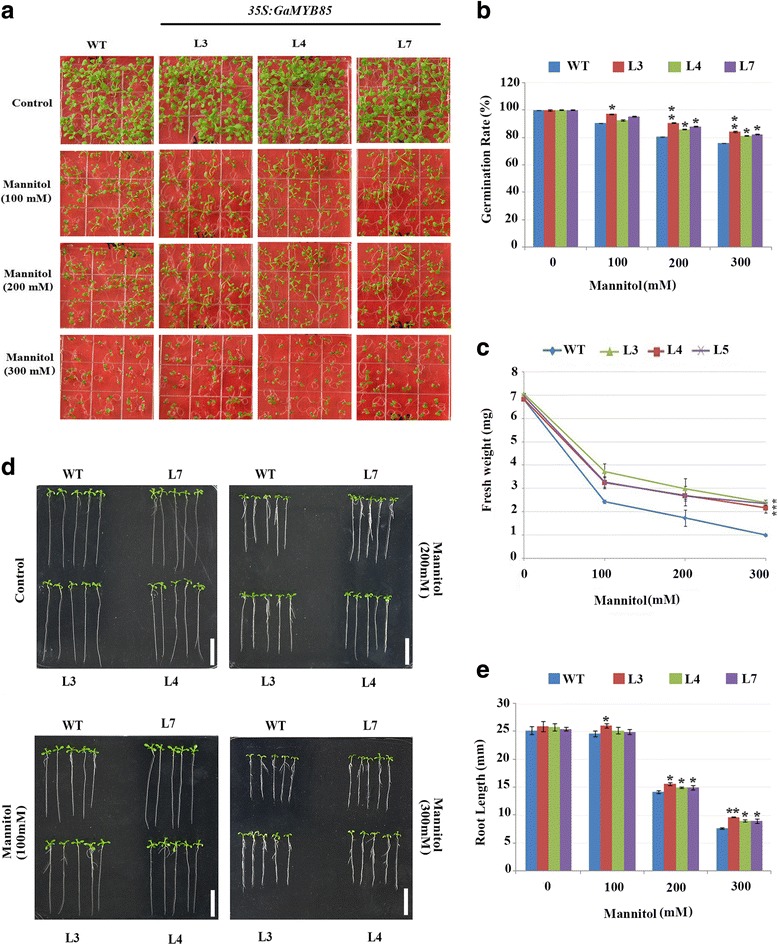
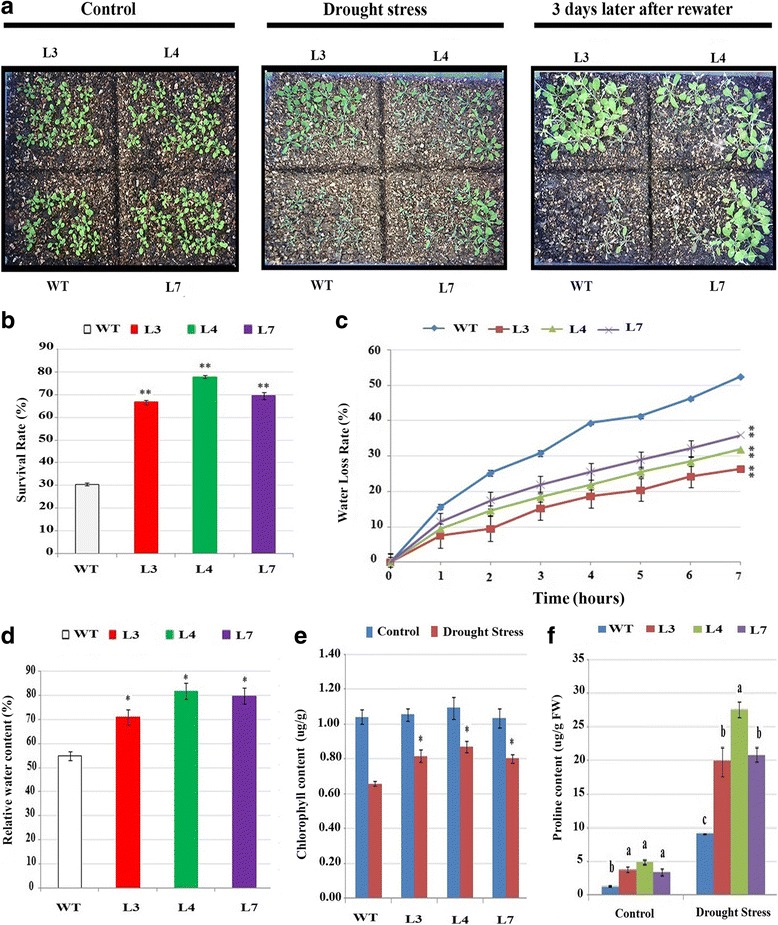
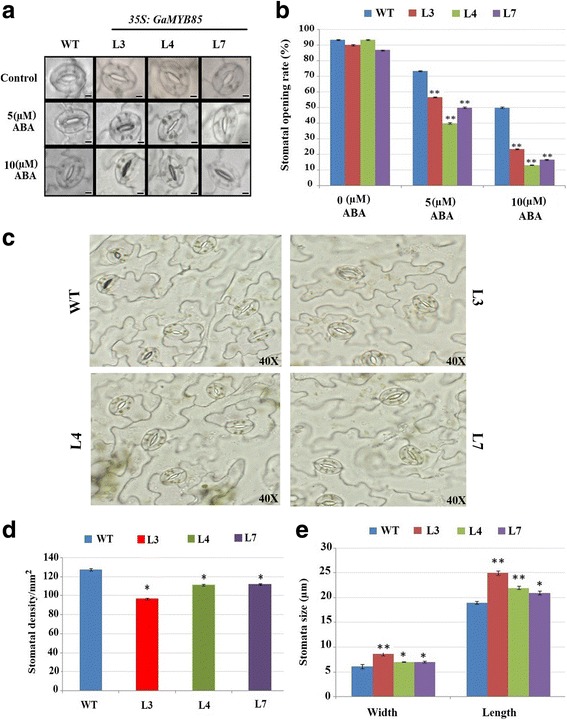
The in-silico analysis of GaMYB85 shows the presence of a SANT domain with a conserved R2R3 MYB imperfect repeat. The GaMYB85 protein has a 257-amino acid sequence, a molecular weight of 24.91 kD, and an isoelectric point of 5.58. Arabidopsis plants overexpressing GaMYB85 exhibited a higher seed germination rate in response to mannitol and salt stress, and higher drought avoidance efficiency than wild-type plants upon water deprivation. These plants had notably higher levels of free proline and chlorophyll with subsequent lower water loss rates and higher relative water content. Germination of GaMYB85 transgenics was more sensitive to abscisic acid (ABA) and extremely liable to ABA-induced inhibition of primary root elongation. Moreover, when subjected to treatment with different concentrations of ABA, transgenic plants with ectopically expressed GaMYB85 showed reduced stomatal density, with greater stomatal size and lower stomatal opening rates than those in wild-type plants. Ectopic expression of GaMYB85 led to enhanced transcript levels of stress-related marker genes such as RD22, ADH1, RD29A, P5CS, and ABI5.
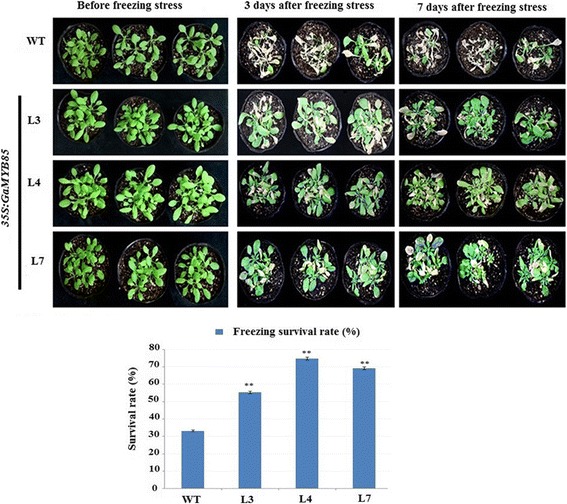
Our results indicate previously unknown roles of GaMYB85, showing that it confers good drought, salt, and freezing tolerance, most probably via an ABA-induced pathway. These findings can potentially be exploited to develop improved abiotic stress tolerance in cotton plants.
MYB转录因子是高等植物中最大的转录因子家族之一,参与多种生物学、功能和结构过程。此前,针对棉花中R2R3 MYB响应非生物胁迫的功能验证研究极少。在本研究中,棉花R2R3 MYB转录因子GaMYB85在拟南芥(Col-0)中异位表达,并通过转基因植物中的过表达对其功能进行了表征。
对GaMYB85的电子分析显示存在一个具有保守R2R3 MYB不完全重复序列的SANT结构域。GaMYB85蛋白具有257个氨基酸序列,分子量为24.91 kD,等电点为5.58。过表达GaMYB85的拟南芥植株在甘露醇和盐胁迫下表现出更高的种子萌发率,在缺水时比野生型植株具有更高的避旱效率。这些植株的游离脯氨酸和叶绿素水平显著更高,随后水分流失率更低,相对含水量更高。GaMYB85转基因植株的萌发对脱落酸(ABA)更敏感,并且极易受到ABA诱导的主根伸长抑制。此外,在用不同浓度的ABA处理时,异位表达GaMYB85的转基因植株气孔密度降低,气孔尺寸更大,气孔开放率低于野生型植株。GaMYB85的异位表达导致胁迫相关标记基因如RD22、ADH1、RD29A、P5CS和ABI5的转录水平升高。
我们的结果表明了GaMYB85以前未知的作用,表明它最有可能通过ABA诱导的途径赋予良好的耐旱、耐盐和耐寒性。这些发现有可能被用于培育具有更高非生物胁迫耐受性的棉花植株。