Dahlqvist Jenny Alenius, Wiklund Urban, Karlsson Marcus, Hanséus Katarina, Strömvall-Larsson Eva, Nygren Anders, Eliasson Håkan, Rydberg Annika
Department of Clinical Sciences, Pediatrics, Umeå University, 901 85, Umeå, Sweden.
Department of Radiation Sciences, Biomedical Engineering, Umeå University, Umeå, Sweden.
Pediatr Cardiol. 2019 Apr;40(4):685-693. doi: 10.1007/s00246-019-02092-5. Epub 2019 Mar 27.
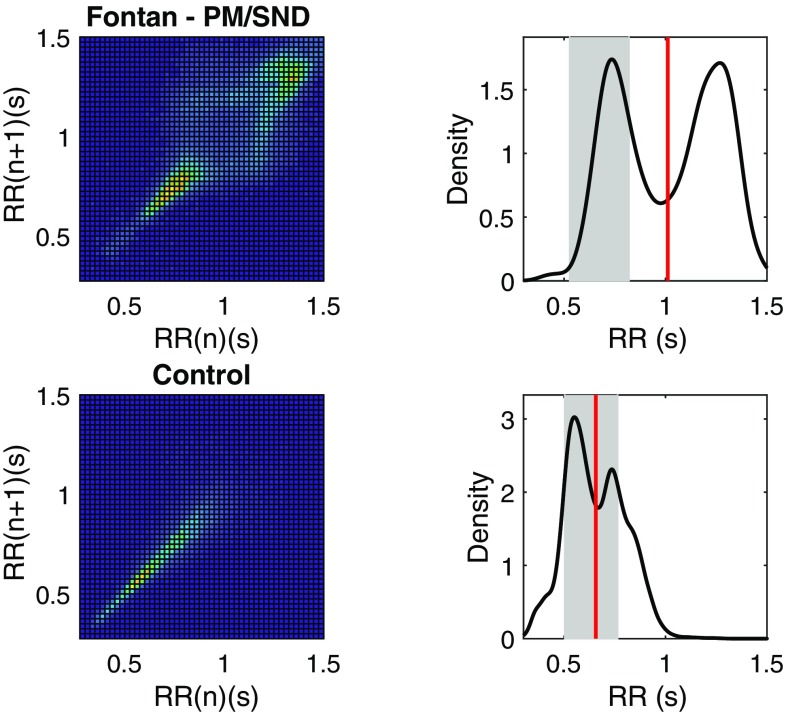
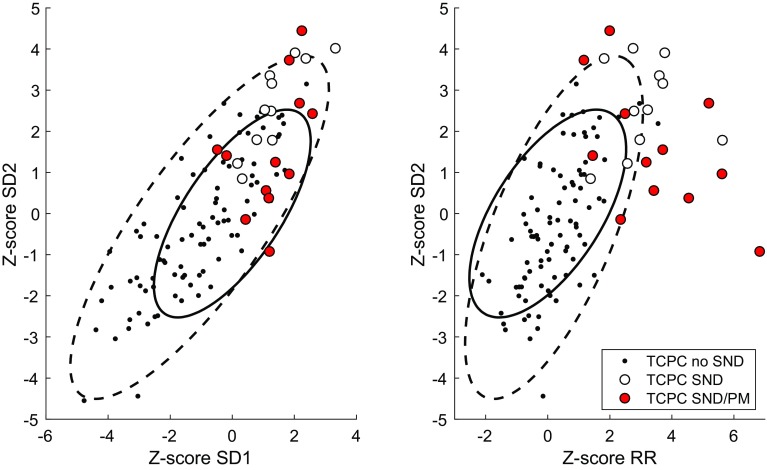
Sinus node dysfunction (SND) causes significant morbidity in patients after Fontan surgery. Heart rate variability (HRV) reflects the autonomic regulation of the heart, and changes in HRV have been associated with SND in adults. We aimed to study whether changes in HRV could be detected in 24-h electrocardiographic (ECG) recordings in Fontan patients with SND. We compared HRV results from two patient groups; patients with Fontan circulation who later required a pacemaker due to severe SND (n = 12) and patients with Fontan circulation and SND, without indication for pacemaker treatment (n = 11), with two control groups; patients with Fontan circulation without SND (n = 90) and healthy controls (n = 66). The Poincaré plot index SD2 (representing changes in heart rate over 24-h) and the very low-frequency (VLF) HRV component were significantly higher in both SND groups, both compared with healthy controls and patients with Fontan circulation without SND. In SND patients with pacemakers, SD2 and VLF were slightly reduced compared to SND patients without pacemaker (p = 0.06). In conclusion, in Fontan patients with SND the HRV is significantly higher compared to healthy controls and Fontan patients without SND. However, in patients with severe SND requiring pacemaker, SD2 and VLF tended to be lower than in patients with SND without pacemaker, which could indicate a reduced diurnal HRV in addition to the severe bradycardia. This is a small study, but our results indicate that HRV analysis might be a useful method in the follow-up of Fontan patients regarding development of SND.
窦房结功能障碍(SND)在Fontan手术患者中会导致严重的发病情况。心率变异性(HRV)反映了心脏的自主调节功能,HRV的变化与成人的SND有关。我们旨在研究在Fontan手术合并SND的患者的24小时心电图(ECG)记录中是否能检测到HRV的变化。我们比较了两组患者的HRV结果;因严重SND后来需要起搏器的Fontan循环患者(n = 12)和有Fontan循环及SND但无起搏器治疗指征的患者(n = 11),与两个对照组;无SND的Fontan循环患者(n = 90)和健康对照组(n = 66)。与健康对照组和无SND的Fontan循环患者相比,两个SND组的庞加莱图指数SD2(代表24小时内心率的变化)和极低频(VLF)HRV成分均显著更高。在有起搏器的SND患者中,与无起搏器的SND患者相比,SD2和VLF略有降低(p = 0.06)。总之,在Fontan手术合并SND的患者中,HRV显著高于健康对照组和无SND的Fontan患者。然而,在需要起搏器的严重SND患者中,SD2和VLF往往低于无起搏器的SND患者,这可能表明除了严重心动过缓外,昼夜HRV也有所降低。这是一项小型研究,但我们的结果表明,HRV分析可能是Fontan手术患者SND发生情况随访中的一种有用方法。