Department of Microbiology, Stellenbosch University, Stellenbosch, 7600, South Africa.
BMC Mol Biol. 2019 Mar 29;20(1):10. doi: 10.1186/s12867-019-0127-x.
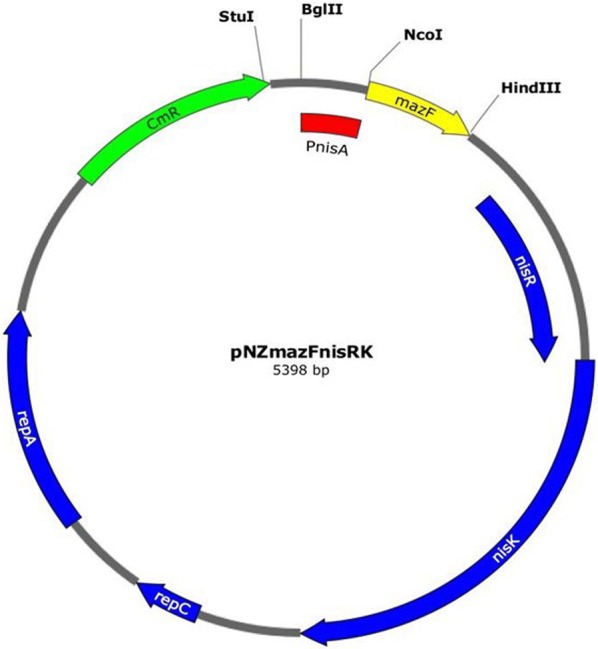
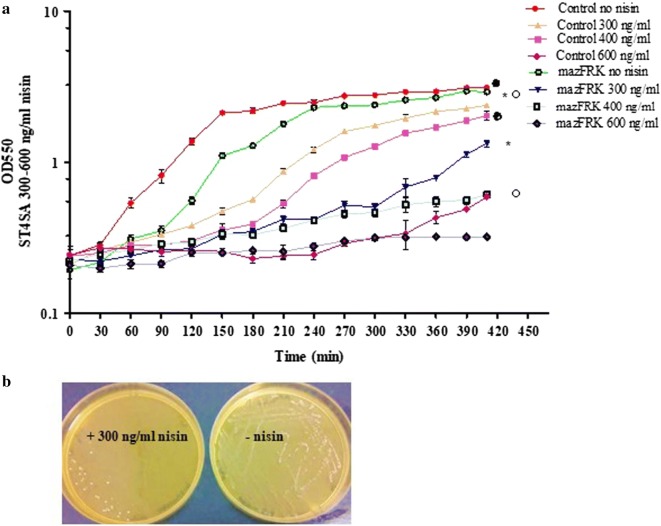
The underlying mechanisms by which probiotic lactic acid bacteria (LAB) enhance the health of the consumer have not been fully elucidated. Verification of probiotic modes of action can be achieved by using single- or multiple-gene knockout analyses of bacterial mutants in in vitro or in vivo models. We developed a novel system based on an inducible toxin counter-selection system, allowing for rapid and efficient isolation of LAB integration or deletion mutants. The Lactococcus lactis nisin A inducible promoter was used for expression of the Escherichia coli mazF toxin gene as counter-selectable marker.
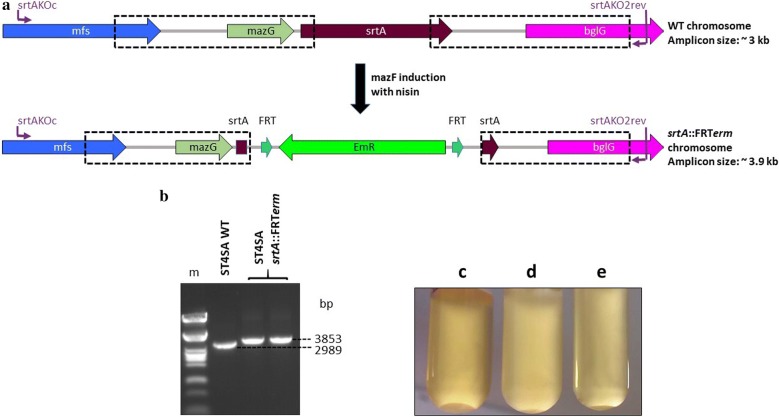
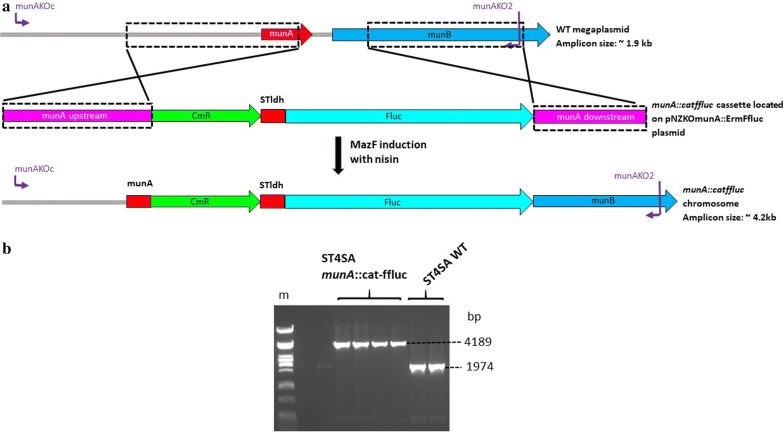
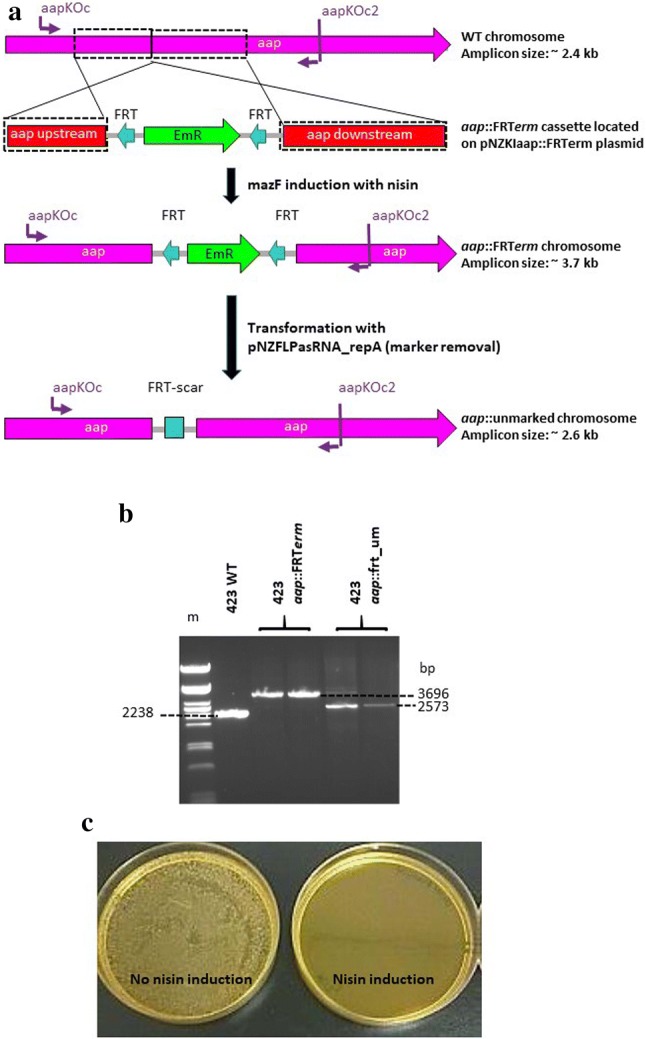
The flippase (FLP)/flippase recognition target (FRT) recombination system and an antisense RNA transcript were used to create markerless chromosomal gene integrations/deletions in LAB. Expression of NisR and NisK signalling proteins generated stable DNA integrations and deletions. Large sequences could be inserted or deleted in a series of steps, as demonstrated by insertion of the firefly bioluminescence gene and erythromycin resistance marker into the bacteriocin operons or adhesion genes of Lactobacillus plantarum 423 and Enterococcus mundtii ST4SA.
The system was useful in the construction of L. plantarum 423 and E. mundtii ST4SA bacteriocin and adhesion gene mutants. This provides the unique opportunity to study the role of specific probiotic LAB genes in complex environments using reverse genetics analysis. Although this work focuses on two probiotic LAB strains, L. plantarum 423 and E. mundtii ST4SA, the system developed could be adapted to most, if not all, LAB species.
益生菌乳酸菌(LAB)增强消费者健康的潜在机制尚未完全阐明。可以通过使用体外或体内模型中的细菌突变体的单基因或多基因突变体分析来验证益生菌作用模式。我们开发了一种基于诱导型毒素反选择系统的新型系统,允许快速有效地分离 LAB 整合或缺失突变体。乳链菌肽诱导启动子用于表达大肠杆菌 mazF 毒素基因作为可选择标记。
翻转酶(FLP)/翻转酶识别靶标(FRT)重组系统和反义 RNA 转录本用于在 LAB 中创建无标记染色体基因整合/缺失。NisR 和 NisK 信号蛋白的表达产生了稳定的 DNA 整合和缺失。如将萤火虫生物发光基因和红霉素抗性标记插入细菌素操纵子或植物乳杆菌 423 和肠球菌 mundtii ST4SA 的粘附基因中所示,可以通过一系列步骤插入或缺失大片段序列。
该系统可用于构建植物乳杆菌 423 和肠球菌 mundtii ST4SA 细菌素和粘附基因突变体。这为使用反向遗传学分析在复杂环境中研究特定益生菌 LAB 基因的作用提供了独特的机会。尽管这项工作集中在两种益生菌 LAB 菌株,即植物乳杆菌 423 和肠球菌 mundtii ST4SA,但开发的系统可以适应大多数,如果不是全部的话,LAB 物种。