Ramos-Molina Bruno, Queipo-Ortuño Maria Isabel, Lambertos Ana, Tinahones Francisco J, Peñafiel Rafael
Department of Endocrinology and Nutrition, Virgen de la Victoria University Hospital, Institute of Biomedical Research of Malaga, University and Malaga, Malaga, Spain.
CIBER Physiopathology of Obesity and Nutrition (CIBERobn), Institute of Health Carlos III (ISCIII), Madrid, Spain.
Front Nutr. 2019 Mar 14;6:24. doi: 10.3389/fnut.2019.00024. eCollection 2019.
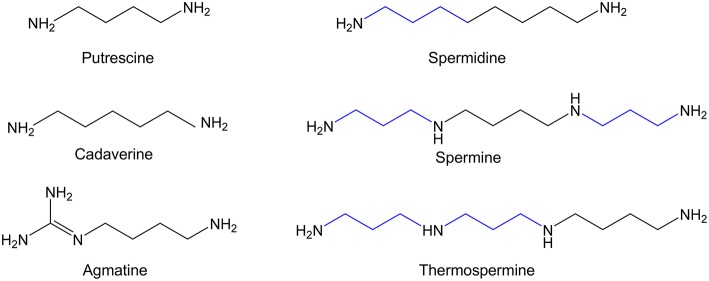
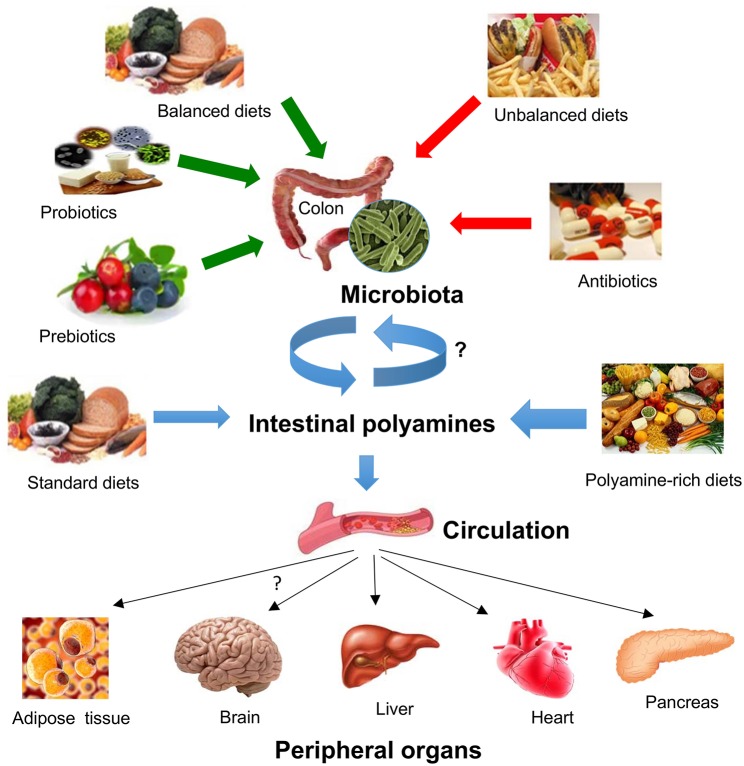
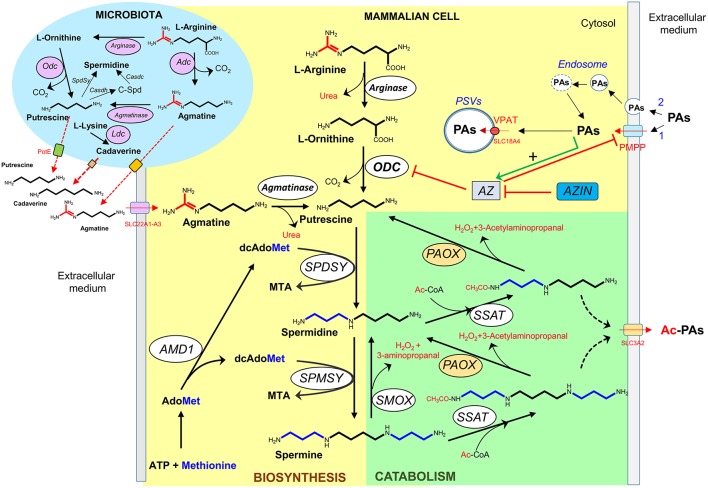
The polyamines putrescine, spermidine, and spermine are widely distributed polycationic compounds essential for cellular functions. Intracellular polyamine pools are tightly regulated by a complex regulatory mechanism involving biosynthesis, catabolism, and transport across the plasma membrane. In mammals, both the production of polyamines and their uptake from the extracellular space are controlled by a set of proteins named antizymes and antizyme inhibitors. Dysregulation of polyamine levels has been implicated in a variety of human pathologies, especially cancer. Additionally, decreases in the intracellular and circulating polyamine levels during aging have been reported. The differences in the polyamine content existing among tissues are mainly due to the endogenous polyamine metabolism. In addition, a part of the tissue polyamines has its origin in the diet or their production by the intestinal microbiome. Emerging evidence has suggested that exogenous polyamines (either orally administrated or synthetized by the gut microbiota) are able to induce longevity in mice, and that spermidine supplementation exerts cardioprotective effects in animal models. Furthermore, the administration of either spermidine or spermine has been shown to be effective for improving glucose homeostasis and insulin sensitivity and reducing adiposity and hepatic fat accumulation in diet-induced obesity mouse models. The exogenous addition of agmatine, a cationic molecule produced through arginine decarboxylation by bacteria and plants, also exerts significant effects on glucose metabolism in obese models, as well as cardioprotective effects. In this review, we will discuss some aspects of polyamine metabolism and transport, how diet can affect circulating and local polyamine levels, and how the modulation of either polyamine intake or polyamine production by gut microbiota can be used for potential therapeutic purposes.
多胺腐胺、亚精胺和精胺是广泛分布的多阳离子化合物,对细胞功能至关重要。细胞内多胺池通过涉及生物合成、分解代谢和跨质膜转运的复杂调节机制受到严格调控。在哺乳动物中,多胺的产生及其从细胞外空间的摄取均由一组名为抗酶和抗酶抑制剂的蛋白质控制。多胺水平的失调与多种人类疾病有关,尤其是癌症。此外,据报道衰老过程中细胞内和循环多胺水平会降低。组织间多胺含量的差异主要归因于内源性多胺代谢。此外,一部分组织多胺来源于饮食或由肠道微生物群产生。新出现的证据表明,外源性多胺(无论是口服还是由肠道微生物群合成)能够延长小鼠寿命,并且补充亚精胺在动物模型中具有心脏保护作用。此外,在饮食诱导的肥胖小鼠模型中,给予亚精胺或精胺已被证明对改善葡萄糖稳态和胰岛素敏感性以及减少肥胖和肝脏脂肪积累有效。外源性添加胍丁胺(一种由细菌和植物通过精氨酸脱羧产生的阳离子分子)对肥胖模型中的葡萄糖代谢以及心脏保护作用也有显著影响。在本综述中,我们将讨论多胺代谢和转运的一些方面、饮食如何影响循环和局部多胺水平,以及肠道微生物群对多胺摄入或多胺产生的调节如何用于潜在的治疗目的。