Department of Genetics, Stanford University School of Medicine, 300 Pasteur Drive, M322 Alway Building, Stanford, CA, 94305-5120, USA.
Stanford Neurosciences Graduate Program, Stanford University School of Medicine, Stanford, CA, USA.
Acta Neuropathol. 2019 Jun;137(6):961-980. doi: 10.1007/s00401-019-01995-0. Epub 2019 Mar 29.
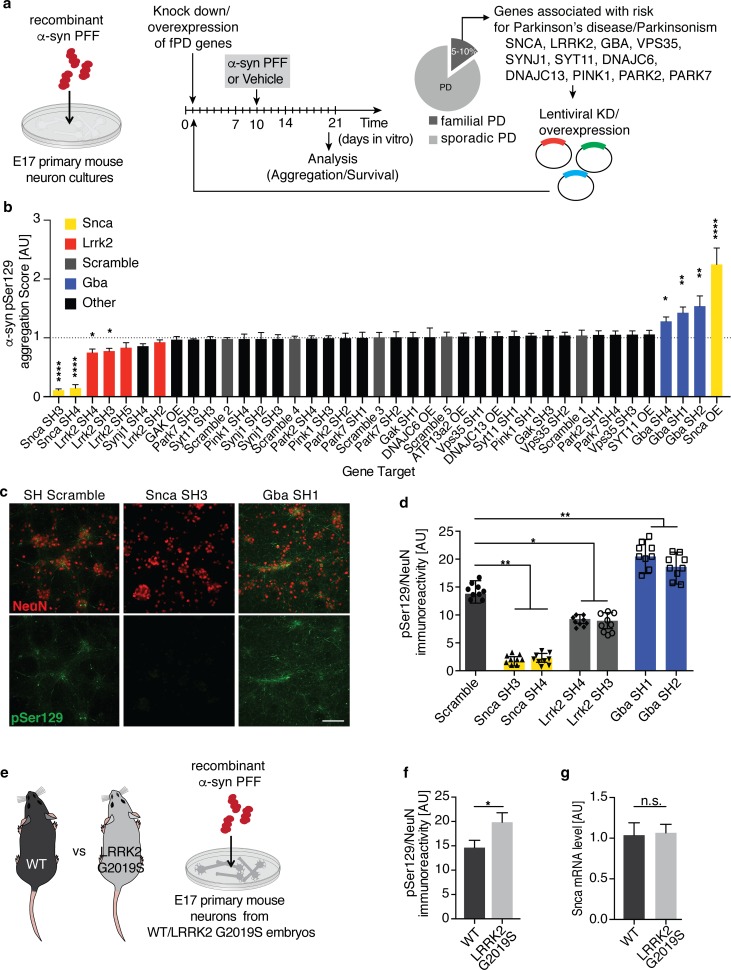
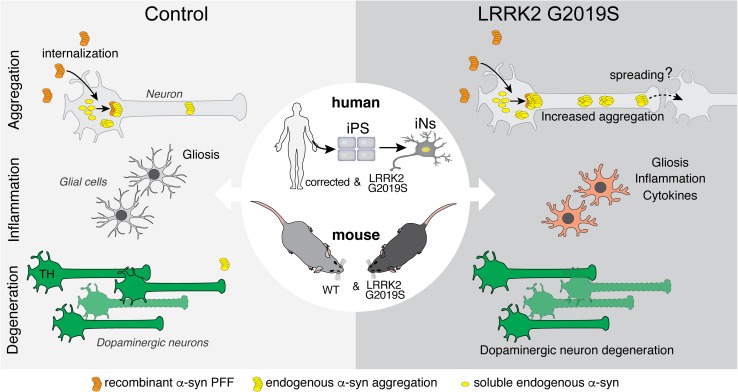
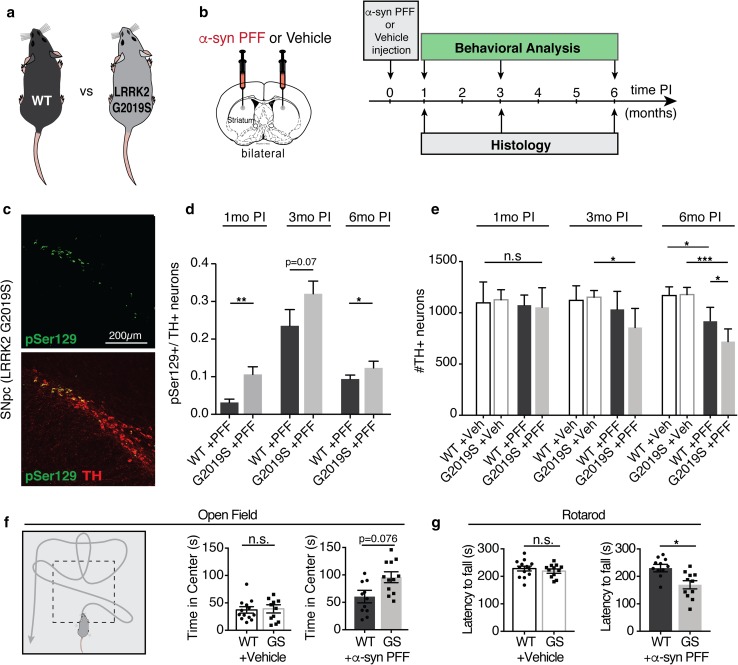
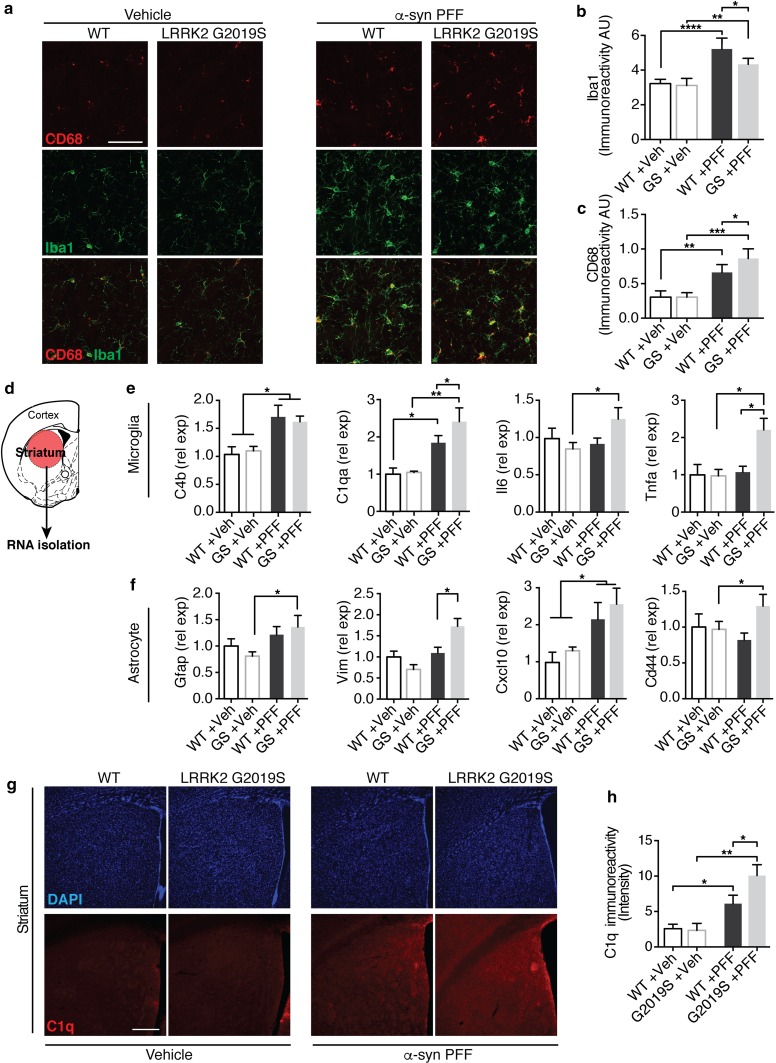
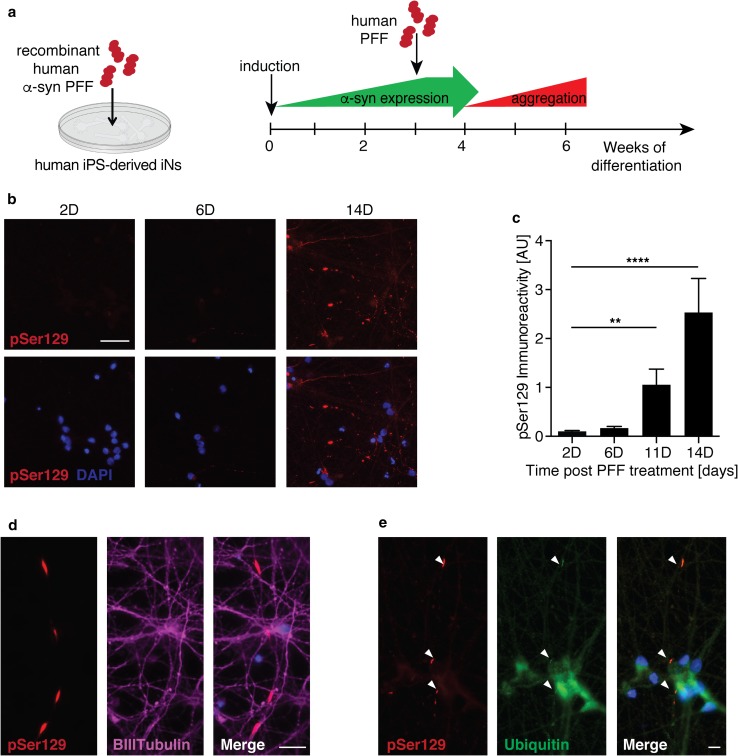
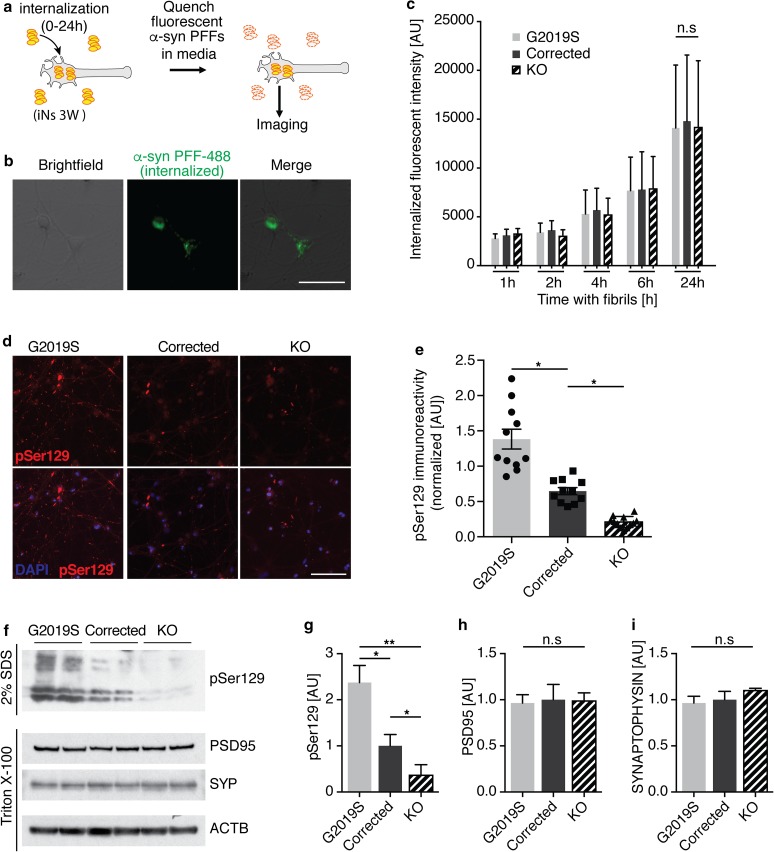
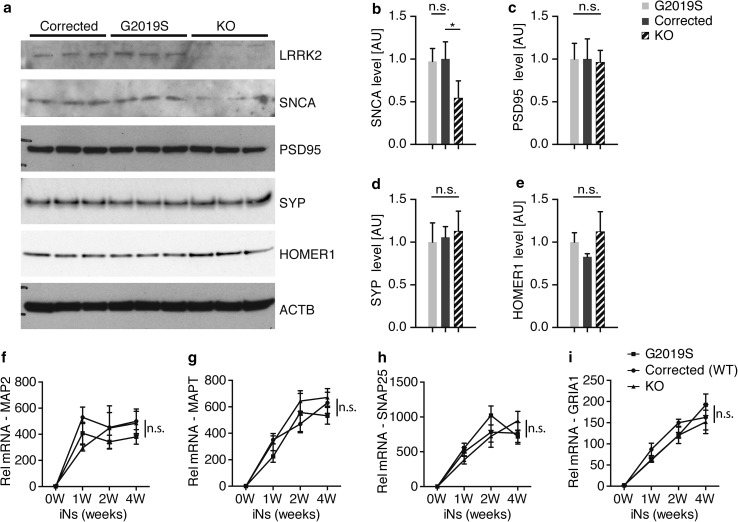
Progressive aggregation of the protein alpha-synuclein (α-syn) and loss of dopaminergic neurons in the substantia nigra pars compacta (SNpc) are key histopathological hallmarks of Parkinson's disease (PD). Accruing evidence suggests that α-syn pathology can propagate through neuronal circuits in the brain, contributing to the progressive nature of the disease. Thus, it is therapeutically pertinent to identify modifiers of α-syn transmission and aggregation as potential targets to slow down disease progression. A growing number of genetic mutations and risk factors has been identified in studies of familial and sporadic forms of PD. However, how these genes affect α-syn aggregation and pathological transmission, and whether they can be targeted for therapeutic interventions, remains unclear. We performed a targeted genetic screen of risk genes associated with PD and parkinsonism for modifiers of α-syn aggregation, using an α-syn preformed-fibril (PFF) induction assay. We found that decreased expression of Lrrk2 and Gba modulated α-syn aggregation in mouse primary neurons. Conversely, α-syn aggregation increased in primary neurons from mice expressing the PD-linked LRRK2 G2019S mutation. In vivo, using LRRK2 G2019S transgenic mice, we observed acceleration of α-syn aggregation and degeneration of dopaminergic neurons in the SNpc, exacerbated degeneration-associated neuroinflammation and behavioral deficits. To validate our findings in a human context, we established a novel human α-syn transmission model using induced pluripotent stem cell (iPS)-derived neurons (iNs), where human α-syn PFFs triggered aggregation of endogenous α-syn in a time-dependent manner. In PD subject-derived iNs, the G2019S mutation enhanced α-syn aggregation, whereas loss of LRRK2 decreased aggregation. Collectively, these findings establish a strong interaction between the PD risk gene LRRK2 and α-syn transmission across mouse and human models. Since clinical trials of LRRK2 inhibitors in PD are currently underway, our findings raise the possibility that these may be effective in PD broadly, beyond cases caused by LRRK2 mutations.
蛋白 α-突触核蛋白(α-syn)的进行性聚集和黑质致密部(SNpc)多巴胺能神经元的丧失是帕金森病(PD)的关键组织病理学特征。越来越多的证据表明,α-syn 病理学可以在大脑神经元回路中传播,导致疾病的进行性发展。因此,鉴定α-syn 传递和聚集的修饰物作为潜在的靶点来减缓疾病进展是非常重要的。在家族性和散发性 PD 的研究中,已经确定了越来越多的遗传突变和风险因素。然而,这些基因如何影响α-syn 聚集和病理性传递,以及它们是否可以作为治疗靶点,仍然不清楚。我们使用α-syn 预形成纤维(PFF)诱导测定法,对与 PD 和帕金森病相关的风险基因进行了靶向遗传筛选,以寻找α-syn 聚集的调节剂。我们发现 Lrrk2 和 Gba 的表达减少调节了小鼠原代神经元中的α-syn 聚集。相反,在表达 PD 相关 LRRK2 G2019S 突变的原代神经元中,α-syn 聚集增加。在体内,使用 LRRK2 G2019S 转基因小鼠,我们观察到α-syn 聚集加速和 SNpc 中多巴胺能神经元变性,加剧了与变性相关的神经炎症和行为缺陷。为了在人类背景下验证我们的发现,我们使用诱导多能干细胞(iPS)衍生的神经元(iNs)建立了一种新型的人类α-syn 传递模型,其中人类α-syn PFF 以时间依赖性方式触发内源性α-syn 的聚集。在 PD 患者来源的 iNs 中,G2019S 突变增强了α-syn 聚集,而 LRRK2 的缺失减少了聚集。总之,这些发现确立了 PD 风险基因 LRRK2 与跨小鼠和人类模型的α-syn 传递之间的强烈相互作用。由于 LRRK2 抑制剂在 PD 中的临床试验目前正在进行中,我们的发现提出了一种可能性,即这些抑制剂可能在广泛的 PD 中有效,而不仅仅是在由 LRRK2 突变引起的病例中。