Department of Public Health and Caring Sciences, Uppsala University, Uppsala, Sweden.
Department of Biology, University of Padova, Padua, Italy.
Mol Neurobiol. 2021 Jul;58(7):3119-3140. doi: 10.1007/s12035-021-02327-8. Epub 2021 Feb 24.
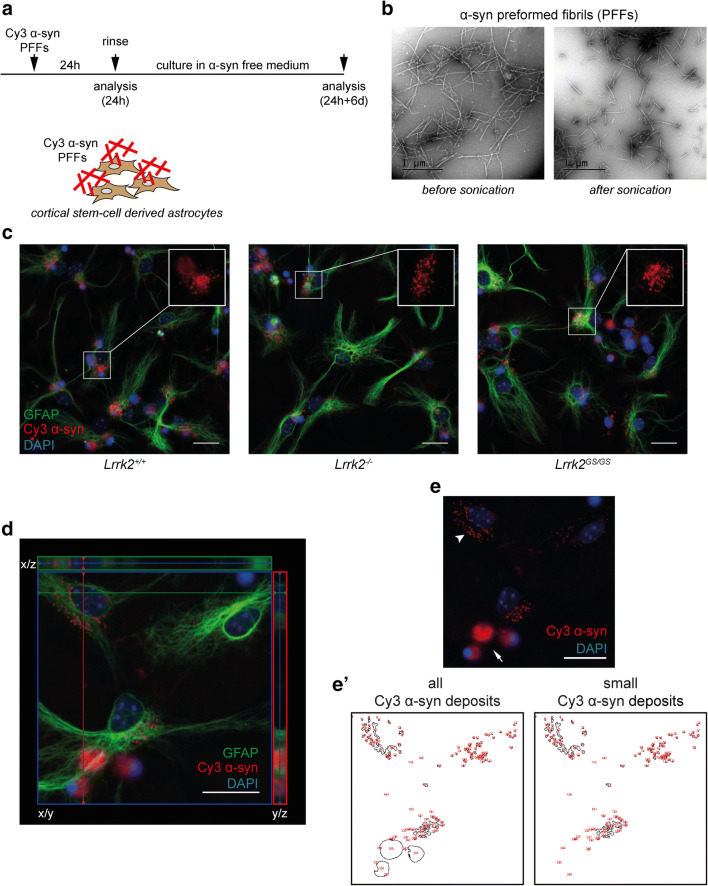
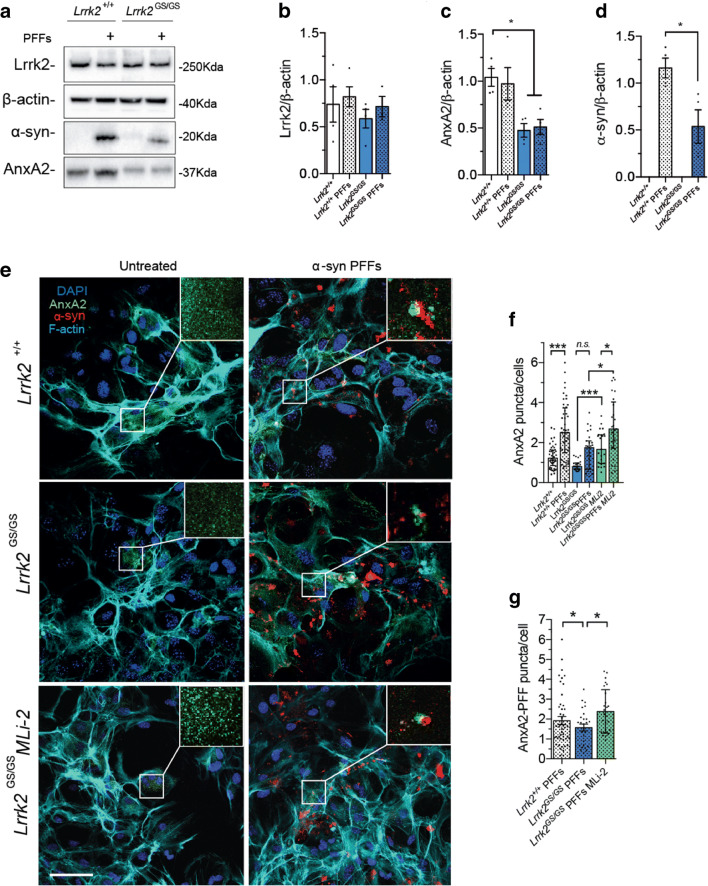
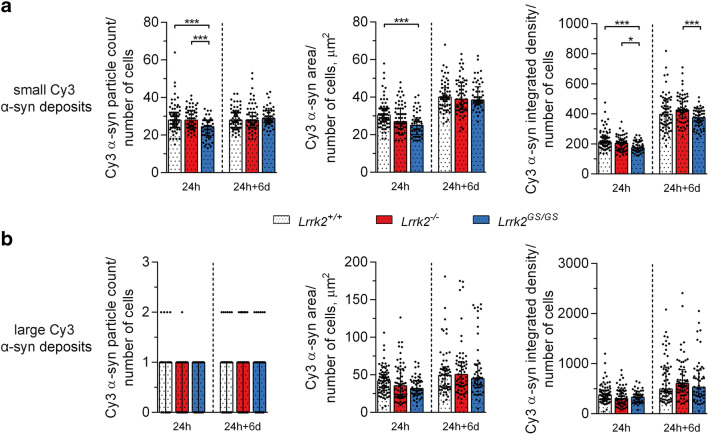
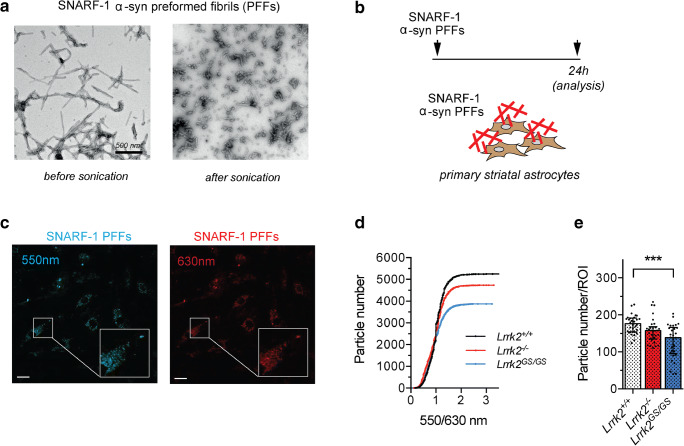
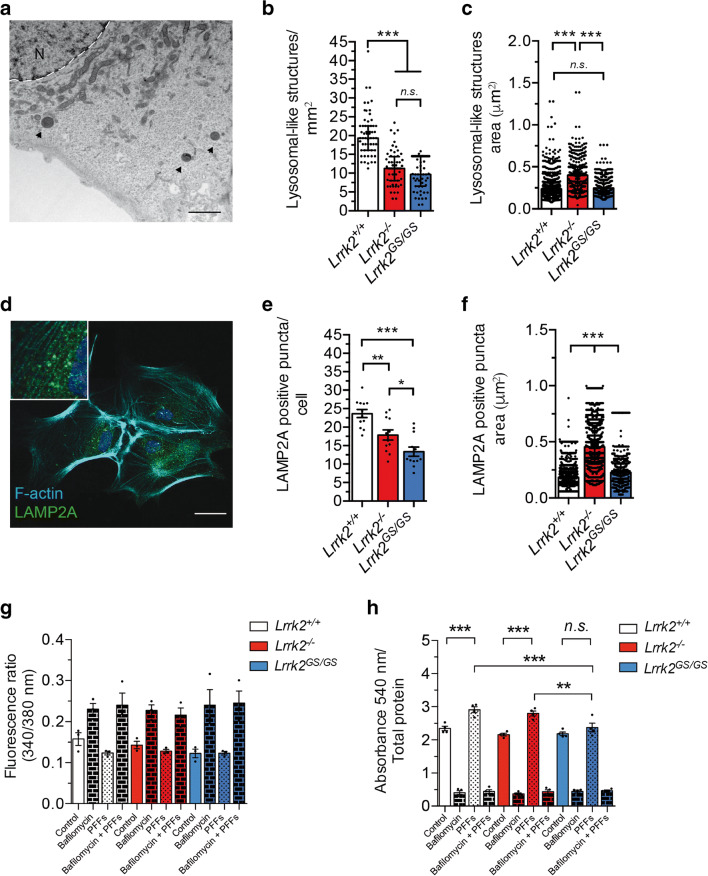
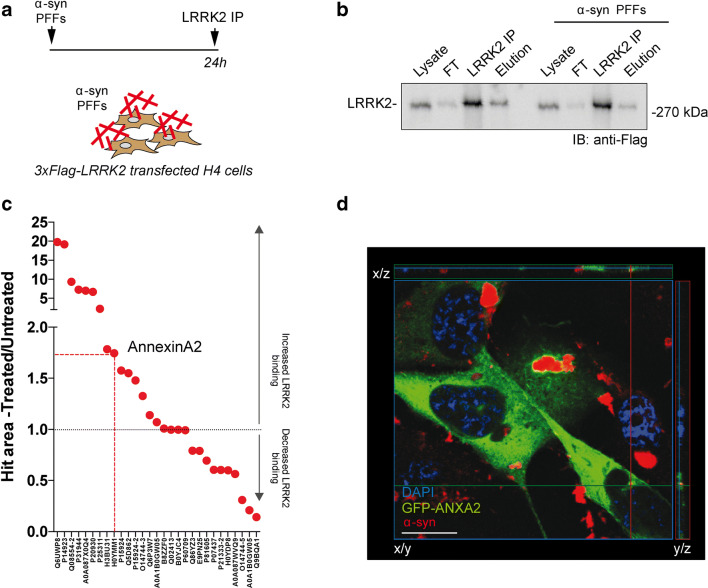
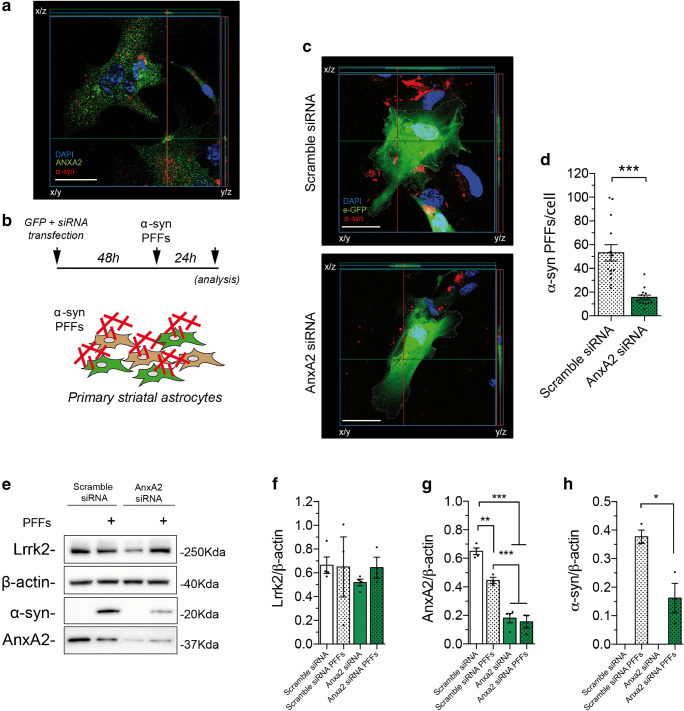
Parkinson's disease (PD) is a neurodegenerative, progressive disease without a cure. To prevent PD onset or at least limit neurodegeneration, a better understanding of the underlying cellular and molecular disease mechanisms is crucial. Mutations in the leucine-rich repeat kinase 2 (LRRK2) gene represent one of the most common causes of familial PD. In addition, LRRK2 variants are risk factors for sporadic PD, making LRRK2 an attractive therapeutic target. Mutations in LRRK2 have been linked to impaired alpha-synuclein (α-syn) degradation in neurons. However, in which way pathogenic LRRK2 affects α-syn clearance by astrocytes, the major glial cell type of the brain, remains unclear. The impact of astrocytes on PD progression has received more attention and recent data indicate that astrocytes play a key role in α-syn-mediated pathology. In the present study, we aimed to compare the capacity of wild-type astrocytes and astrocytes carrying the PD-linked G2019S mutation in Lrrk2 to ingest and degrade fibrillary α-syn. For this purpose, we used two different astrocyte culture systems that were exposed to sonicated α-syn for 24 h and analyzed directly after the α-syn pulse or 6 days later. To elucidate the impact of LRRK2 on α-syn clearance, we performed various analyses, including complementary imaging, transmission electron microscopy, and proteomic approaches. Our results show that astrocytes carrying the G2019S mutation in Lrrk2 exhibit a decreased capacity to internalize and degrade fibrillar α-syn via the endo-lysosomal pathway. In addition, we demonstrate that the reduction of α-syn internalization in the Lrrk2 G2019S astrocytes is linked to annexin A2 (AnxA2) loss of function. Together, our findings reveal that astrocytic LRRK2 contributes to the clearance of extracellular α-syn aggregates through an AnxA2-dependent mechanism.
帕金森病(PD)是一种神经退行性、进行性疾病,目前尚无治愈方法。为了预防 PD 的发生或至少限制神经退行性变,深入了解潜在的细胞和分子疾病机制至关重要。富含亮氨酸重复激酶 2(LRRK2)基因的突变是家族性 PD 的最常见原因之一。此外,LRRK2 变体是散发性 PD 的危险因素,这使得 LRRK2 成为一个有吸引力的治疗靶点。LRRK2 突变与神经元中α-突触核蛋白(α-syn)降解受损有关。然而,致病性 LRRK2 以何种方式影响星形胶质细胞(大脑的主要神经胶质细胞类型)清除α-syn 仍不清楚。星形胶质细胞对 PD 进展的影响受到了更多的关注,最近的数据表明星形胶质细胞在α-syn 介导的病理中发挥关键作用。在本研究中,我们旨在比较携带 PD 相关 LRRK2 G2019S 突变的野生型星形胶质细胞和星形胶质细胞摄取和降解原纤维状α-syn 的能力。为此,我们使用了两种不同的星形胶质细胞培养系统,这些系统暴露于超声处理的α-syn 中 24 小时,然后直接在α-syn 脉冲后或 6 天后进行分析。为了阐明 LRRK2 对α-syn 清除的影响,我们进行了各种分析,包括互补成像、透射电子显微镜和蛋白质组学方法。我们的结果表明,携带 LRRK2 G2019S 突变的星形胶质细胞通过内吞作用和溶酶体途径内化和降解原纤维状α-syn 的能力降低。此外,我们证明 Lrrk2 G2019S 星形胶质细胞中α-syn 内化减少与膜联蛋白 A2(AnxA2)功能丧失有关。总之,我们的研究结果表明,星形胶质细胞中的 LRRK2 通过依赖 AnxA2 的机制有助于清除细胞外α-syn 聚集体。