Department of Biological and Environmental Sciences, University of Gothenburg, Box 463, 413 90, Göteborg, Sweden.
DTU Environment, Technical University of Denmark, 2800, Kongens Lyngby, Denmark.
Environ Sci Pollut Res Int. 2019 May;26(15):15354-15372. doi: 10.1007/s11356-019-04856-1. Epub 2019 Mar 31.
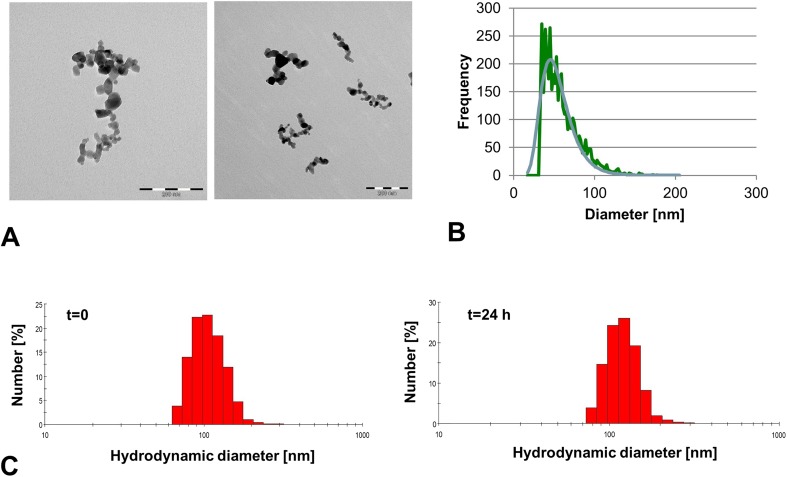
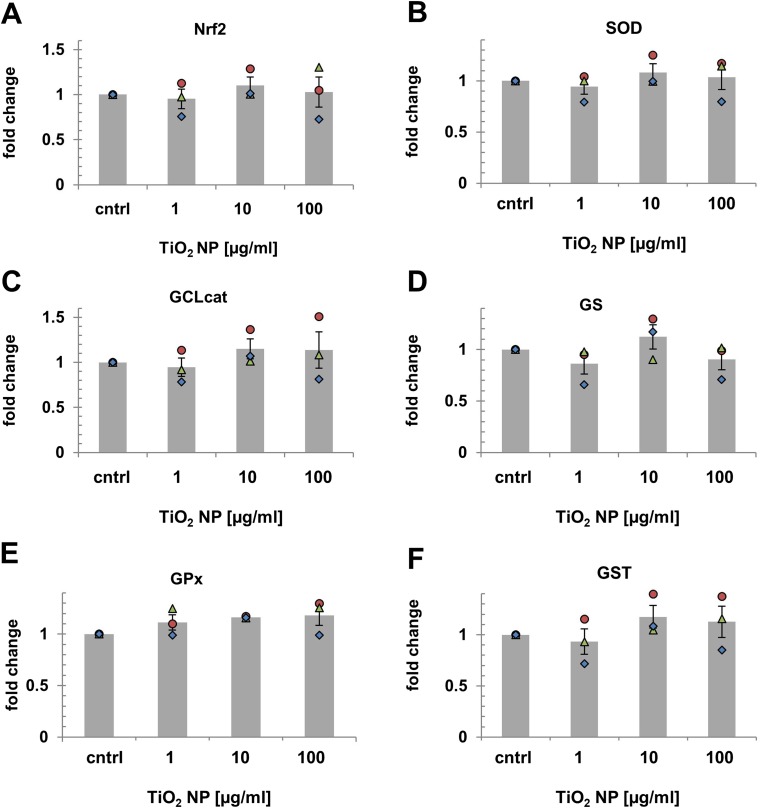
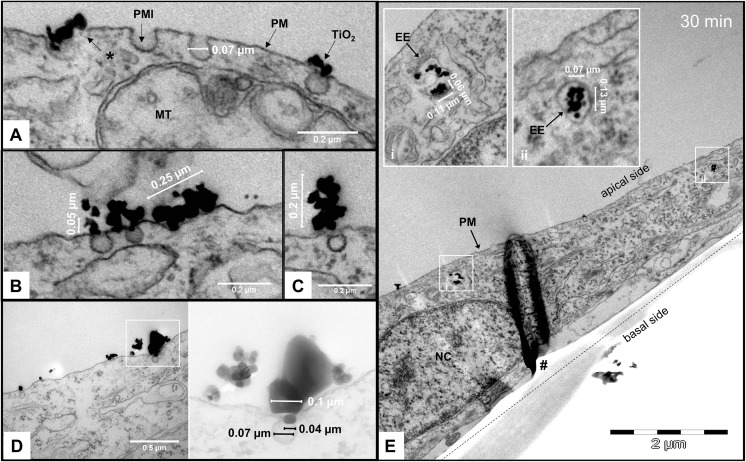
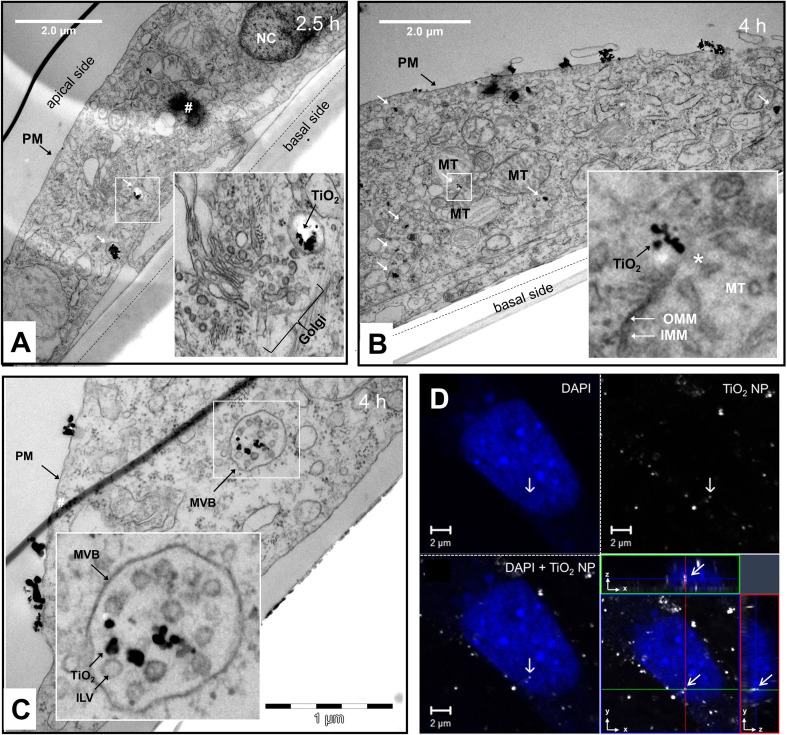
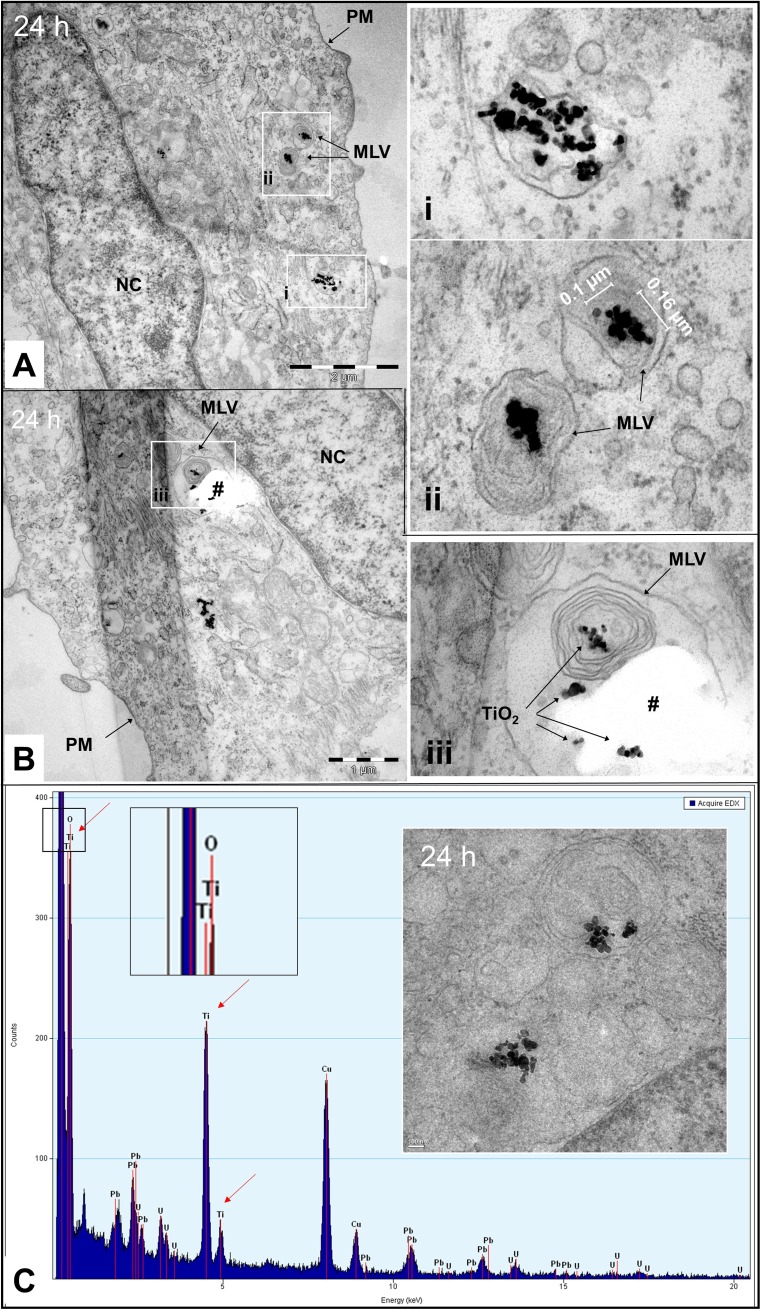
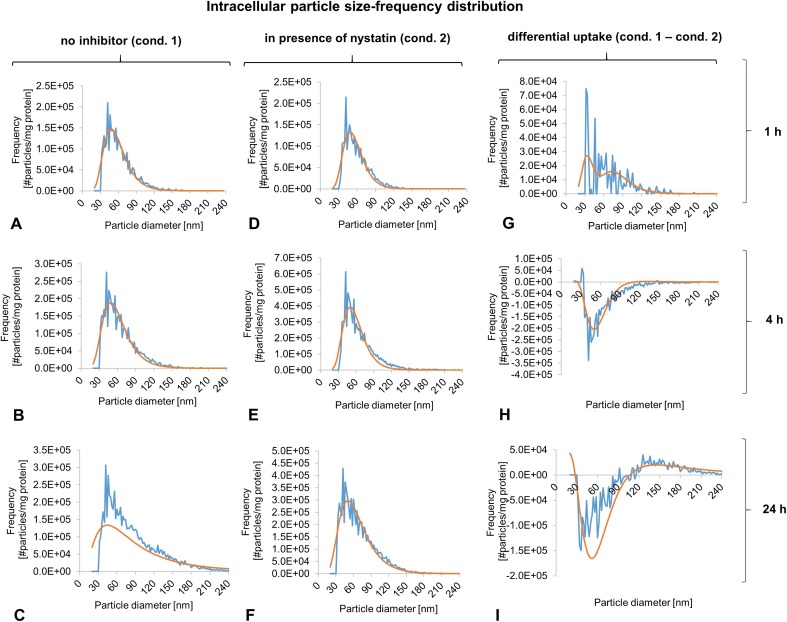
There is increasing evidence that titanium dioxide (TiO) nanoparticles (NPs) present in water or diet can be taken up by fish and accumulate in internal organs including the liver. However, their further fate in the organ is unknown. This study provides new insights into the interaction, uptake mechanism, intracellular trafficking, and fate of TiO NPs (Aeroxide® P25) in fish liver parenchymal cells (RTL-W1) in vitro using high-resolution transmission electron microscopy (TEM) and single particle inductively coupled plasma mass spectrometry (spICP-MS) as complementary analytical techniques. The results demonstrate that following their uptake via caveolae-mediated endocytosis, TiO NPs were trafficked through different intracellular compartments including early endosomes, multivesicular bodies, and late endosomes/endo-lysosomes, and eventually concentrated inside multilamellar vesicles. TEM and spICP-MS results provide evidence that uptake was nano-specific. Only NPs/NP agglomerates of a specific size range (~ 30-100 nm) were endocytosed; larger agglomerates were excluded from uptake and remained located in the extracellular space/exposure medium. NP number and mass inside cells increased linearly with time and was associated with an increase in particle diameter suggesting intracellular agglomeration/aggregation. No alterations in the expression of genes regulated by the redox balance-sensitive transcription factor Nrf-2 including superoxide dismutase, glutamyl cysteine ligase, glutathione synthetase, glutathione peroxidase, and glutathione S-transferase were observed. This shows that, despite the high intracellular NP burden (~ 3.9 × 10 ng Ti/mg protein after 24 h) and NP-interaction with mitochondria, cellular redox homeostasis was not significantly affected. This study contributes to a better mechanistic understanding of in vitro particokinetics as well as the potential fate and effects of TiO NPs in fish liver cells.
越来越多的证据表明,水中或饮食中的二氧化钛(TiO)纳米颗粒(NPs)可被鱼类摄取并在包括肝脏在内的内部器官中积累。然而,它们在器官中的进一步命运尚不清楚。本研究使用高分辨率透射电子显微镜(TEM)和单颗粒电感耦合等离子体质谱(spICP-MS)作为互补分析技术,首次深入研究了 TiO NPs(Aeroxide® P25)在体外鱼类肝细胞(RTL-W1)中的相互作用、摄取机制、细胞内转运和命运。结果表明,在通过小窝介导的内吞作用摄取后,TiO NPs 通过不同的细胞内隔室转运,包括早期内体、多泡体和晚期内体/溶酶体,并最终在内层多泡体中浓缩。TEM 和 spICP-MS 结果提供了摄取具有纳米特异性的证据。只有特定大小范围(~30-100nm)的 NPs/NP 团聚物被内吞;较大的团聚物被排除在摄取之外,并留在细胞外空间/暴露介质中。细胞内的 NP 数量和质量随时间呈线性增加,并且与颗粒直径的增加相关,表明细胞内团聚/聚集。未观察到受氧化还原平衡敏感转录因子 Nrf-2 调节的基因(包括超氧化物歧化酶、谷氨酰半胱氨酸连接酶、谷胱甘肽合成酶、谷胱甘肽过氧化物酶和谷胱甘肽 S-转移酶)表达的改变。这表明,尽管细胞内 NP 负荷很高(24 小时后约 3.9×10ng Ti/mg 蛋白),并且 NP 与线粒体相互作用,但细胞内氧化还原稳态并未受到显著影响。本研究有助于更好地理解体外 particokinetics 以及 TiO NPs 在鱼类肝细胞中的潜在命运和影响。