Lives Lived Well, Orange, NSW, Australia.
Conjoint Academic, National Drug and Alcohol Research Centre, UNSW, P.O. Box 9374, Orange East, NSW, 2800, Australia.
Addict Sci Clin Pract. 2019 Apr 1;14(1):13. doi: 10.1186/s13722-019-0144-6.
A substantial increase in substance treatment episodes for methamphetamine problems suggests characteristics of the treatment population could have changed and that targeted treatment programs are required. To determine who methamphetamine treatment should be designed for this study has two aims. First, to empirically describe changes in amphetamine treatment presentations to a rural NSW drug and alcohol treatment agency over time. Second, to examine how these characteristics may affect the likelihood of being treated for amphetamines compared to other drugs.
The Australian Alcohol and Other Drug Treatment Services National Minimum Data Set (AODTS-NMDS) containing closed treatment episodes from a single agency from three time periods was used. Characteristics of people receiving amphetamine treatments in these three periods were compared and the effects of these characteristics on the odds of being treated for amphetamine were estimated using a logistic regression model. The characteristics utilised in the analysis include age, sex, Indigenous status, usual accommodation, living arrangement, source of referral and source of income.
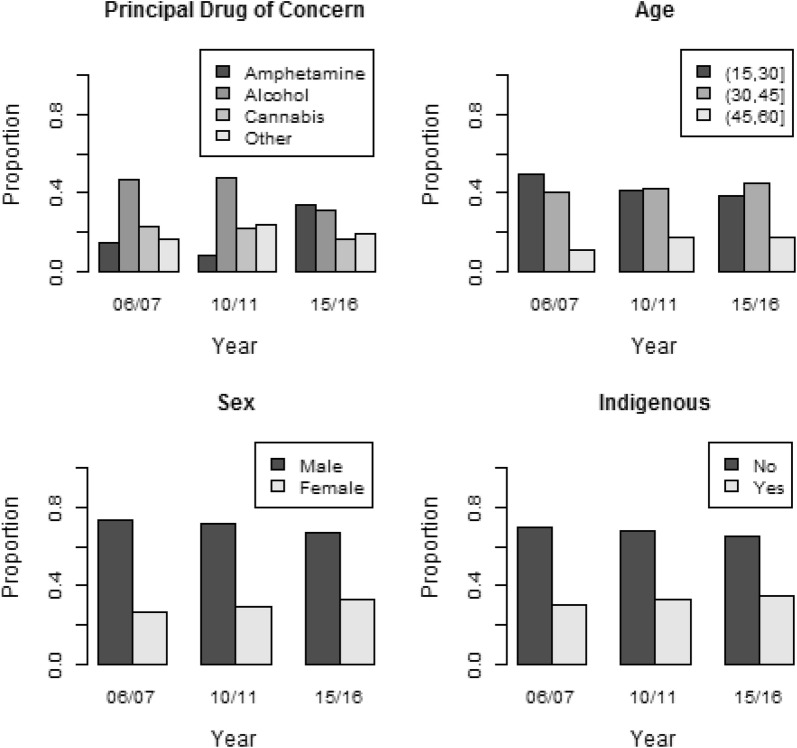
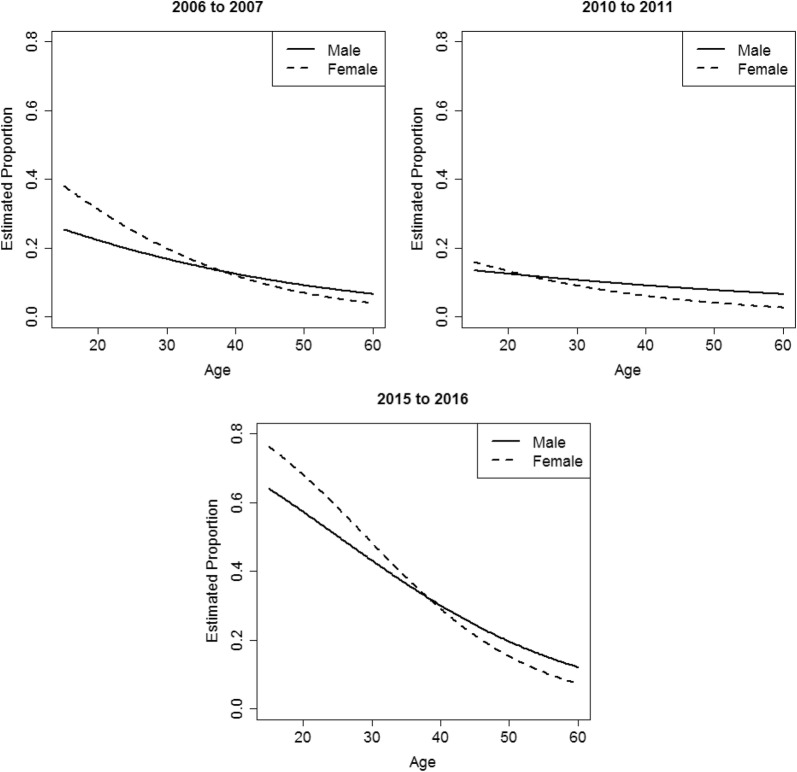
The proportion of amphetamine treatment episodes doubled from 2006/2007 to 2015/2016 and overtook alcohol as the most commonly treated principal drug of concern. The estimated proportion of amphetamine treatments showed an increment across all ages and for men and women. It was found that younger people, women, people in temporary accommodation or homeless, people who were self-referred and people whose main source of income was not through employment are more likely to be treated for amphetamine use.
Significant changes over time in the age, sex and Indigenous status of people receiving treatment for amphetamine as the principal drug of concern requires service delivery to match demand from younger people, particularly women; and Indigenous people. The needs and preferences for treatment of younger women who use amphetamine will be important factors in treatment planning service providers who are more used to providing treatment for young men who use cannabis and older men who use alcohol. Further research on women's experiences in treatment and outcomes would be useful for informing treatment practices.
接受冰毒治疗的人数大幅增加,这表明治疗人群的特征可能已经发生了变化,需要有针对性的治疗项目。为了确定应该为哪些人设计冰毒治疗方案,本研究有两个目的。首先,从实证上描述在一段时间内,新南威尔士州农村地区一个毒品和酒精治疗机构的安非他命治疗呈现的变化。其次,研究这些特征如何影响与其他药物相比,接受安非他命治疗的可能性。
使用澳大利亚酒精和其他药物治疗服务国家最低数据集(AODTS-NMDS),该数据集包含了来自三个时期的一个单一机构的封闭治疗期。比较了在这三个时期接受安非他命治疗的人群的特征,并使用逻辑回归模型估计了这些特征对接受安非他命治疗的可能性的影响。分析中使用的特征包括年龄、性别、土著身份、常住地、居住安排、转介来源和收入来源。
安非他命治疗期的比例从 2006/2007 年到 2015/2016 年翻了一番,超过酒精成为最常见的主要关注药物。估计的安非他命治疗比例在所有年龄段和男性和女性中都有所增加。结果发现,年轻人、女性、居住在临时住所或无家可归者、自我转介者和主要收入来源不是就业者更有可能接受安非他命治疗。
接受安非他命治疗的人群在年龄、性别和土著身份方面发生了显著变化,这要求服务提供与年轻人、特别是女性和土著人对治疗的需求相匹配。针对使用安非他命的年轻女性的治疗需求和偏好将是治疗规划服务提供者的重要因素,这些服务提供者更习惯于为使用大麻的年轻男性和使用酒精的老年男性提供治疗。关于女性在治疗中的经验和结果的进一步研究将有助于为治疗实践提供信息。