ETH Zurich, Animal Physiology, Institute of Agricultural Sciences, Zurich, Switzerland.
Genetics and Functional Genomics, Clinic of Reproductive Medicine, Department for Farm Animals, University of Zurich, Zurich, Switzerland.
Reproduction. 2019 Jul;158(1):13-24. doi: 10.1530/REP-19-0022.
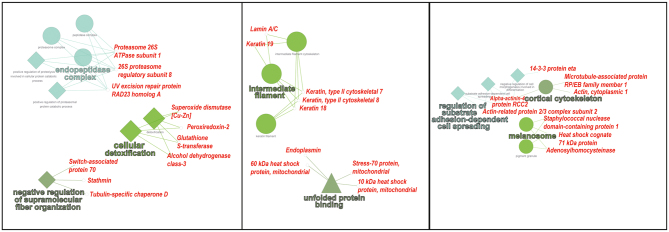
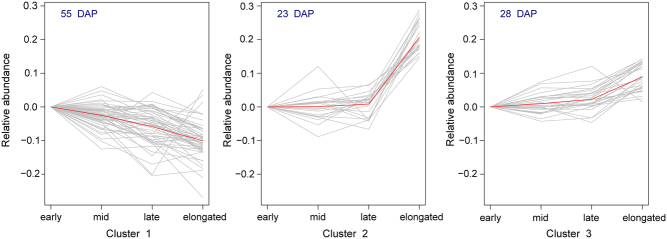
The uterine microenvironment during pre-implantation presents a pro-survival milieu and is essential for embryo elongation in ruminants. The European roe deer (Careolus capreolus) pre-implantation embryo development is characterised by a 4-month period of reduced development, embryonic diapause, after which the embryo rapidly elongates and implants. We investigated the uterine fluid proteome by label-free liquid chromatography tandem mass spectrometry at four defined stages covering the phase of reduced developmental pace (early diapause, mid-diapause and late diapause) and embryo elongation. We hypothesised that embryo development during diapause is halted by the lack of signals that support progression past the blastocyst stage. Three clusters of differentially abundant proteins were identified by a self-organising tree algorithm: (1) gradual reduction over development; (2) stable abundance during diapause, followed by a sharp rise at elongation; and (3) gradual increase over development. Proteins in the different clusters were subjected to gene ontology analysis. 'Cellular detoxification' in cluster 1 was represented by alcohol dehydrogenase, glutathione S-transferase and peroxiredoxin-2. ATP-citrate synthase, nucleolin, lamin A/C, and purine phosphorylase as cell proliferation regulators were found in cluster 2 and 'cortical cytoskeleton', 'regulation of substrate adhesion-dependent cell spreading' and 'melanosome' were present in cluster 3. Cell cycle promoters were higher abundant at elongation than during diapause, and polyamines presence indicates their role in diapause regulation. This study provides a comprehensive overview of proteins in the roe deer uterine fluid during diapause and forms a basis for studies aiming at understanding the impact of the lack of cell cycle promoters during diapause.
在着床前,子宫微环境呈现出有利于胚胎存活的环境,这对于反刍动物胚胎的伸长至关重要。欧洲赤鹿(Careolus capreolus)的着床前胚胎发育的特点是经历了长达 4 个月的发育减缓期,即胚胎休眠,之后胚胎迅速伸长并着床。我们通过无标记液相色谱串联质谱法在四个定义明确的阶段研究了子宫液的蛋白质组,这些阶段涵盖了发育减缓期(早期休眠、中期休眠和晚期休眠)和胚胎伸长期。我们假设,胚胎在休眠期间的发育停滞是由于缺乏支持其越过囊胚阶段的信号。通过自组织树算法,我们鉴定了三个差异丰度蛋白簇:(1)在发育过程中逐渐减少;(2)在休眠期间稳定,在伸长时急剧增加;(3)在发育过程中逐渐增加。对不同簇中的蛋白质进行了基因本体分析。簇 1 中的“细胞解毒”由醇脱氢酶、谷胱甘肽 S-转移酶和过氧化物酶 2 代表。在簇 2 中发现了作为细胞增殖调节剂的三磷酸柠檬酸合酶、核仁素、核纤层 A/C 和嘌呤磷酸化酶,而“皮质细胞骨架”、“调节底物粘附依赖性细胞扩散”和“黑素体”存在于簇 3 中。细胞周期启动子在伸长期的丰度高于休眠期,多胺的存在表明它们在休眠调控中的作用。本研究提供了鹿子宫液在休眠期的蛋白质的全面概述,为研究缺乏细胞周期启动子对休眠的影响奠定了基础。