Agnoli Emanuele, Ciapponi Riccardo, Levi Marinella, Turri Stefano
Department of Chemistry, Materials and Chemical Engineering "Giulio Natta", Politecnico di Milano, Piazza Leonardo da Vinci 32, 20133 Milano, Italy.
INSTM-National Interuniversity Consortium of Materials Science and Technology, Via G. Giusti 9, 50121 Firenze, Italy.
Materials (Basel). 2019 Mar 27;12(7):1004. doi: 10.3390/ma12071004.
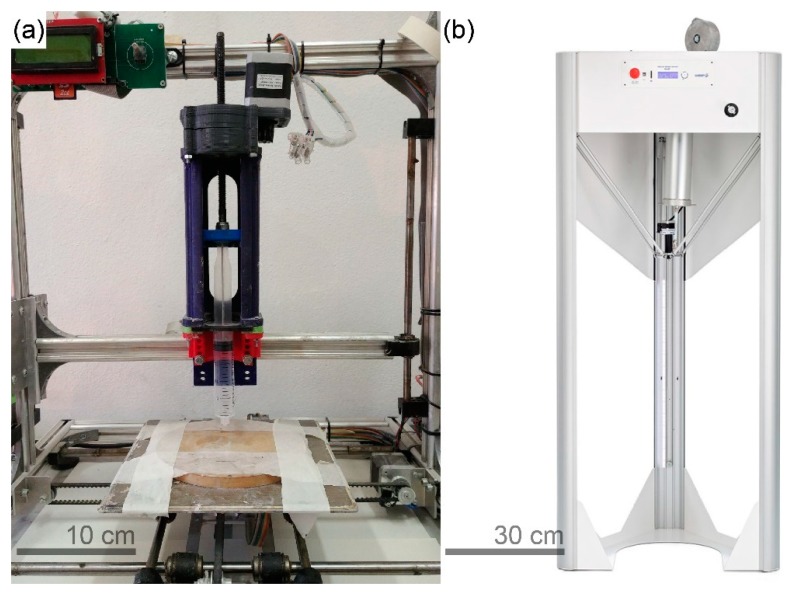
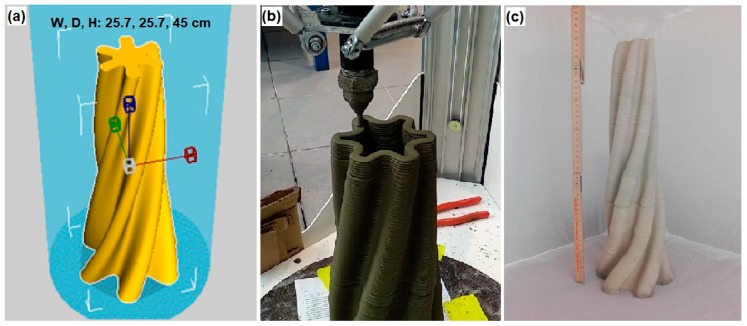
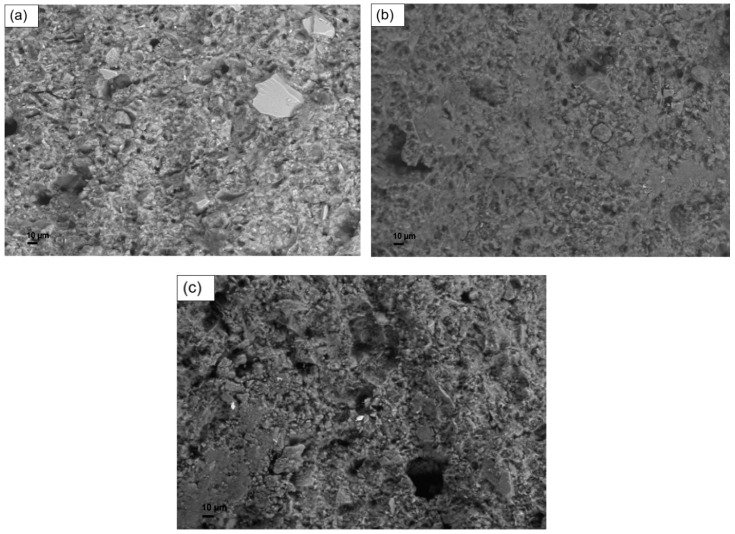
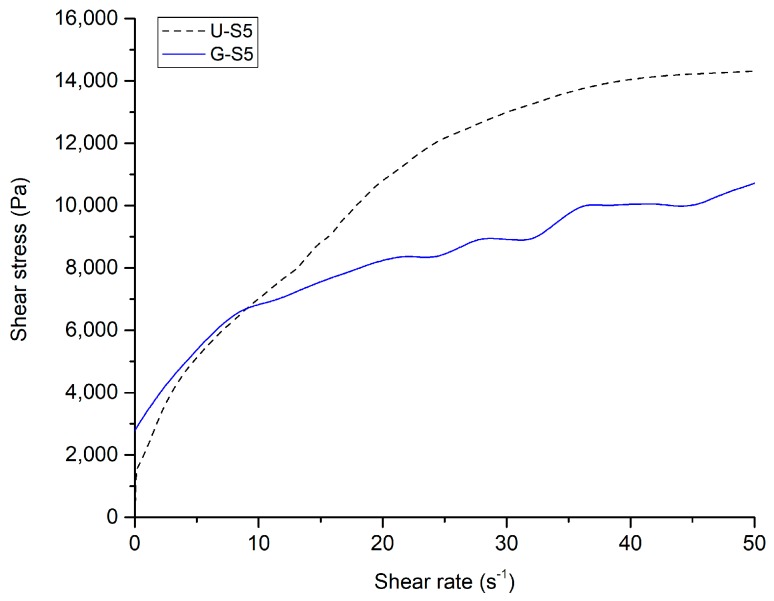
This paper deals with the additive manufacturing of metakaolin-based geopolymers and with the use of microalgal biomass from wastewater treatment plants as biofiller in this kind of cementitious material. The study was developed following the evolution stages of the material, which was prepared and printed as a soft paste and then hardened thanks to an inorganic polymerization reaction (geopolymerization). Thus, the characterization techniques adopted encompassed rheometry, mechanical tests performed on the hardened material, scanning electron microscopy (SEM), energy-dispersive X-ray spectroscopy (EDS) and mercury intrusion porosimetry (MIP). Microalgal biomass addition, evaluated in this study at 1, 3 and 5 php with respect to the powder weight, affected both the properties of the fresh and of the hardened material. Regarding the former aspect, biomass reduced the yield stress of the pastes, improving the ease of the extrusion process, but potentially worsening the ability to build structures in height. When hardened, geopolymers containing microalgae showed mechanical properties comparable to the unfilled material and a microstructure characterized by smaller pores. Finally, a printing test was successfully performed with a larger printer to assess the feasibility of producing large-scale structures. Taking into account these results, this study demonstrates the possibility of using microalgal biomass as biofiller in geopolymers for additive manufacturing.
本文探讨偏高岭土地质聚合物的增材制造,以及利用污水处理厂的微藻生物质作为此类胶凝材料的生物填料。该研究按照材料的演变阶段展开,材料制备成软质糊状物后进行打印,随后通过无机聚合反应(地质聚合)硬化。因此,所采用的表征技术包括流变学、对硬化材料进行的力学测试、扫描电子显微镜(SEM)、能量色散X射线光谱(EDS)和压汞孔隙率测定法(MIP)。本研究中微藻生物质的添加量相对于粉末重量分别为1、3和5 php,这对新鲜材料和硬化材料的性能均有影响。在新鲜材料方面,生物质降低了糊状物的屈服应力,提高了挤出过程的便利性,但可能会降低构建高层结构的能力。硬化后,含微藻的地质聚合物显示出与未填充材料相当的力学性能,且微观结构的孔隙较小。最后,使用更大的打印机成功进行了打印测试,以评估生产大规模结构的可行性。考虑到这些结果,本研究证明了在增材制造的地质聚合物中使用微藻生物质作为生物填料的可能性。