Ben-David-Naim Meital, Dagan Arie, Grad Etty, Aizik Gil, Nordling-David Mirjam M, Morss Clyne Alisa, Granot Zvi, Golomb Gershon
Institute for Drug Research, Faculty of Medicine, The Hebrew University of Jerusalem, Jerusalem 9112001, Israel.
Department of Mechanical Engineering and Mechanics, Drexel University, Philadelphia, PA 19104, USA.
Cancers (Basel). 2019 Mar 29;11(4):442. doi: 10.3390/cancers11040442.
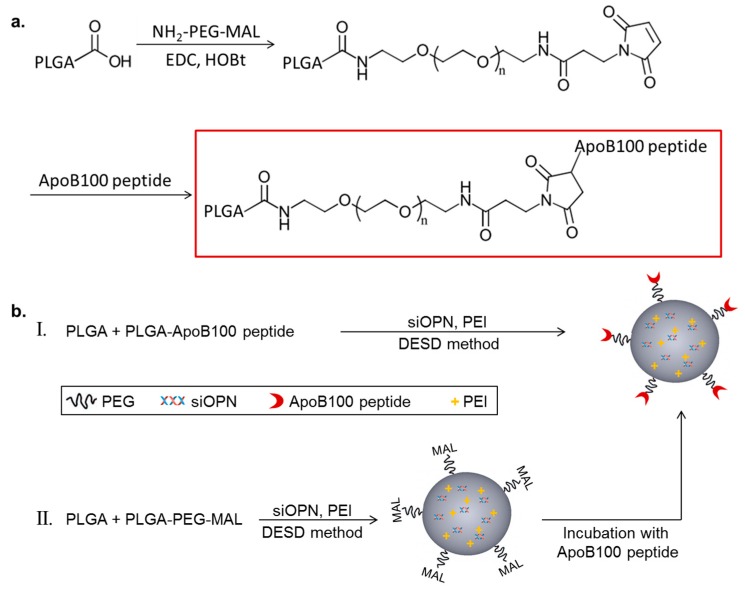
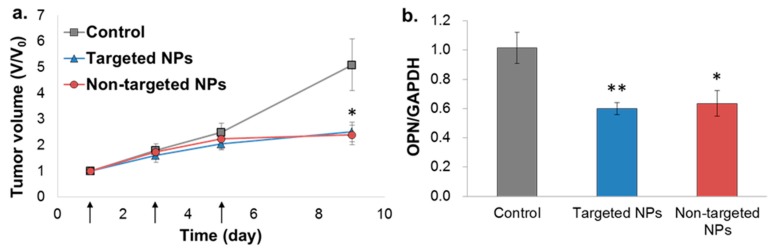
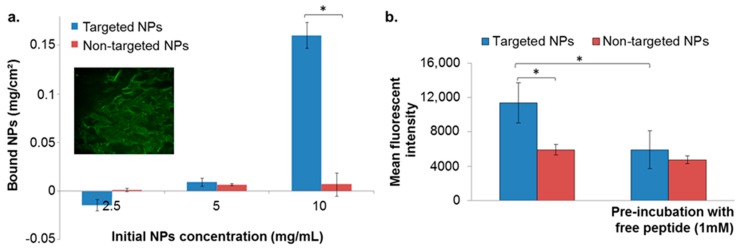
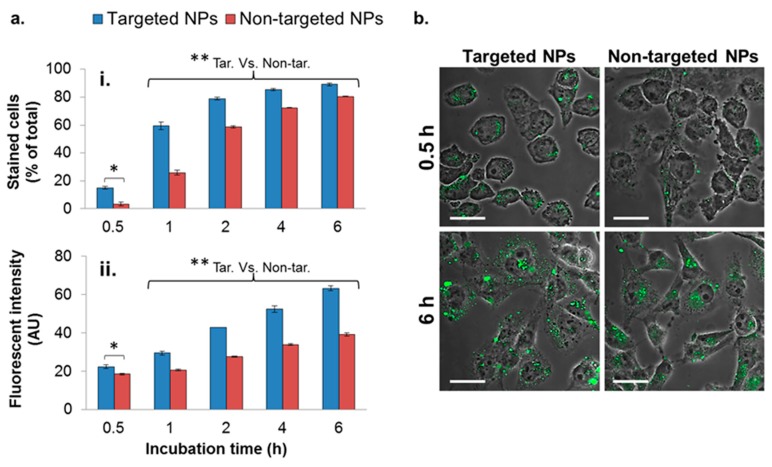
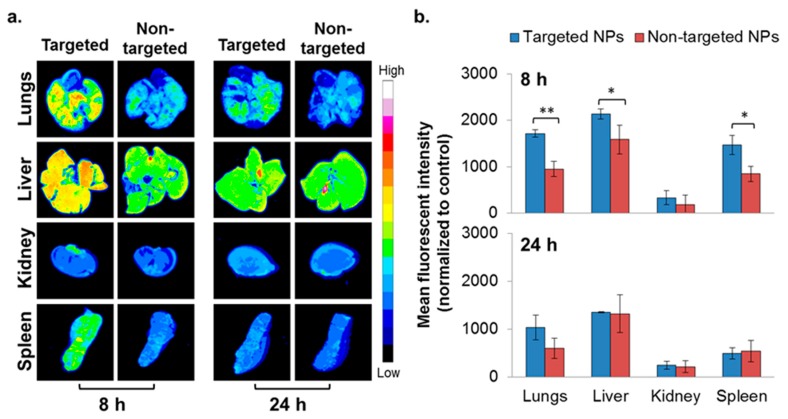
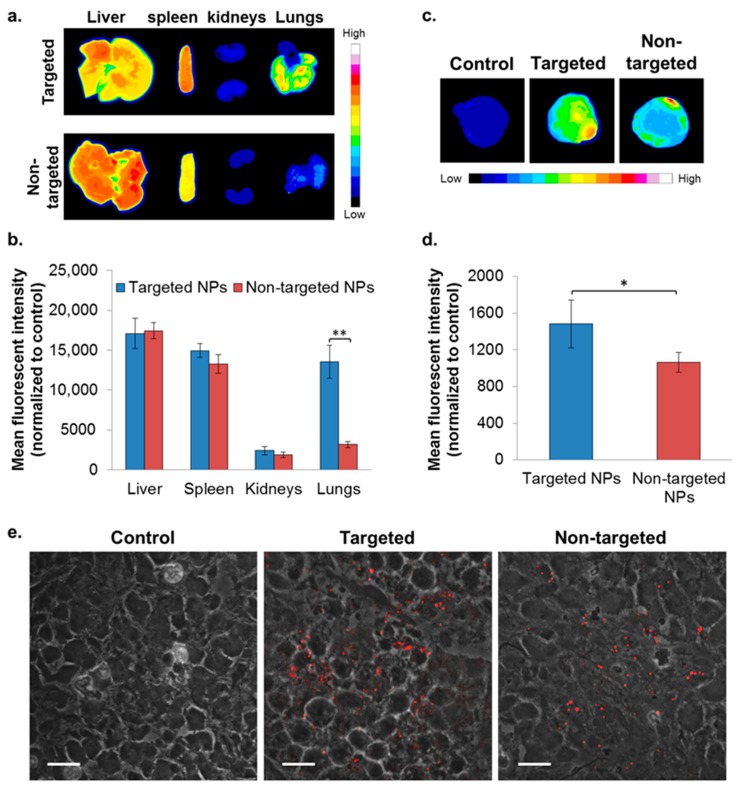
Non-viral, polymeric-based, siRNA nanoparticles (NPs) have been proposed as promising gene delivery systems. Encapsulating siRNA in targeted NPs could confer improved biological stability, extended half-life, enhanced permeability, effective tumor accumulation, and therapy. In this work, a peptide derived from apolipoprotein B100 (ApoB-P), the protein moiety of low-density lipoprotein, was used to target siRNA-loaded PEGylated NPs to the extracellular matrix/proteoglycans (ECM/PGs) of a mammary carcinoma tumor. siRNA against osteopontin (siOPN), a protein involved in breast cancer development and progression, was encapsulated into PEGylated poly(d,l-lactic-co-glycolic acid) (PLGA) NPs using the double emulsion solvent diffusion technique. The NPs obtained possessed desired physicochemical properties including 200 nm size, a neutral surface charge, and high siOPN loading of ~5 µg/mg. ApoB-P-targeted NPs exhibited both enhanced binding to isolated ECM and internalization by MDA-MB-231 human mammary carcinoma cells, in comparison to non-targeted NPs. Increased accumulation of the targeted NPs was achieved in the primary mammary tumor of mice xenografted with MDA-MB-231 mammary carcinoma cells as well as in the lungs, one of the main sites affected by metastases. siOPN NPs treatment resulted in significant inhibition of tumor growth (similar bioactivity of both formulations), accompanied with significant reduction of OPN mRNA levels (40% knockdown of mRNA levels). We demonstrated that targeted NPs possessed enhanced tumor accumulation with increased therapeutic potential in mice models of mammary carcinoma.
非病毒、基于聚合物的小干扰RNA纳米颗粒(NPs)已被认为是很有前景的基因递送系统。将小干扰RNA包裹在靶向纳米颗粒中可提高其生物稳定性、延长半衰期、增强通透性、实现有效的肿瘤蓄积并用于治疗。在本研究中,一种源自载脂蛋白B100(ApoB-P)(低密度脂蛋白的蛋白质部分)的肽被用于将负载小干扰RNA的聚乙二醇化纳米颗粒靶向至乳腺癌肿瘤的细胞外基质/蛋白聚糖(ECM/PGs)。使用双乳液溶剂扩散技术将针对骨桥蛋白(siOPN)(一种参与乳腺癌发生和发展的蛋白质)的小干扰RNA包裹到聚乙二醇化聚(d,l-乳酸-共-乙醇酸)(PLGA)纳米颗粒中。所获得的纳米颗粒具有所需的物理化学性质,包括约200 nm的尺寸、中性表面电荷和约5 μg/mg的高siOPN负载量。与非靶向纳米颗粒相比,ApoB-P靶向纳米颗粒对分离的ECM的结合增强,且被MDA-MB-231人乳腺癌细胞内化。在用MDA-MB-231乳腺癌细胞异种移植的小鼠原发性乳腺肿瘤以及肺(转移的主要受累部位之一)中,靶向纳米颗粒的蓄积增加。siOPN纳米颗粒治疗导致肿瘤生长受到显著抑制(两种制剂的生物活性相似),同时OPN mRNA水平显著降低(mRNA水平敲低约40%)。我们证明,在乳腺癌小鼠模型中,靶向纳米颗粒具有增强的肿瘤蓄积和增加的治疗潜力。