College of Pharmacy, Dalian Medical University, Western 9 Lvshunnan Road, Dalian 116044, China.
Key Laboratory for Basic and Applied Research on Pharmacodynamic Substances of Traditional Chinese Medicine of Liaoning Province, Dalian Medical University, Dalian 116044, China.
Molecules. 2019 Mar 30;24(7):1247. doi: 10.3390/molecules24071247.
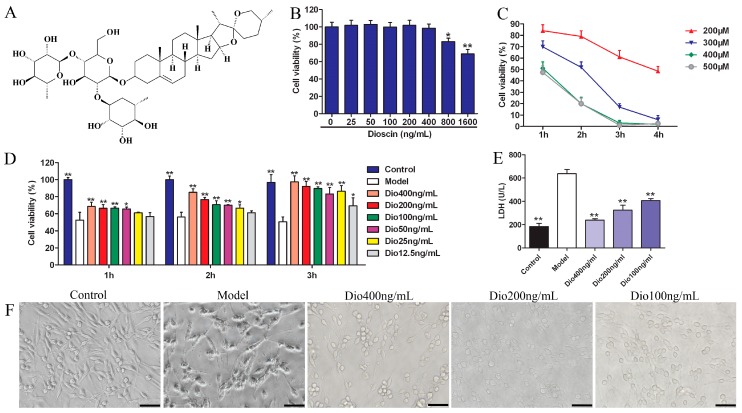
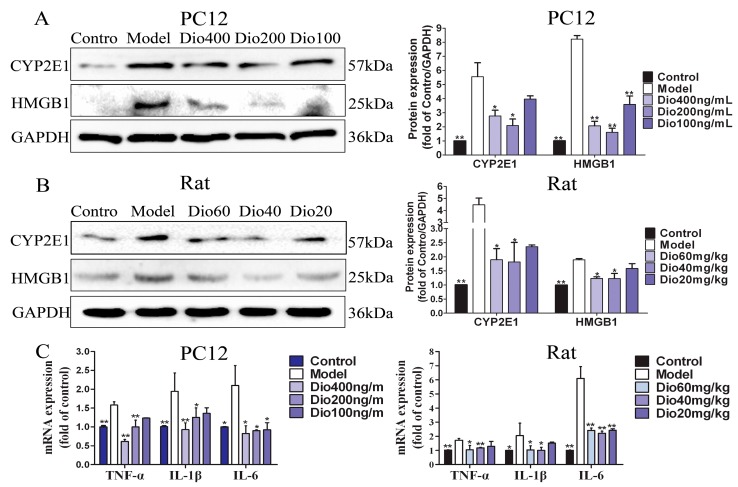
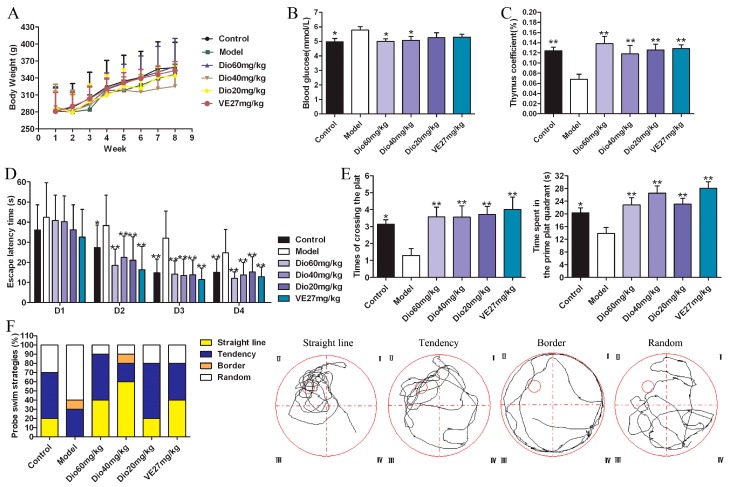
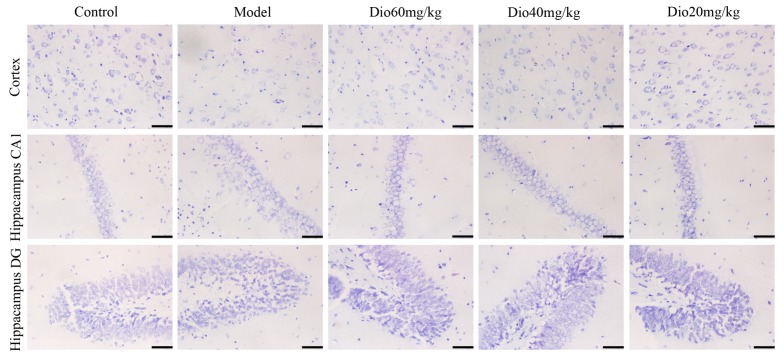
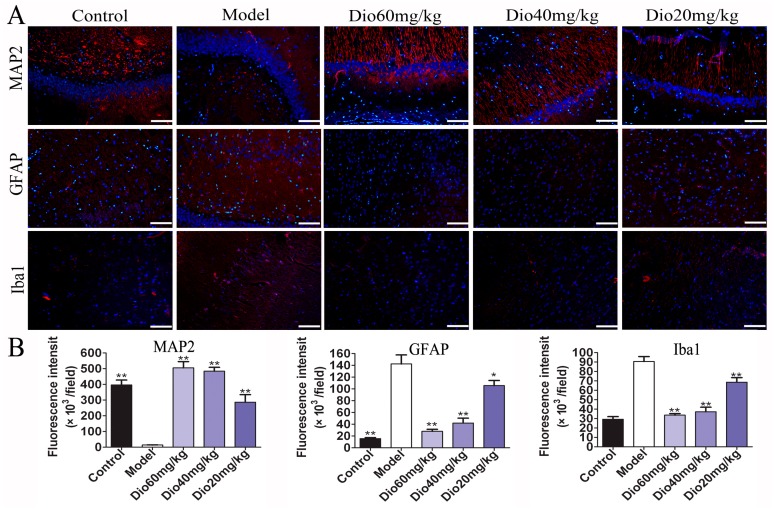
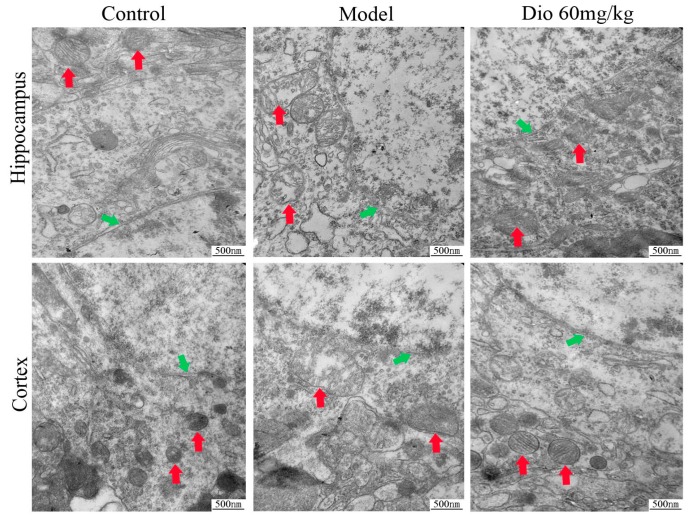
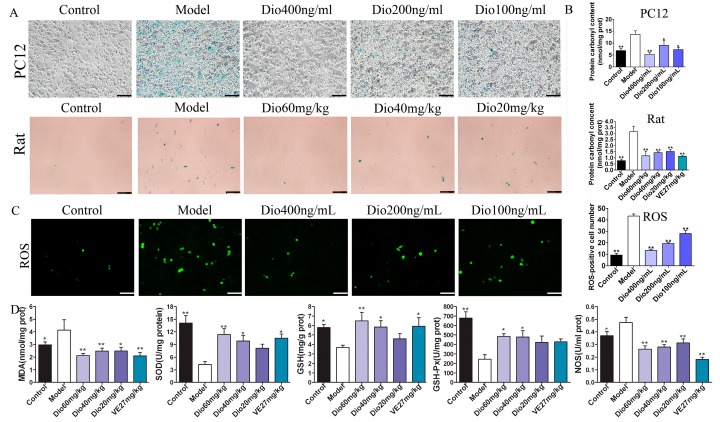
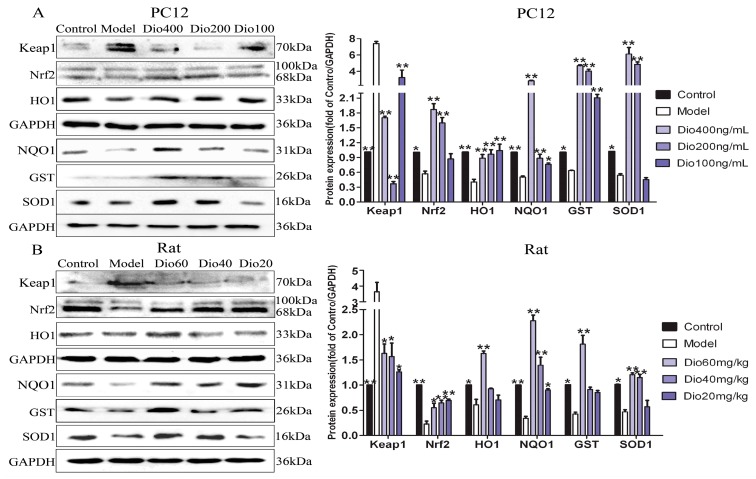
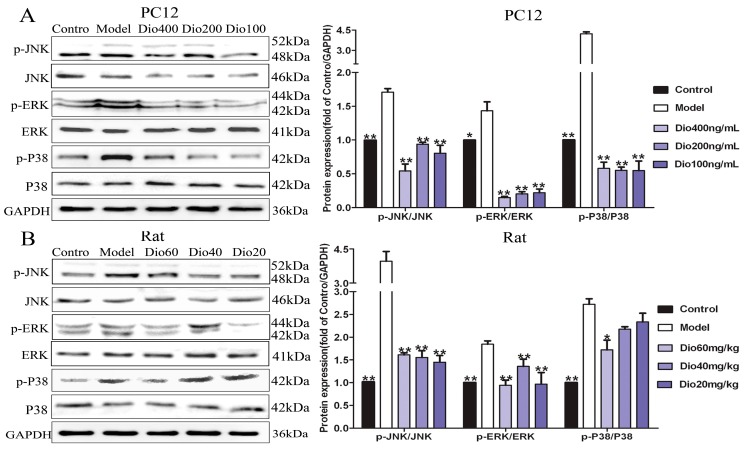
Our previous works have shown that dioscin, a natural product, has various pharmacological activities, however, its role in brain aging has not been reported. In the present study, in vitro H₂O₂-treated PC12 cells and in vivo d-galactose-induced aging rat models were used to evaluate the neuroprotective effect of dioscin on brain aging. The results showed that dioscin increased cell viability and protected PC12 cells against oxidative stress through decreasing reactive oxygen species (ROS) and lactate dehydrogenase (LDH) levels. In vivo, dioscin markedly improved the spatial learning ability and memory of aging rats, reduced the protein carbonyl content and aging cell numbers, restored the levels of superoxide dismutase (SOD), glutathione (GSH), glutathione peroxidase (GSH-Px), malondialdehyde (MDA) and nitric oxide synthase (NOS) in brain tissue, and reversed the histopathological structure changes of nerve cells. Mechanism studies showed that dioscin markedly adjusted the MAPK and Nrf2/ARE signalling pathways to decrease oxidative stress. Additionally, dioscin also significantly decreased inflammation by inhibiting the mRNA or protein levels of TNF-α, IL-1β, IL-6, CYP2E1 and HMGB1. Taken together, these results indicate that dioscin showed neuroprotective effect against brain aging via decreasing oxidative stress and inflammation, which should be developed as an efficient candidate in clinical to treat brain aging in the future.
我们之前的研究表明,薯蓣皂苷元是一种天然产物,具有多种药理活性,但它在脑衰老中的作用尚未报道。在本研究中,采用体外 H₂O₂处理的 PC12 细胞和体内 D-半乳糖诱导的衰老大鼠模型,评估薯蓣皂苷元对脑衰老的神经保护作用。结果表明,薯蓣皂苷元通过降低活性氧(ROS)和乳酸脱氢酶(LDH)水平,增加细胞活力,保护 PC12 细胞免受氧化应激。在体内,薯蓣皂苷元显著改善了衰老大鼠的空间学习能力和记忆力,减少了蛋白质羰基含量和衰老细胞数量,恢复了脑组织中超氧化物歧化酶(SOD)、谷胱甘肽(GSH)、谷胱甘肽过氧化物酶(GSH-Px)、丙二醛(MDA)和一氧化氮合酶(NOS)的水平,并逆转了神经细胞的组织病理学结构变化。机制研究表明,薯蓣皂苷元通过调节 MAPK 和 Nrf2/ARE 信号通路显著降低氧化应激。此外,薯蓣皂苷元还通过抑制 TNF-α、IL-1β、IL-6、CYP2E1 和 HMGB1 的 mRNA 或蛋白水平显著抑制炎症。综上所述,这些结果表明,薯蓣皂苷元通过降低氧化应激和炎症发挥对脑衰老的神经保护作用,有望成为未来治疗脑衰老的有效候选药物。