Chuamanochan Mati, Weller Karsten, Feist Eugen, Kallinich Tilmann, Maurer Marcus, Kümmerle-Deschner Jasmin, Krause Karoline
Department of Dermatology and Allergy, Charité - Universitätsmedizin Berlin, Germany.
Division of Dermatology, Department of Internal Medicine, Faculty of Medicine, Chiang Mai University, Chiang Mai, Thailand.
World Allergy Organ J. 2019 Mar 14;12(3):100019. doi: 10.1016/j.waojou.2019.100019. eCollection 2019.
Systemic autoinflammatory diseases (SAIDs) are rare debilitating disorders of which there is limited awareness and a significant delay in diagnosis. There is no uniform approach in the diagnosis and treatment of these disorders and the real life state of SAID patient care is poorly characterized. The aim of this study was to obtain data on the epidemiology, state of care and the perception of physicians who are involved in the care of SAID patients.
We performed a questionnaire-based survey and contacted 134 university departments of dermatology, pediatrics, rheumatology and other SAID departments of tertiary care in German-speaking countries.
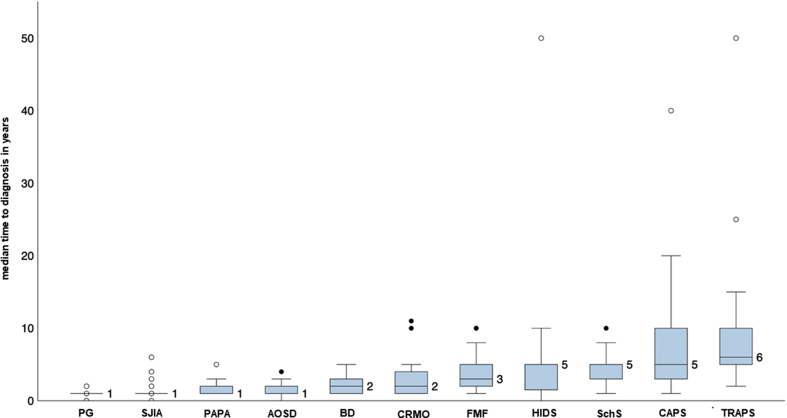
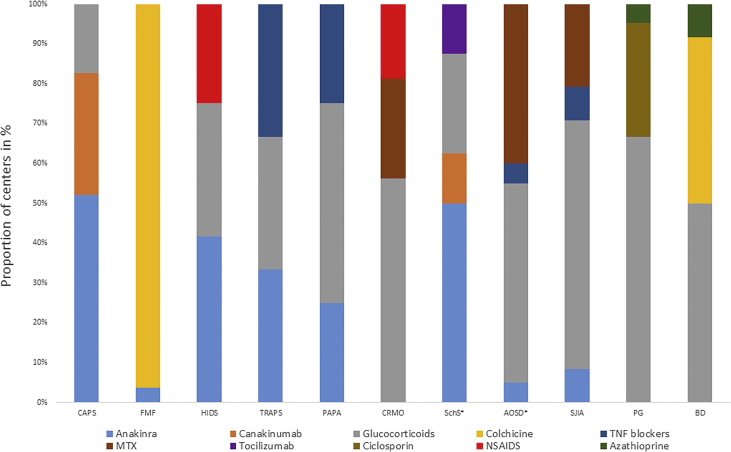
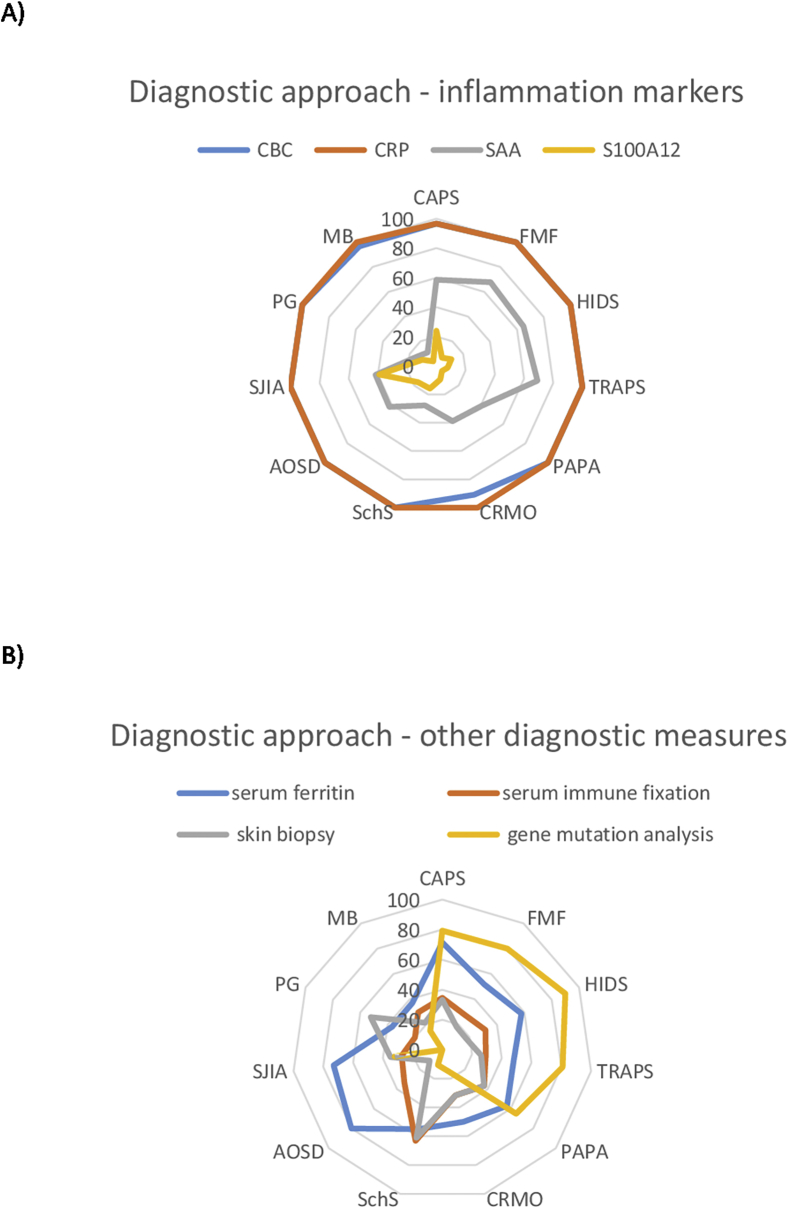
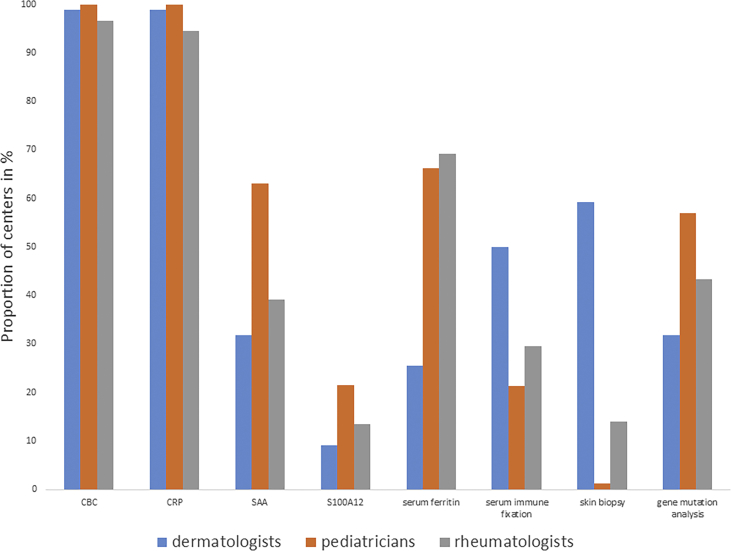
A total of 37 departments participated in the survey. The majority of departments managed both adult and pediatric patients with a variety of monogenic and polygenic/acquired SAIDs. For monogenic SAIDs such as cryopyrin-associated periodic syndromes (CAPS) and familial Mediterranean fever (FMF), the diagnostic and treatment strategies were similar among the departments. The diagnostic work-up included inflammatory markers and genetic testing, the first line treatment interleukin-1 (IL-1) blockers for CAPS and colchicine for FMF. For polygenic/acquired SAIDs, we observed a significant heterogeneity in diagnostic and therapeutic approaches. As a major unmet need, diagnostic delay was identified with a median time to diagnosis of 2 (range 1-5) years. The overall state of care for SAID patients was rated to be excellent or good by only 12% of departments, and to be poor or non-sufficient by 40% of departments.
This study demonstrates a high need to improve the state of care and to harmonize diagnostic and treatment strategies for SAID patients.
系统性自身炎症性疾病(SAIDs)是罕见的使人衰弱的疾病,人们对其认识有限,诊断存在显著延迟。这些疾病的诊断和治疗没有统一的方法,SAID患者护理的实际情况也缺乏充分描述。本研究的目的是获取有关SAID患者护理的流行病学、护理状况以及参与护理的医生的认知的数据。
我们进行了一项基于问卷的调查,并联系了德语国家的134个大学皮肤科、儿科、风湿病科及其他SAID专科三级护理部门。
共有37个部门参与了调查。大多数部门负责治疗患有各种单基因和多基因/后天性SAIDs的成人和儿童患者。对于单基因SAIDs,如冷吡啉相关周期性综合征(CAPS)和家族性地中海热(FMF),各部门的诊断和治疗策略相似。诊断检查包括炎症标志物和基因检测,CAPS的一线治疗是白细胞介素-1(IL-1)阻滞剂,FMF的一线治疗是秋水仙碱。对于多基因/后天性SAIDs,我们观察到诊断和治疗方法存在显著异质性。作为一个主要的未满足需求,诊断延迟被确定,诊断的中位时间为2年(范围1-5年)。只有12%的部门将SAID患者的整体护理状况评为优秀或良好,40%的部门认为护理状况差或不足。
本研究表明,迫切需要改善SAID患者的护理状况,并统一其诊断和治疗策略。