Centre for Molecular Microbiology and Infection, Department of Life Sciences, Imperial College, London, United Kingdom.
Functional Proteomics Group, Chester Beatty Laboratories, Institute of Cancer Research, London, United Kingdom.
mBio. 2019 Apr 2;10(2):e00062-19. doi: 10.1128/mBio.00062-19.
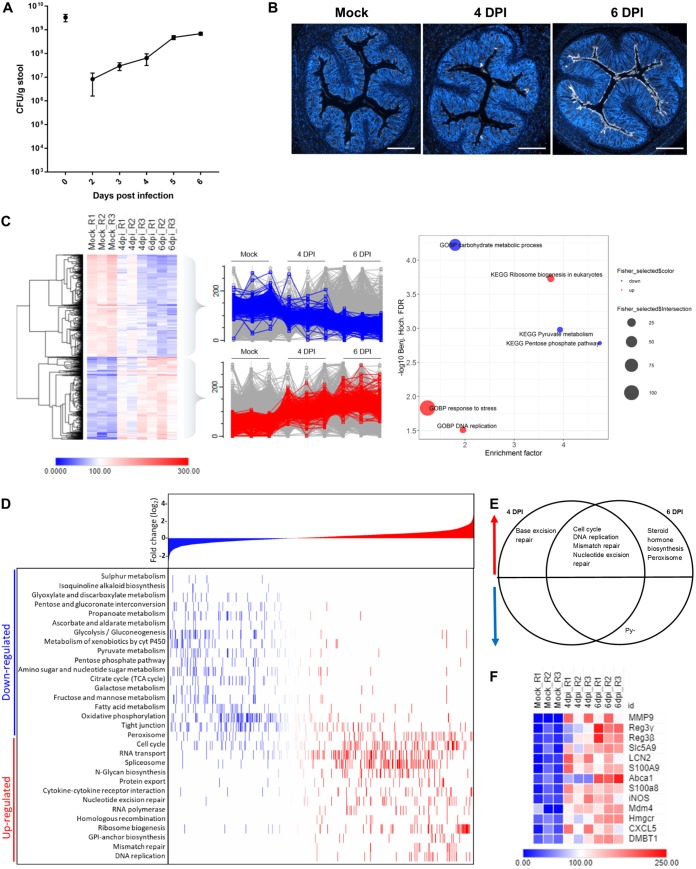
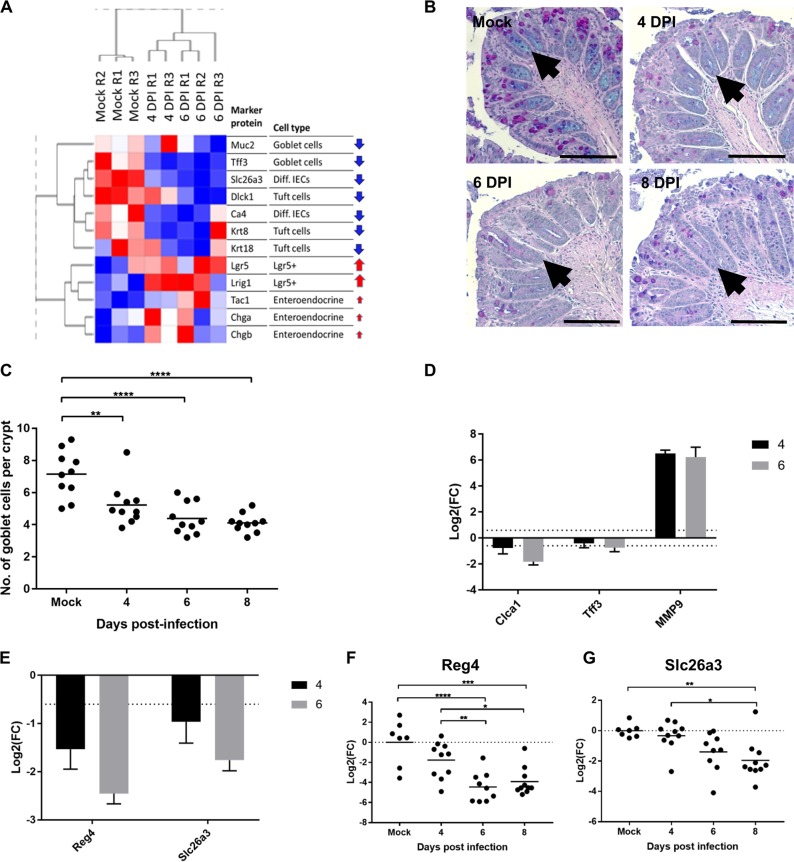
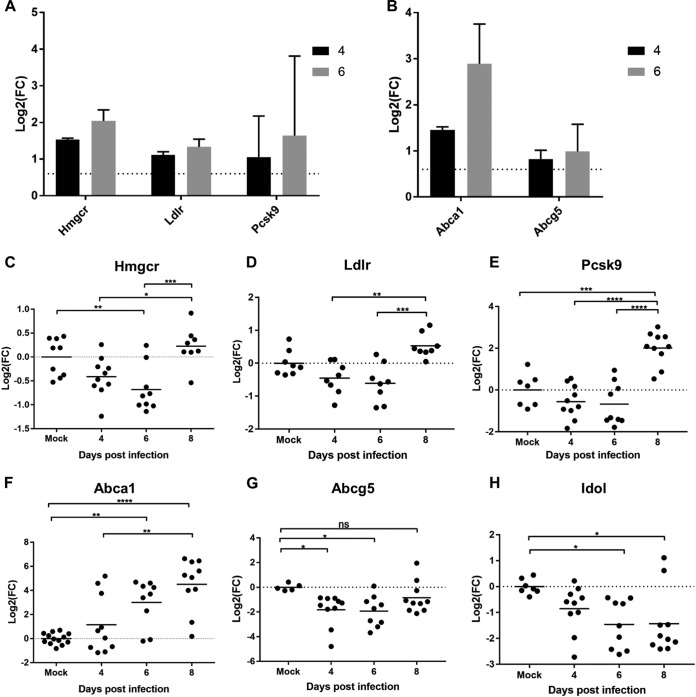
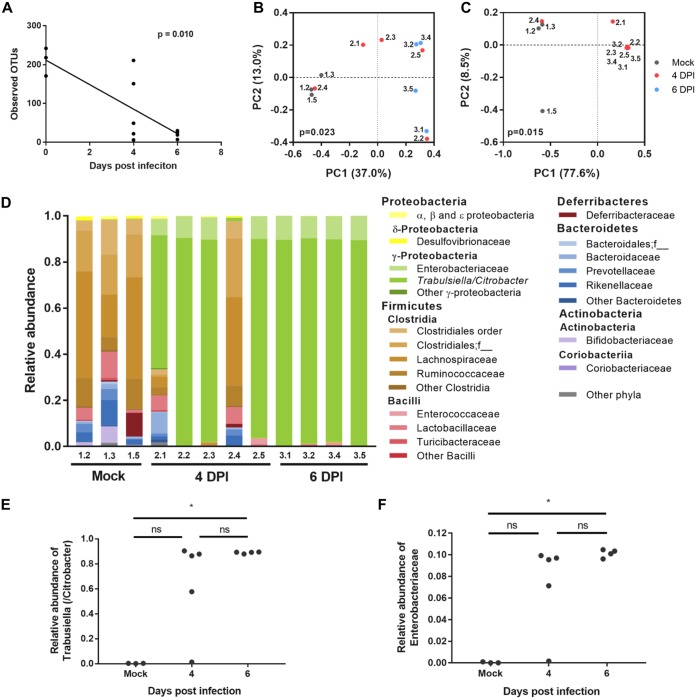
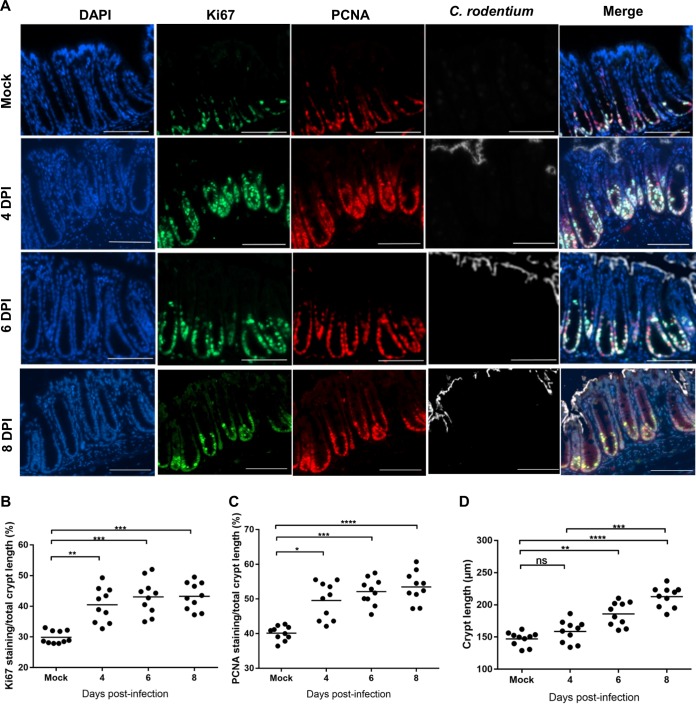
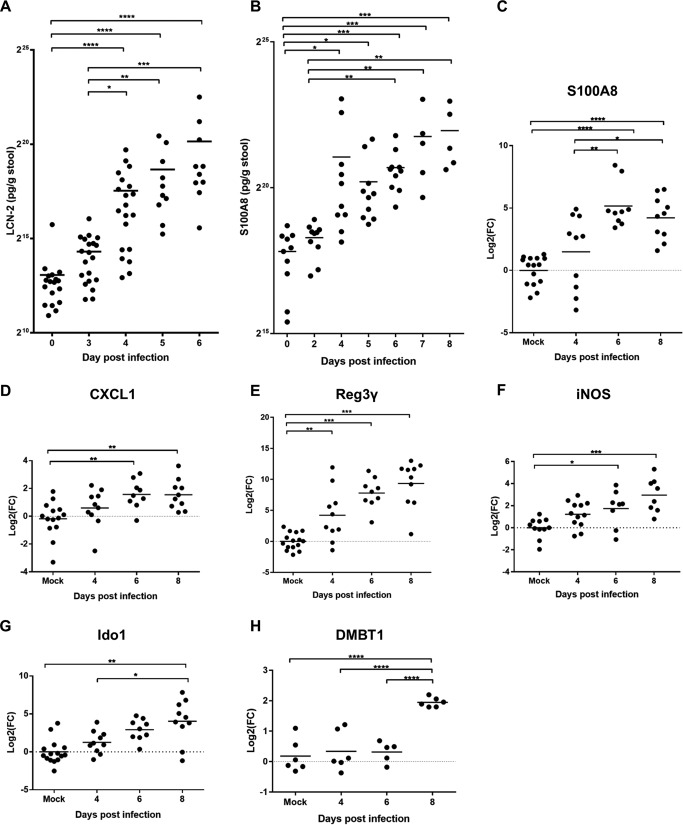
We used the mouse attaching and effacing (A/E) pathogen , which models the human A/E pathogens enteropathogenic and enterohemorrhagic (EPEC and EHEC), to temporally resolve intestinal epithelial cell (IEC) responses and changes to the microbiome during infection. We found the host to be unresponsive during the first 3 days postinfection (DPI), when resides in the caecum. In contrast, at 4 DPI, the day of colonic colonization, despite only sporadic adhesion to the apex of the crypt, we observed robust upregulation of cell cycle and DNA repair processes, which were associated with expansion of the crypt Ki67-positive replicative zone, and downregulation of multiple metabolic processes (including the tricarboxylic acid [TCA] cycle and oxidative phosphorylation). Moreover, we observed dramatic depletion of goblet and deep crypt secretory cells and an atypical regulation of cholesterol homeostasis in IECs during early infection, with simultaneous upregulation of cholesterol biogenesis (e.g., 3-hydroxy-3-methylglutaryl-coenzyme A reductase [Hmgcr]), import (e.g., low-density lipoprotein receptor [Ldlr]), and efflux (e.g., AbcA1). We also detected interleukin 22 (IL-22) responses in IECs (e.g., Reg3γ) on the day of colonic colonization, which occurred concomitantly with a bloom of commensal Enterobacteriaceae on the mucosal surface. These results unravel a new paradigm in host-pathogen-microbiome interactions, showing for the first time that sensing a small number of pathogenic bacteria triggers swift intrinsic changes to the IEC composition and function, in tandem with significant changes to the mucosa-associated microbiome, which parallel innate immune responses. The mouse pathogen is a widely used model for colonic infection and has been a major tool in fundamental discoveries in the fields of bacterial pathogenesis and mucosal immunology. Despite extensive studies probing acute infection, our understanding of the early stages preceding the infection climax remains relatively undetailed. To this end, we apply a multiomics approach to resolve temporal changes to the host and microbiome during early infection. Unexpectedly, we found immediate and dramatic responses occurring on the day of colonic infection, both in the host intestinal epithelial cells and in the microbiome. Our study suggests changes in cholesterol and carbon metabolism in epithelial cells are instantly induced upon pathogen detection in the colon, corresponding with a shift to primarily facultative anaerobes constituting the microbiome. This study contributes to our knowledge of disease pathogenesis and mechanisms of barrier regulation, which is required for development of novel therapeutics targeting the intestinal epithelium.
我们使用黏附-消失(A/E)病原体,即模拟人类 A/E 病原体肠致病性大肠杆菌(EPEC)和肠出血性大肠杆菌(EHEC)的模型,来暂时解析感染过程中肠道上皮细胞(IEC)的反应和微生物组的变化。我们发现,在感染后第 3 天(3 DPI),即病原体位于盲肠时,宿主没有反应。相比之下,在 4 DPI,即结肠定植的那天,尽管病原体仅偶尔黏附在隐窝顶端,我们观察到细胞周期和 DNA 修复过程的强烈上调,这与隐窝 Ki67 阳性复制区的扩张以及多个代谢过程(包括三羧酸循环和氧化磷酸化)的下调有关。此外,我们观察到在早期感染期间,IEC 中杯状细胞和深层隐窝 secretory cells 的大量耗竭以及胆固醇稳态的异常调节,同时胆固醇生物合成(如 3-羟基-3-甲基戊二酰基辅酶 A 还原酶 [Hmgcr])、摄取(如低密度脂蛋白受体 [Ldlr])和流出(如 AbcA1)同时上调。我们还在结肠定植当天检测到 IEC 中的白细胞介素 22(IL-22)反应(如 Reg3γ),这与黏膜表面共生肠杆菌科的大量繁殖同时发生。这些结果揭示了宿主-病原体-微生物组相互作用的新范例,首次表明,感知少量病原体可迅速引发 IEC 组成和功能的内在变化,同时黏膜相关微生物组发生显著变化,与先天免疫反应平行。小鼠病原体是一种广泛用于结肠感染的模型,它是细菌发病机制和黏膜免疫学领域基础发现的主要工具。尽管有大量研究探究急性感染,但我们对感染高峰期之前的早期阶段的理解仍相对不完善。为此,我们应用多组学方法来解析早期感染过程中宿主和微生物组的时间变化。出乎意料的是,我们发现,在结肠感染当天,宿主肠道上皮细胞和微生物组都立即出现了显著的反应。我们的研究表明,在结肠中检测到病原体后,上皮细胞中的胆固醇和碳代谢即刻被诱导,这与主要兼性厌氧菌构成微生物组的转变相对应。这项研究有助于我们了解疾病发病机制和屏障调节机制,这是开发针对肠道上皮的新型治疗方法所必需的。