Bowser Sarah, Chapartegui-González Itziar, Torres Alfredo G
Department of Microbiology and Immunology, Galveston, TX, USA.
Division of Infectious Diseases, ANA Futura Laboratory, Department of Medicine Huddinge, Karolinska Institutet, Stockholm, 141 52, Sweden.
Gut Pathog. 2024 Dec 19;16(1):75. doi: 10.1186/s13099-024-00670-4.
Enterohemorrhagic Escherichia coli (EHEC), a group of enteric pathogenic bacteria that is a major cause of human diarrheal disease, must interact with the diverse intestinal microbiome during colonization and subsequently overcome the environmental challenges to survive and cause disease. While this relationship, and how the microbiome modulates infection of EHEC, has been studied, it is less understood how the microbiome is impacted during treatment for an EHEC infection. One area that is notably lacking in knowledge is how vaccination can impact the intestinal microbiome composition, and therefore, influence vaccine efficacy. We previously developed vaccine formulations consisting of gold nanoparticles (AuNPs) conjugated to various EHEC antigens and tested them in mice models using both EHEC and its murine counterpart Citrobacter rodentium. The goal of this study was to evaluate the relationship between these EHEC vaccines and their effects on the gut microbiome.
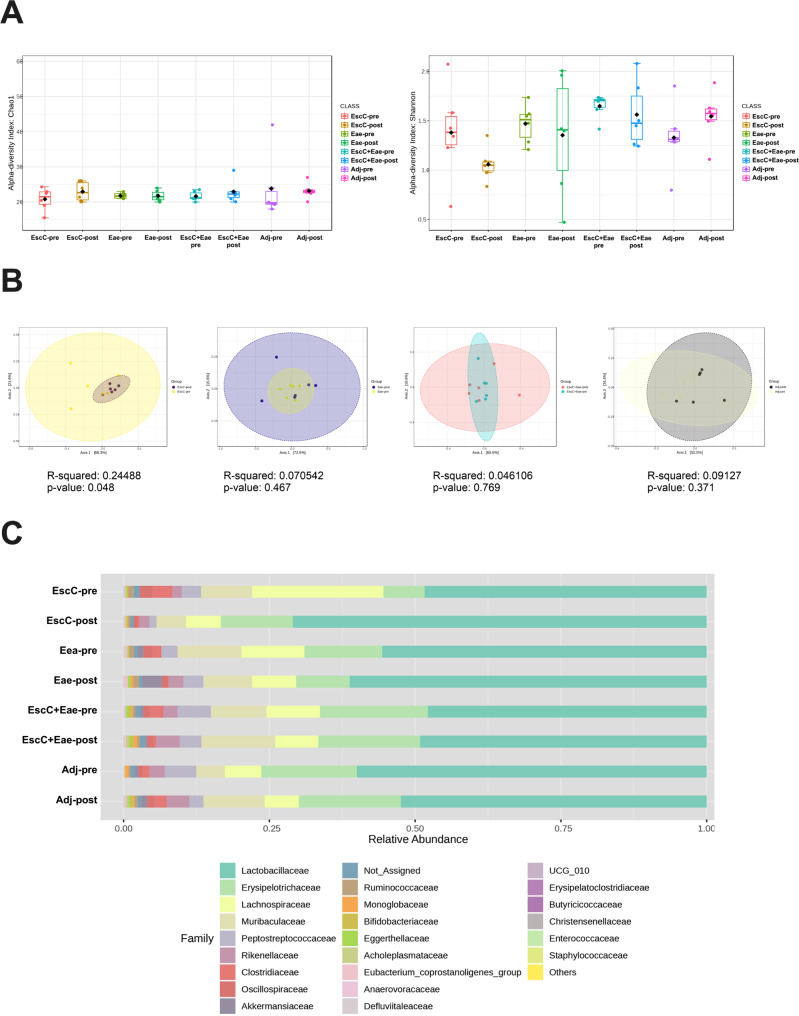
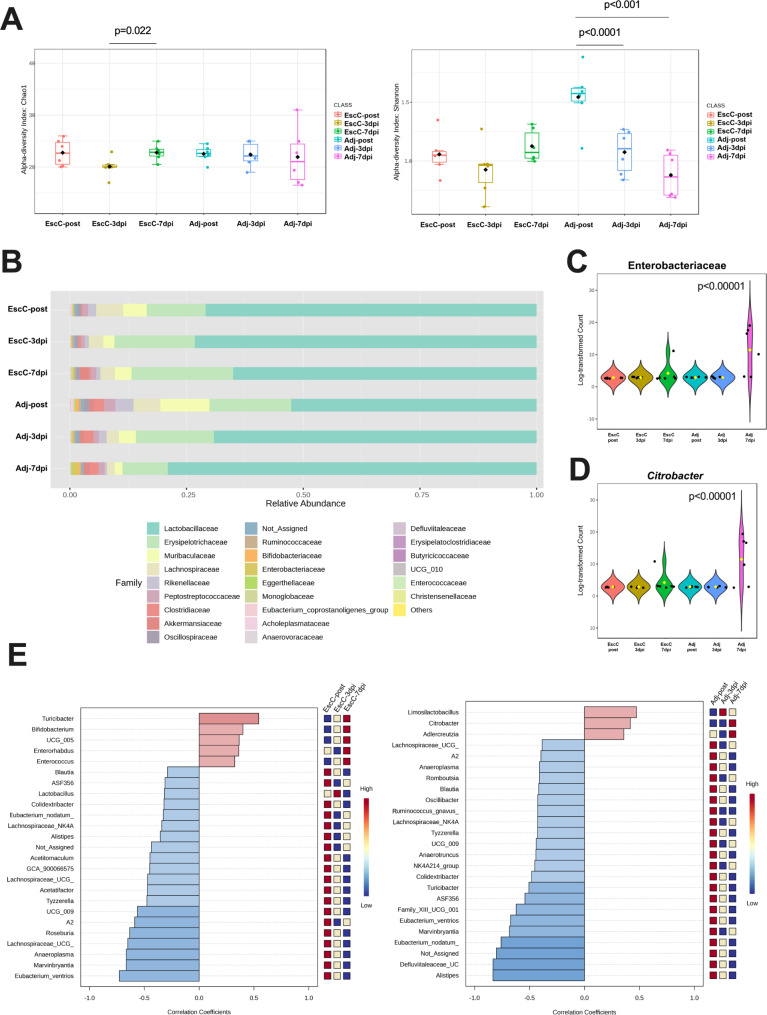
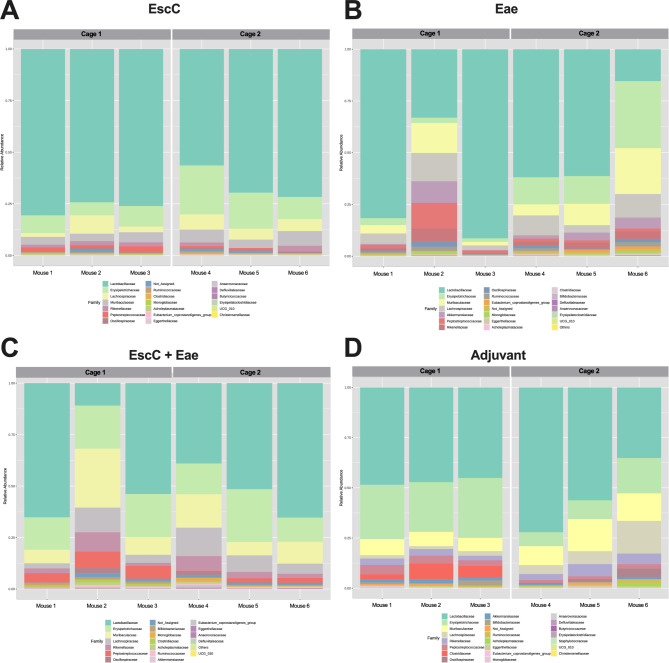
We found that immunization with the vaccines or adjuvant-only control did not lead to major alterations in the composition of the fecal microbiome; however, there were measurable variations in individual mice within the same vaccine group housed in separate cages. Also, immunization with one vaccine (AuNP-EscC) prevented both a decrease in the diversity of the fecal microbiome and an increase in detectable C. rodentium following infection compared to control animals.
Overall, our small study argues in favor of evaluating the intestinal microbiome during vaccine development not just for EHEC, but for other enteric pathogens.
肠出血性大肠杆菌(EHEC)是一类肠道病原菌,是人类腹泻疾病的主要病因,在定植过程中必须与多样的肠道微生物群相互作用,并随后克服环境挑战以生存并引发疾病。虽然这种关系以及微生物群如何调节EHEC感染已得到研究,但对于EHEC感染治疗期间微生物群如何受到影响却了解较少。一个明显缺乏知识的领域是疫苗接种如何影响肠道微生物群组成,进而影响疫苗效力。我们之前开发了由与各种EHEC抗原偶联的金纳米颗粒(AuNP)组成的疫苗制剂,并在使用EHEC及其鼠类对应菌啮齿柠檬酸杆菌的小鼠模型中对其进行了测试。本研究的目的是评估这些EHEC疫苗与其对肠道微生物群的影响之间的关系。
我们发现用疫苗或仅用佐剂的对照进行免疫不会导致粪便微生物群组成的重大改变;然而,在单独笼子中饲养的同一疫苗组内的个别小鼠存在可测量的差异。此外,与对照动物相比,用一种疫苗(AuNP-EscC)进行免疫可防止感染后粪便微生物群多样性的降低以及可检测到的啮齿柠檬酸杆菌数量的增加。
总体而言,我们的小型研究支持在疫苗研发过程中评估肠道微生物群,不仅针对EHEC,也针对其他肠道病原体。