Department of Oncology and Hemato-Oncology, University of Milan, Milan, Italy.
Applied Research Division for Cognitive and Psychological Science, European Institute of Oncology IRCCS, Milan, Italy.
PLoS One. 2019 Apr 4;14(4):e0214682. doi: 10.1371/journal.pone.0214682. eCollection 2019.
To identify trends of patients' urinary and sexual dysfunctions from a clinical and psychological perspective and understand whether sociodemographic and medical predictors could differentiate among patients following different one-year longitudinal trajectories.
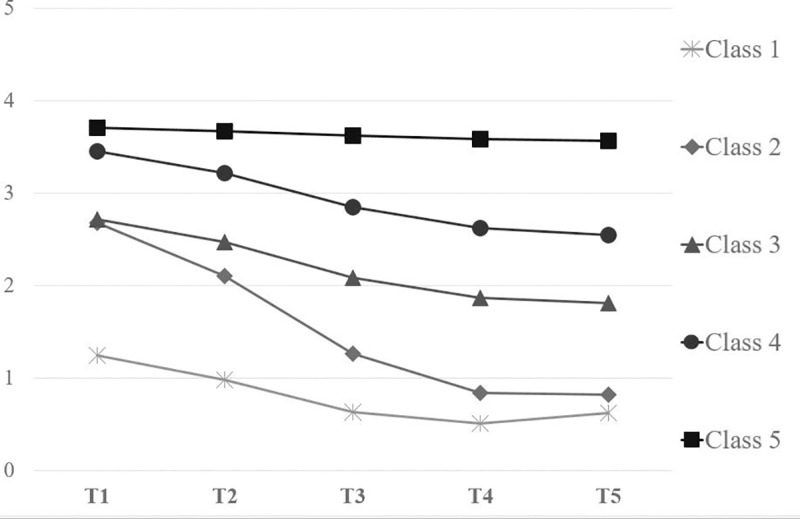
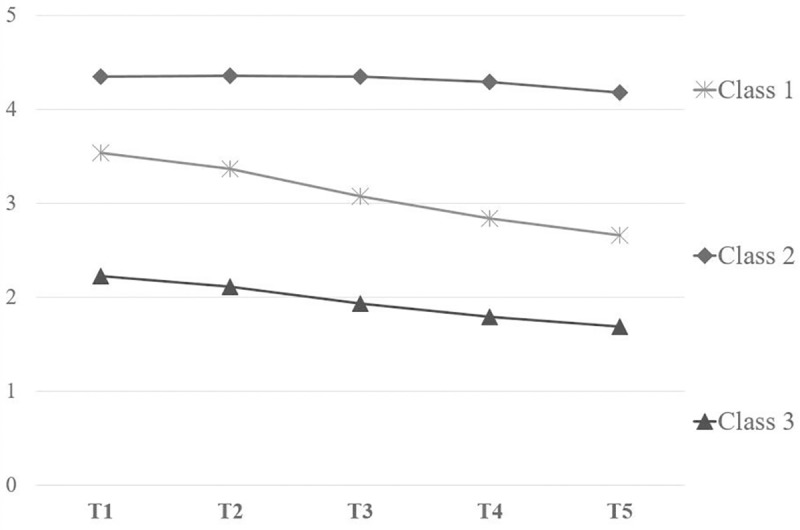
An Italian sample of 478 prostate cancer patients undergone Robot-Assisted Radical Prostatectomy completed the EPIC-26 survey between July 2015 and July 2016 at the pre-hospitalization (T0), 45 days (T1) and 3 (T2), 6 (T3), 9 (T4), and 12 months (T5) after surgery. Sociodemographic and clinical characteristics (age, BMI, diabetes, nerve-sparing procedure) were also collected. Latent Class Growth Analysis was conducted separately for sexual dysfunction and urinary incontinence EPIC-26 subscales. The association between membership in the two longitudinal trajectories of urinary and sexual dysfunctions was assessed by considering Chi-square test and its related contingency table.
People who have a high level of urinary incontinence at T1 are likely to have a worse recovery. Age, BMI and pre-surgical continence may affect the level of incontinence at T1 and the recovery trajectories. Patients with low and moderate sexual problems at T1 can face a moderate linear recovery, while people with high level of impotence immediately after surgery may take a longer period to solve sexual dysfunctions. Age and the pre-surgical sexual condition may impact the recovery. Finally, a great proportion of patients reported both steady problems in sexual function and constant high levels of urinary incontinence over time.
This study highlights different categories of patients at risk who may be important to know in order to develop personalized medical pathways and predictive models in a value-based healthcare.
从临床和心理角度确定患者尿失禁和性功能障碍的趋势,并了解社会人口统计学和医学预测因子是否可以区分不同一年纵向轨迹的患者。
意大利 478 名前列腺癌患者在机器人辅助根治性前列腺切除术前接受了 EPIC-26 调查,该调查于 2015 年 7 月至 2016 年 7 月在住院前(T0)、45 天(T1)、3 个月(T2)、6 个月(T3)、9 个月(T4)和 12 个月(T5)进行。还收集了社会人口统计学和临床特征(年龄、BMI、糖尿病、神经保留手术)。分别对 EPIC-26 子量表的性功能障碍和尿失禁进行潜在类别增长分析。通过考虑卡方检验及其相关列联表,评估尿失禁和性功能障碍的两个纵向轨迹之间的成员关系。
T1 时尿失禁程度较高的人可能恢复得更差。年龄、BMI 和术前控尿可能影响 T1 时的失禁程度和恢复轨迹。T1 时轻度和中度性功能障碍的患者可能会出现中度线性恢复,而术后立即出现严重勃起功能障碍的患者可能需要更长的时间来解决性功能障碍。年龄和术前性功能状况可能会影响恢复。最后,很大一部分患者报告说,性功能一直存在问题,同时尿失禁程度一直很高。
这项研究强调了不同风险类别的患者,这可能对于制定个性化的医疗路径和基于价值的医疗保健中的预测模型很重要。