Department of Hematology and Oncology, The Second Hospital of Jilin University, Changchun, Jilin, China (mainland).
Department of Radiology, The Second Hospital of Jilin University, Changchun, Jilin, China (mainland).
Med Sci Monit. 2019 Apr 5;25:2488-2504. doi: 10.12659/MSM.915382.
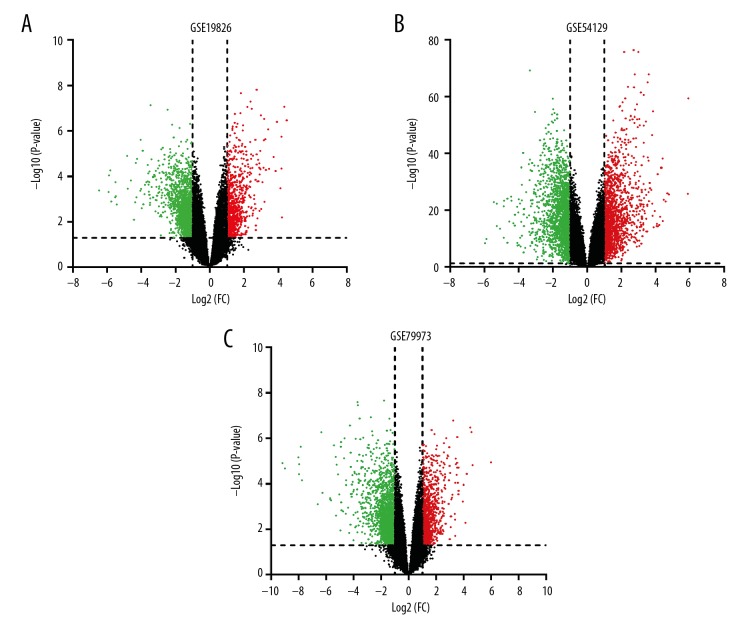
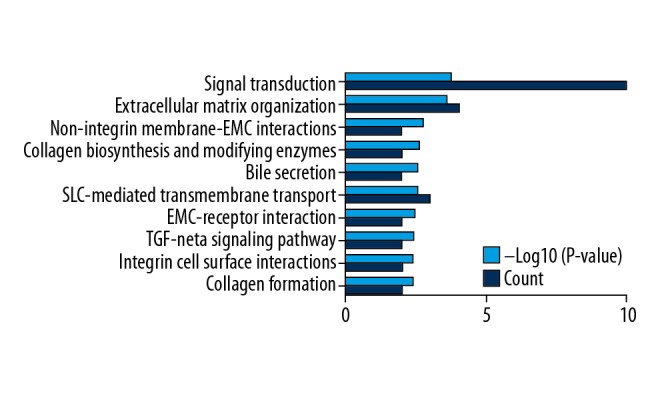
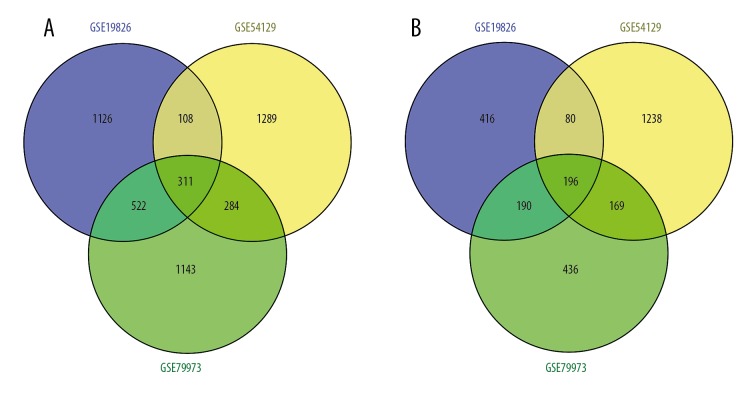
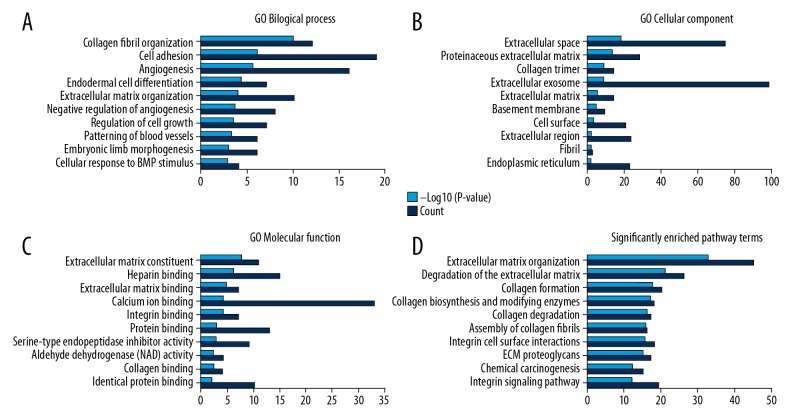
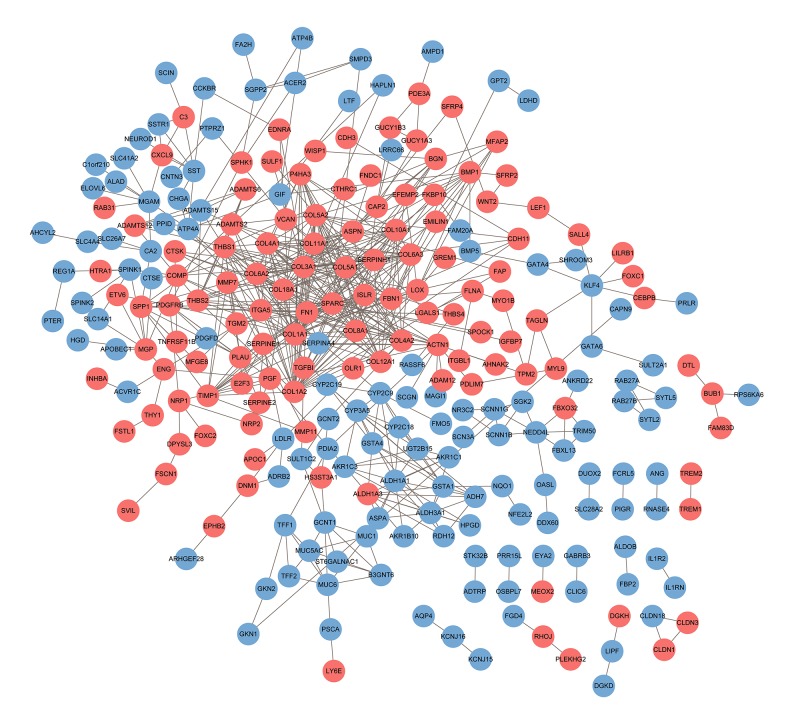
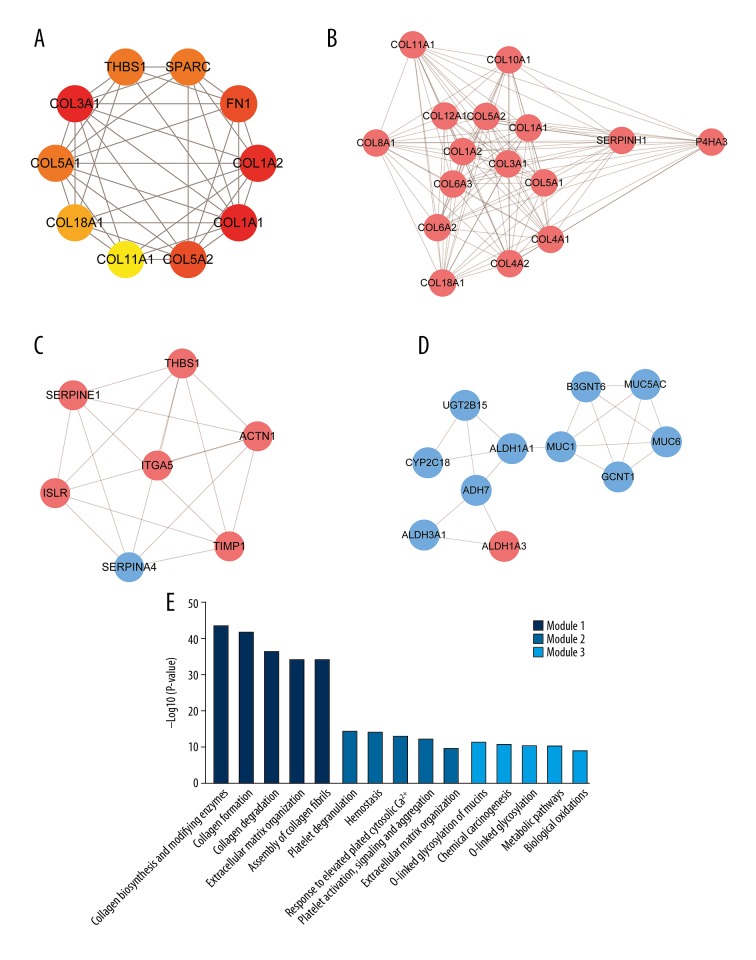
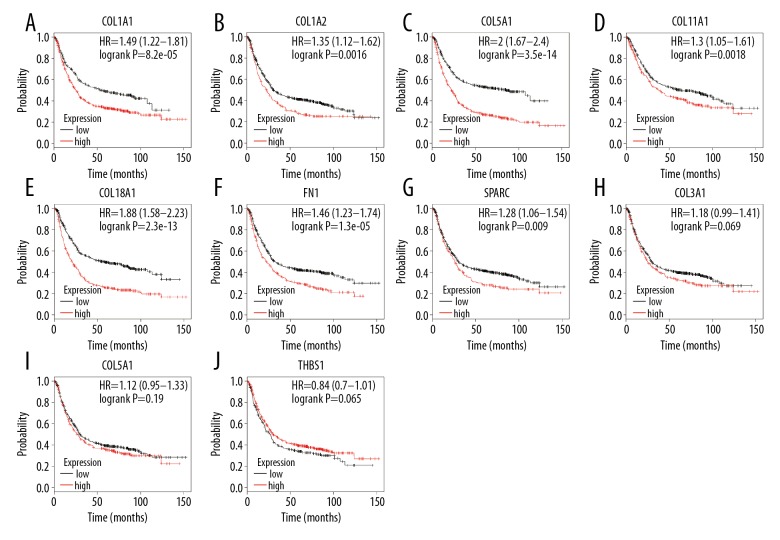
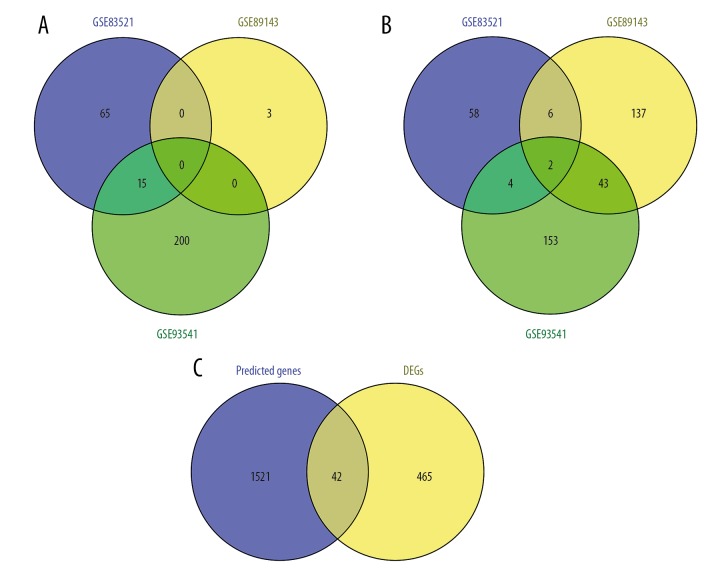
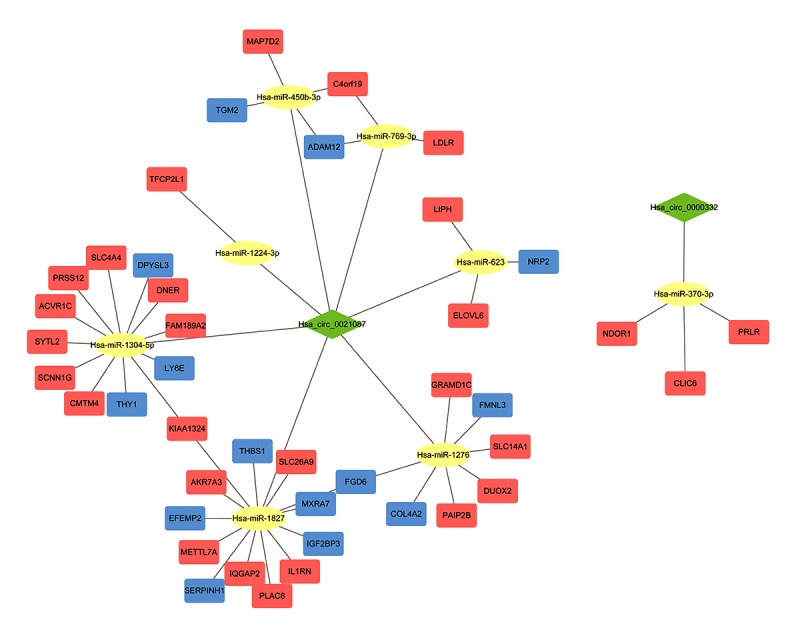
BACKGROUND Globally, gastric cancer (GC) is the third most common source of cancer-associated mortality. The aim of this study was to identify key genes and circular RNAs (circRNAs) in GC diagnosis, prognosis, and therapy and to further explore the potential molecular mechanisms of GC. MATERIAL AND METHODS Differentially expressed genes (DEGs) and circRNAs (DE circRNAs) between GC tissues and adjacent non-tumor tissues were identified from 3 mRNA and 3 circRNA expression profiles. Functional analyses were performed, and protein-protein interaction (PPI) networks were constructed. The significant modules and key genes in the PPI networks were identified. Kaplan-Meier analysis was performed to evaluate the prognostic value of these key genes. Potential miRNA-binding sites of the DE circRNAs and target genes of these miRNAs were predicted and used to construct DE circRNA-miRNA-mRNA networks. RESULTS A total of 196 upregulated and 311 downregulated genes were identified in GC. The results of functional analysis showed that these DEGs were significantly enriched in a variety of functions and pathways, including extracellular matrix-related pathways. Ten hub genes (COL1A1, COL3A1, COL1A2, COL5A2, FN1, THBS1, COL5A1, SPARC, COL18A1, and COL11A1) were identified via PPI network analysis. Kaplan-Meier analysis revealed that 7 of these were associated with a poor overall survival in GC patients. Furthermore, we identified 2 DE circRNAs, hsa_circ_0000332 and hsa_circ_0021087. To reveal the potential molecular mechanisms of circRNAs in GC, DE circRNA-microRNA-mRNA networks were constructed. CONCLUSIONS Key candidate genes and circRNAs were identified, and novel PPI and circRNA-microRNA-mRNA networks in GC were constructed. These may provide useful information for the exploration of potential biomarkers and targets for the diagnosis, prognosis, and therapy of GC.
在全球范围内,胃癌(GC)是癌症相关死亡率的第三大主要原因。本研究旨在鉴定 GC 诊断、预后和治疗中的关键基因和环状 RNA(circRNA),并进一步探讨 GC 的潜在分子机制。
从 3 个 mRNA 和 3 个 circRNA 表达谱中鉴定 GC 组织与相邻非肿瘤组织之间的差异表达基因(DEGs)和环状 RNA(DE circRNAs)。进行功能分析,并构建蛋白质-蛋白质相互作用(PPI)网络。鉴定 PPI 网络中的显著模块和关键基因。进行 Kaplan-Meier 分析以评估这些关键基因的预后价值。预测 DE circRNAs 的潜在 miRNA 结合位点和这些 miRNA 的靶基因,并用于构建 DE circRNA-miRNA-mRNA 网络。
在 GC 中鉴定出 196 个上调和 311 个下调基因。功能分析结果表明,这些 DEGs 显著富集于多种功能和途径中,包括细胞外基质相关途径。通过 PPI 网络分析鉴定出 10 个关键基因(COL1A1、COL3A1、COL1A2、COL5A2、FN1、THBS1、COL5A1、SPARC、COL18A1 和 COL11A1)。Kaplan-Meier 分析显示,其中 7 个基因与 GC 患者总体生存不良相关。此外,我们还鉴定出 2 个 DE circRNAs,hsa_circ_0000332 和 hsa_circ_0021087。为了揭示 circRNAs 在 GC 中的潜在分子机制,构建了 DE circRNA-miRNA-mRNA 网络。
鉴定出关键候选基因和 circRNAs,并构建了 GC 中的新型 PPI 和 circRNA-miRNA-mRNA 网络。这些可能为探索 GC 的潜在诊断、预后和治疗标志物和靶标提供有用信息。