Gregor Mendel Institute of Molecular Plant Biology, Austrian Academy of Sciences, Vienna BioCenter (VBC), Dr. Bohr-Gasse, Vienna, Austria.
School of Biological Sciences, Plant Molecular Science and Centre for Systems and Synthetic Biology, Royal Holloway University of London, Egham, Surrey, UK.
J Exp Bot. 2019 Jun 28;70(12):3313-3328. doi: 10.1093/jxb/erz146.
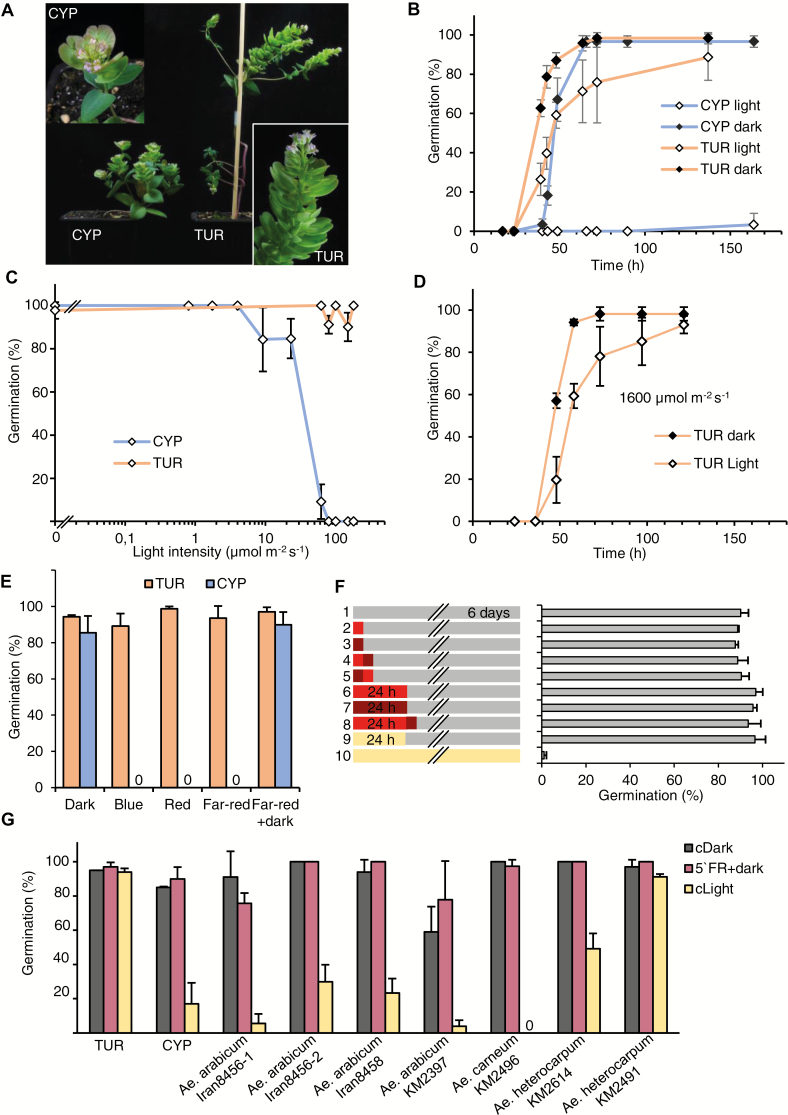
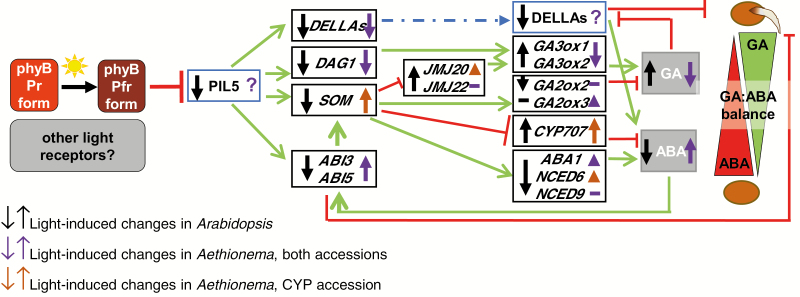
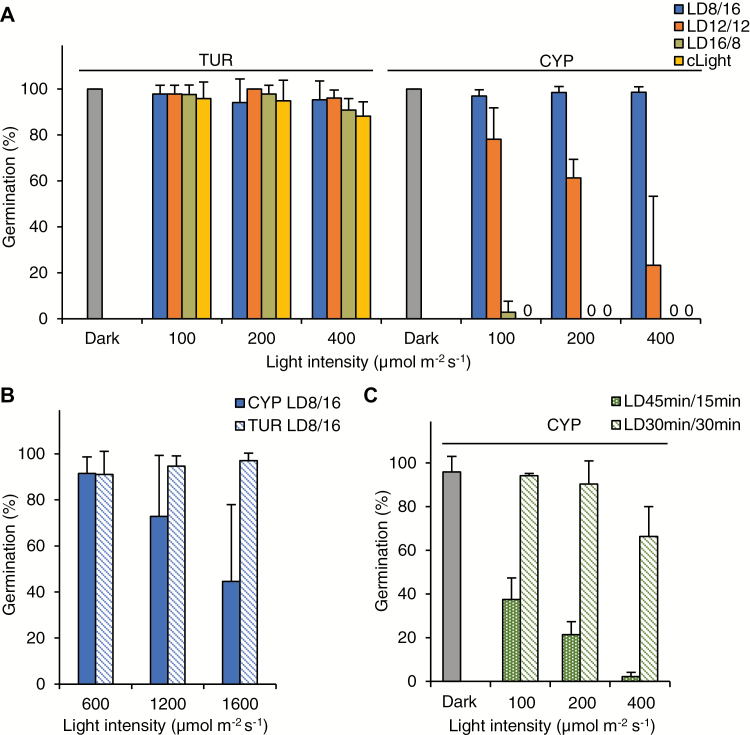
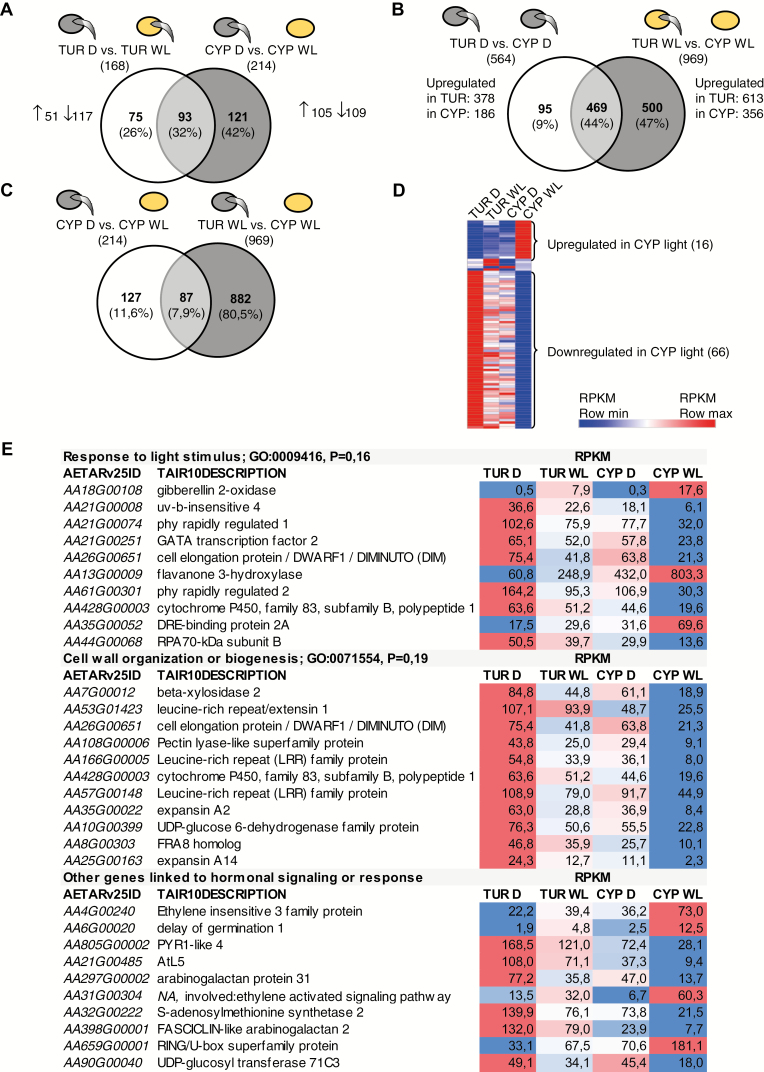
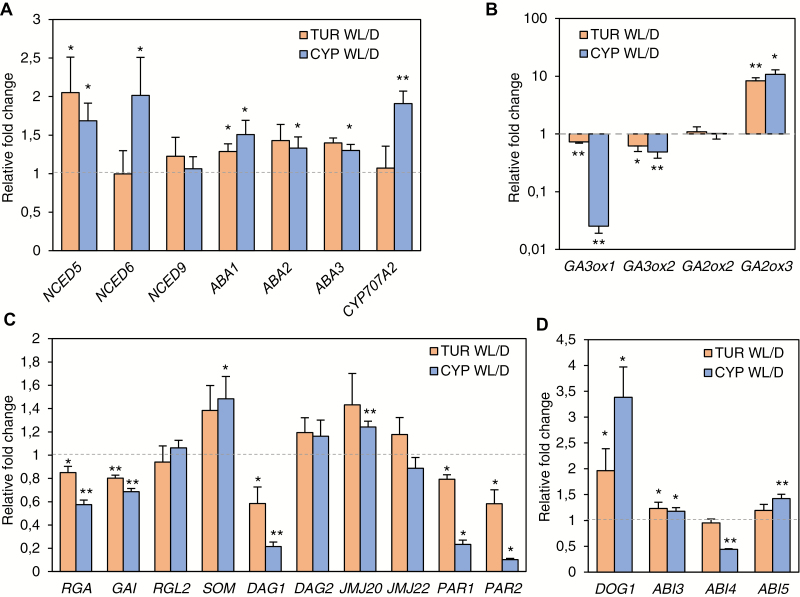
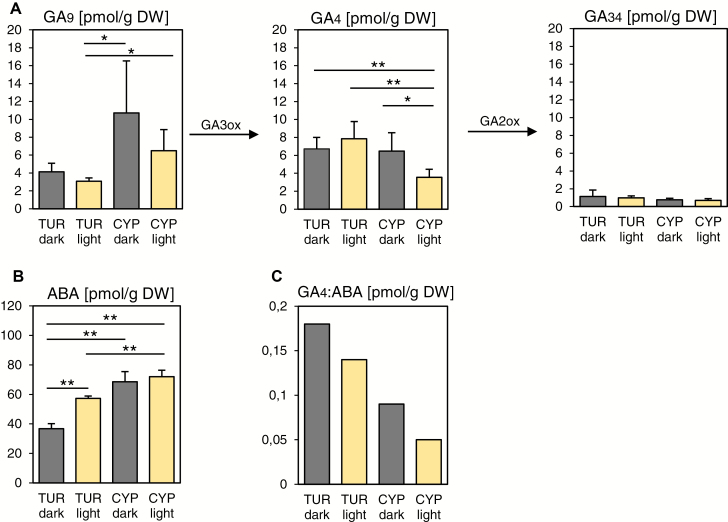
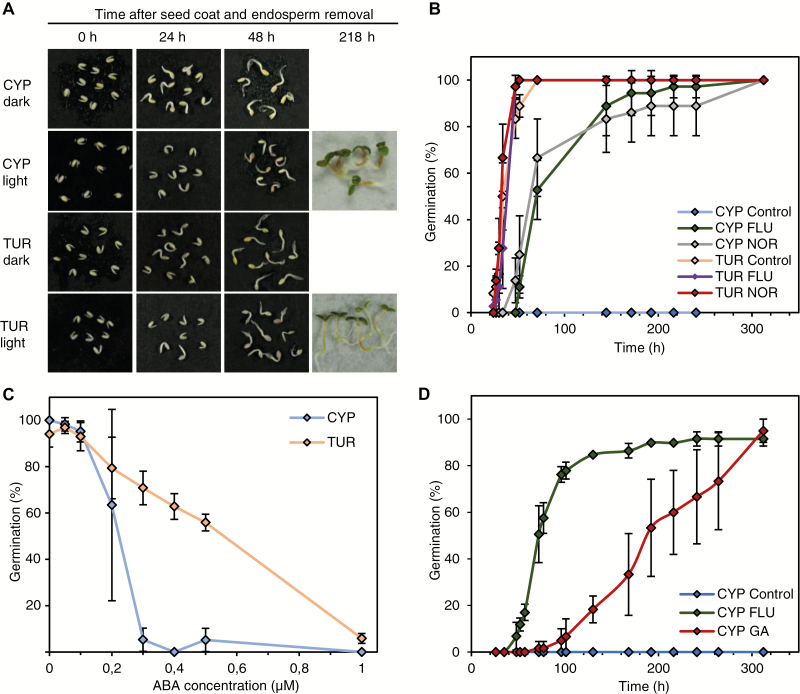
The timing of seed germination is crucial for seed plants and is coordinated by internal and external cues, reflecting adaptations to different habitats. Physiological and molecular studies with lettuce and Arabidopsis thaliana have documented a strict requirement for light to initiate germination and identified many receptors, signaling cascades, and hormonal control elements. In contrast, seed germination in several other plants is inhibited by light, but the molecular basis of this alternative response is unknown. We describe Aethionema arabicum (Brassicaceae) as a suitable model plant to investigate the mechanism of germination inhibition by light, as this species has accessions with natural variation between light-sensitive and light-neutral responses. Inhibition of germination occurs in red, blue, or far-red light and increases with light intensity and duration. Gibberellins and abscisic acid are involved in the control of germination, as in Arabidopsis, but transcriptome comparisons of light- and dark-exposed A. arabicum seeds revealed that, upon light exposure, the expression of genes for key regulators undergo converse changes, resulting in antipodal hormone regulation. These findings illustrate that similar modular components of a pathway in light-inhibited, light-neutral, and light-requiring germination among the Brassicaceae have been assembled in the course of evolution to produce divergent pathways, likely as adaptive traits.
种子萌发的时间对于种子植物至关重要,它受到内部和外部线索的协调,反映了对不同生境的适应。生菜和拟南芥的生理学和分子研究记录了光对启动萌发的严格要求,并确定了许多受体、信号级联和激素控制元件。相比之下,其他几种植物的种子萌发被光抑制,但这种替代反应的分子基础尚不清楚。我们将拟南芥(十字花科)描述为研究光抑制萌发机制的合适模式植物,因为该物种具有对光敏感和光中性反应的天然变异品系。在红光、蓝光或远红光下,萌发受到抑制,并且随着光强和持续时间的增加而增加。赤霉素和脱落酸参与了对萌发的控制,就像在拟南芥中一样,但光和暗暴露的拟南芥种子的转录组比较表明,在光暴露下,关键调节剂的基因表达发生相反的变化,导致相反的激素调节。这些发现表明,在十字花科中,光抑制、光中性和光需要萌发的途径中的类似模块化成分在进化过程中被组装在一起,产生了不同的途径,可能是适应特征。