Institute of Microbiology and Infection, School of Biosciences, University of Birmingham, Birmingham, B15 2TT, UK.
Sci Rep. 2019 Apr 5;9(1):5714. doi: 10.1038/s41598-019-42175-0.
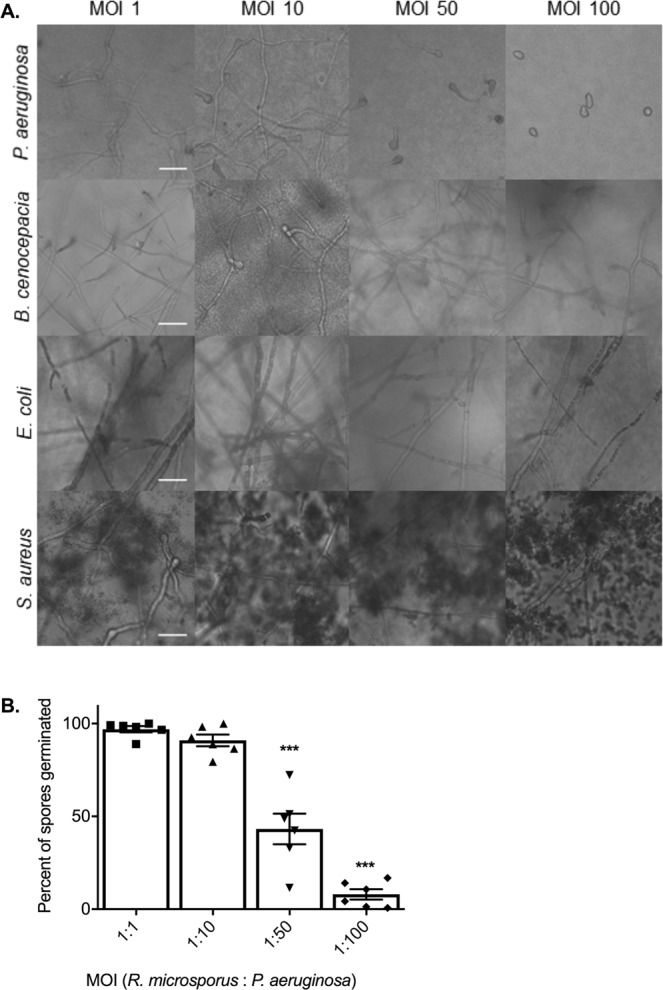
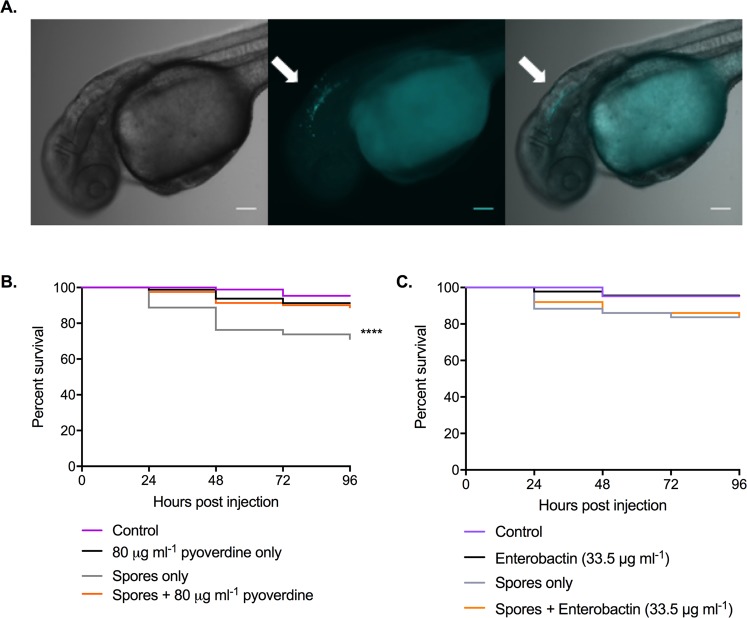
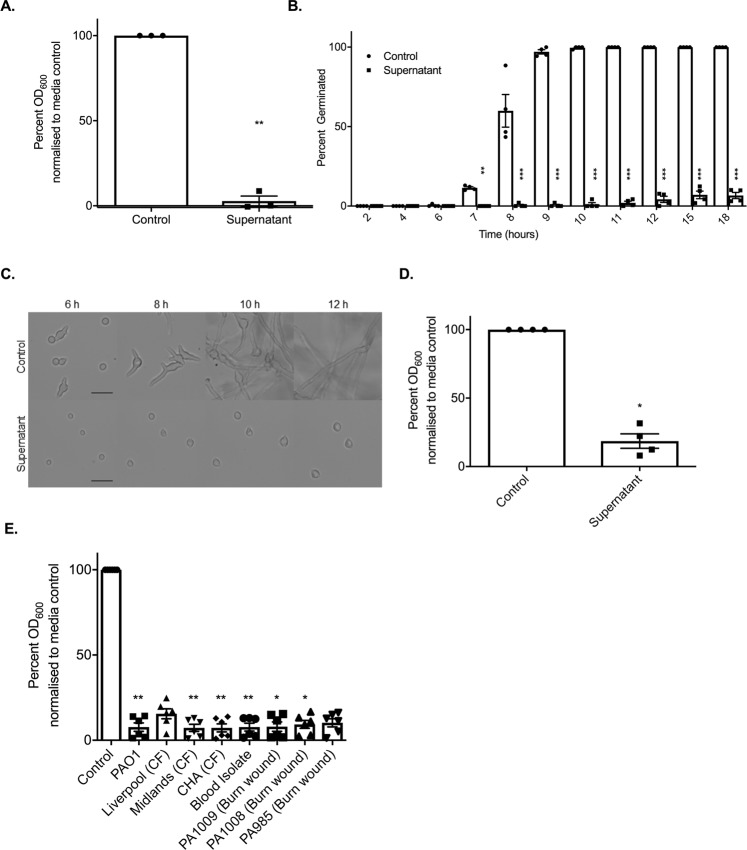
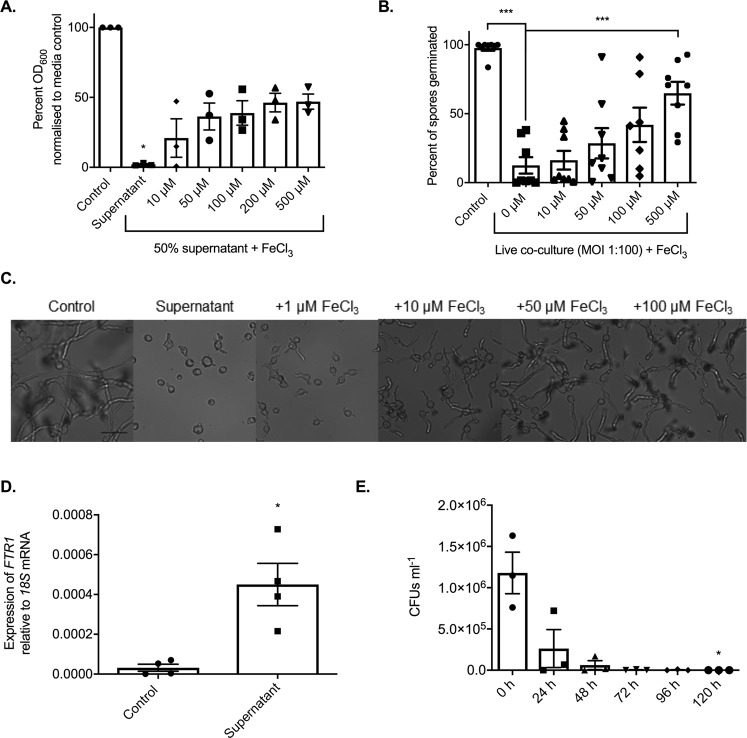
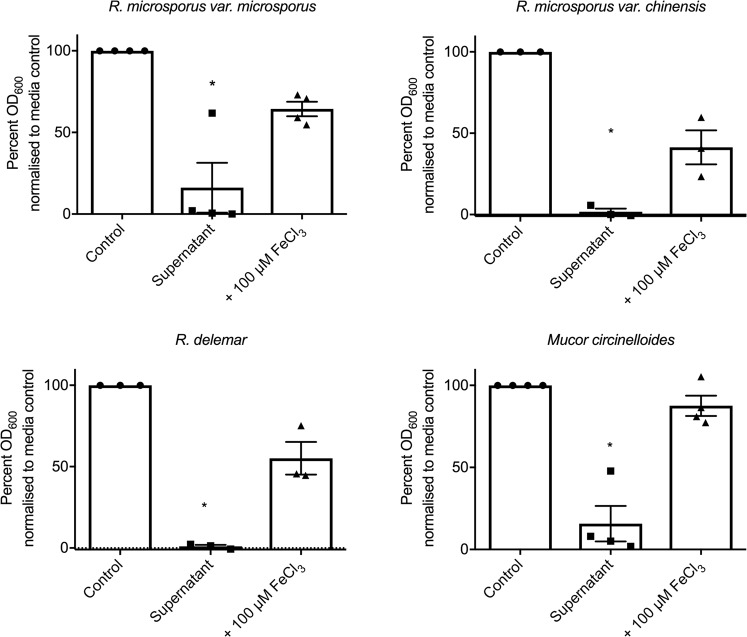
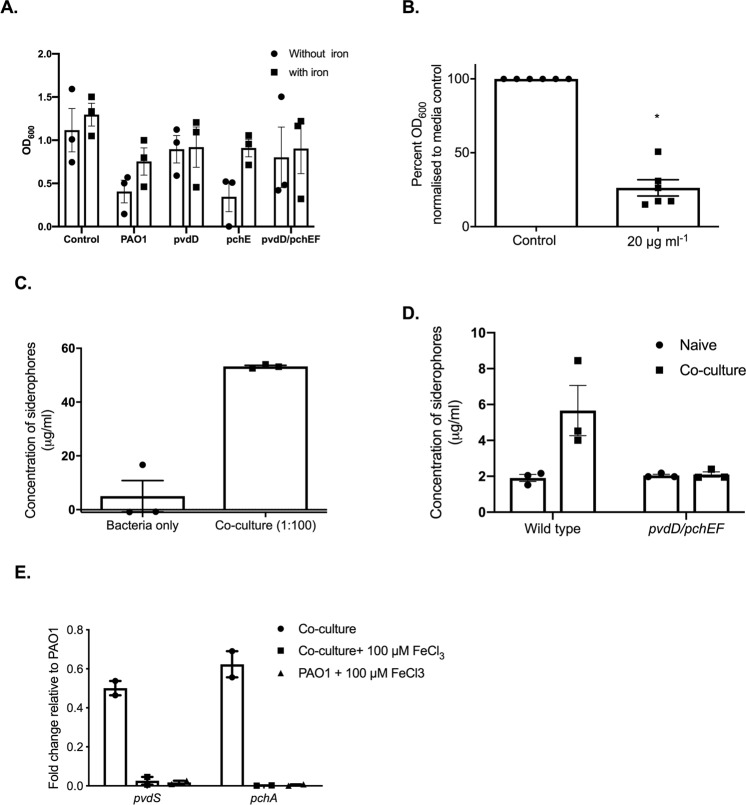
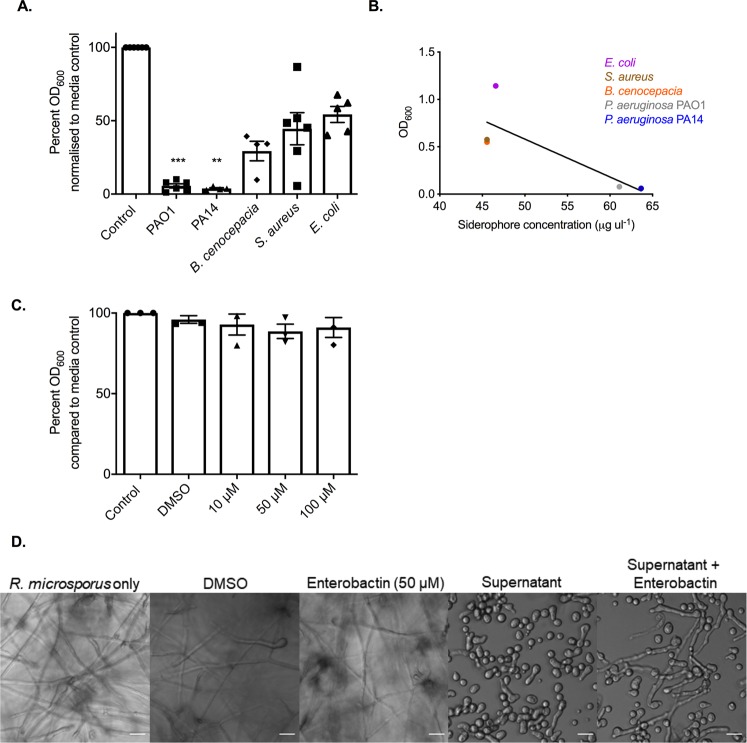
Rhizopus spp are the most common etiological agents of mucormycosis, causing over 90% mortality in disseminated infection. Key to pathogenesis is the ability of fungal spores to swell, germinate, and penetrate surrounding tissues. Antibiotic treatment in at-risk patients increases the probability of the patient developing mucormycosis, suggesting that bacteria have the potential to control the growth of the fungus. However, research into polymicrobial relationships involving Rhizopus spp has not been extensively explored. Here we show that co-culturing Rhizopus microsporus and Pseudomonas aeruginosa results in the inhibition of spore germination. This inhibition was mediated via the secretion of bacterial siderophores, which induced iron stress on the fungus. Addition of P. aeruginosa siderophores to R. microsporus spores in the zebrafish larval model of infection resulted in inhibition of fungal germination and reduced host mortality. Therefore, during infection antibacterial treatment may relieve bacterial imposed nutrient restriction resulting in secondary fungal infections.
根霉属是毛霉病最常见的病因,在播散性感染中导致超过 90%的死亡率。发病机制的关键是真菌孢子膨胀、发芽和穿透周围组织的能力。在高危患者中使用抗生素治疗会增加患者发生毛霉病的概率,这表明细菌有可能控制真菌的生长。然而,涉及根霉属的混合微生物关系的研究尚未得到广泛探索。在这里,我们表明,共培养微小根霉和铜绿假单胞菌会导致孢子发芽受到抑制。这种抑制是通过细菌铁载体的分泌介导的,铁载体会对真菌造成铁胁迫。将铜绿假单胞菌铁载体添加到感染斑马鱼幼虫模型的微小根霉孢子中,会抑制真菌发芽并降低宿主死亡率。因此,在感染期间进行抗菌治疗可能会缓解细菌引起的营养限制,从而导致继发性真菌感染。