Department of Medicine, Division of Cardiology, Columbia University Irving Medical Center, 51 Audubon Avenue, 5th floor, Suite 501, New York, NY, 10032, USA.
Department of Medicine, Division of Cardiology, Center for Behavioral Cardiovascular Health, Columbia University Irving Medical Center, 622 West 168th Street, PH 9-321, New York, NY, 10032, USA.
Curr Hypertens Rep. 2019 Apr 5;21(5):33. doi: 10.1007/s11906-019-0938-7.
This review discusses the recent literature on subjectively and objectively assessed sleep duration in relation to hypertension risk and out-of-clinic blood pressure (BP) measures and highlights critical areas for future research.
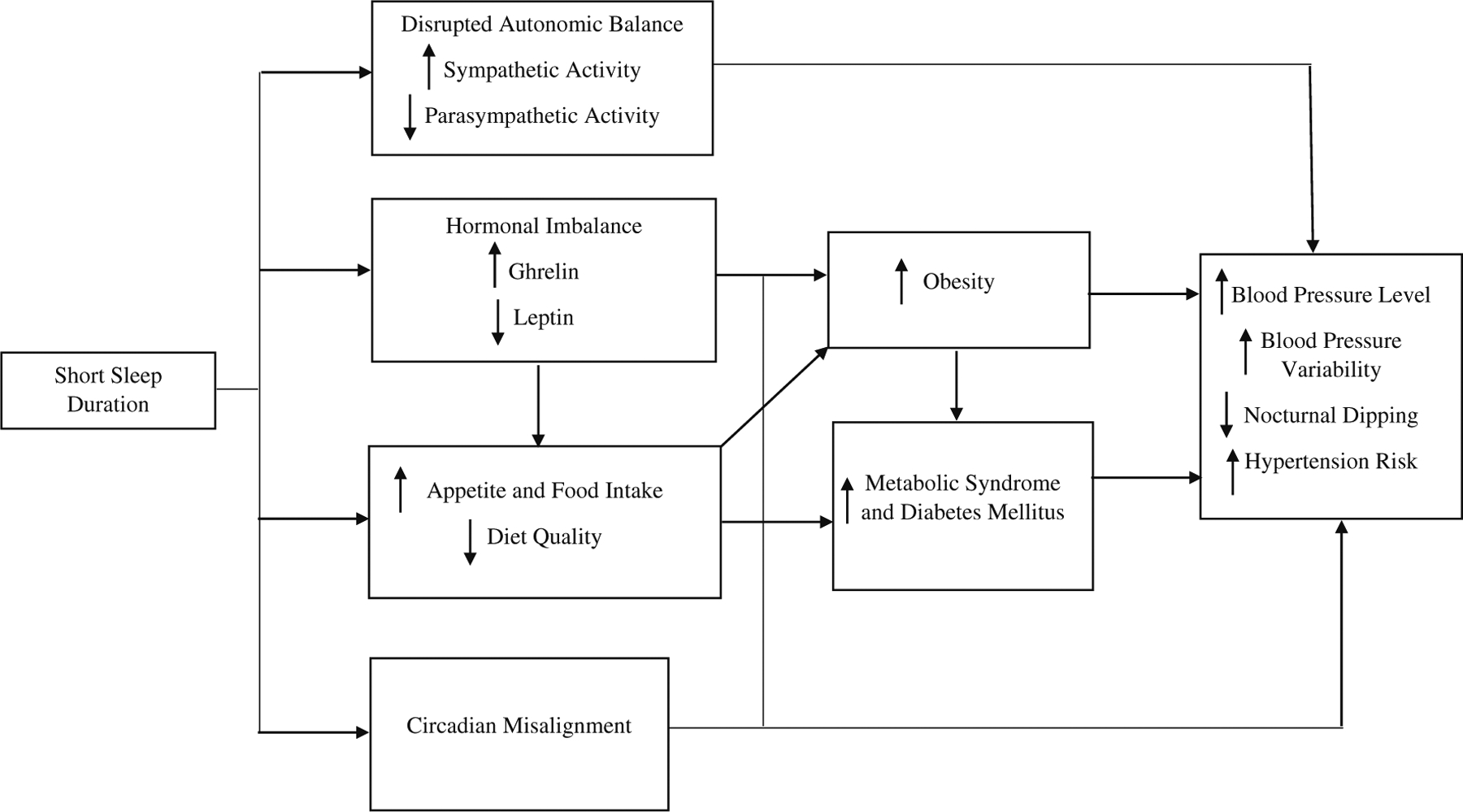
Sleep duration, particularly short sleep, may influence BP through disturbed autonomic balance, hormonal imbalances, increased adiposity and metabolic dysfunction, and disrupted circadian rhythms. Observational studies indicate that short and long sleep are associated with hypertension risk, reduced nocturnal dipping, and elevated morning BP, but evidence is stronger for short sleep. Experimental sleep restriction increases BP, while sleep extension may lower BP in prehypertensive individuals. Women and racial/ethnic minorities are more prone to the detrimental effects of short sleep on BP. Additional studies are warranted to clarify the association of objectively assessed sleep with BP level and diurnal pattern and to determine the sex- and race-specific effects of sleep restriction and extension on BP.
本文讨论了与高血压风险及诊室外血压(BP)测量相关的主观和客观评估睡眠时长的最新文献,并强调了未来研究的关键领域。
睡眠时长,尤其是睡眠时间过短,可能通过扰乱自主平衡、激素失衡、增加肥胖和代谢功能障碍以及破坏昼夜节律来影响 BP。观察性研究表明,睡眠时间过短和过长与高血压风险、夜间血压下降减少和清晨血压升高有关,但睡眠时间过短的证据更为确凿。实验性睡眠限制会增加 BP,而延长睡眠时间可能会降低高血压前期人群的 BP。女性和少数族裔更易受到睡眠时间过短对 BP 的不良影响。需要进一步研究来阐明客观评估睡眠与 BP 水平和昼夜节律模式的关系,并确定睡眠限制和延长对 BP 的性别和种族特异性影响。