Clinical and Experimental Pathology, Department of Immunology, Genetics and Pathology, Uppsala University and Uppsala University Hospital, Rudbeck Laboratory, C5, SE-75185, Uppsala, Sweden.
Experimental and Clinical Oncology, Department of Immunology, Genetics and Pathology, Uppsala University, Uppsala, Sweden.
BMC Cancer. 2019 Apr 5;19(1):316. doi: 10.1186/s12885-019-5529-0.
Regulatory immune cells may modulate the lymphoma microenvironment and are of great interest due to the increasing prevalence of treatment with immunotherapies in lymphoma patients. The aim was to explore the composition of different immune regulatory cell subsets in the peripheral blood of newly diagnosed lymphoma patients in relation to treatment outcome.
Forty-three newly diagnosed patients with lymphoma were included in the study; 24 with high-grade B-cell lymphoma (HGBCL) and 19 with classical Hodgkin lymphoma (cHL). Peripheral blood was prospectively collected and immune regulatory cells were identified by multi-color flow cytometry and analyzed in relation to healthy blood donors and clinical characteristics and outcome.
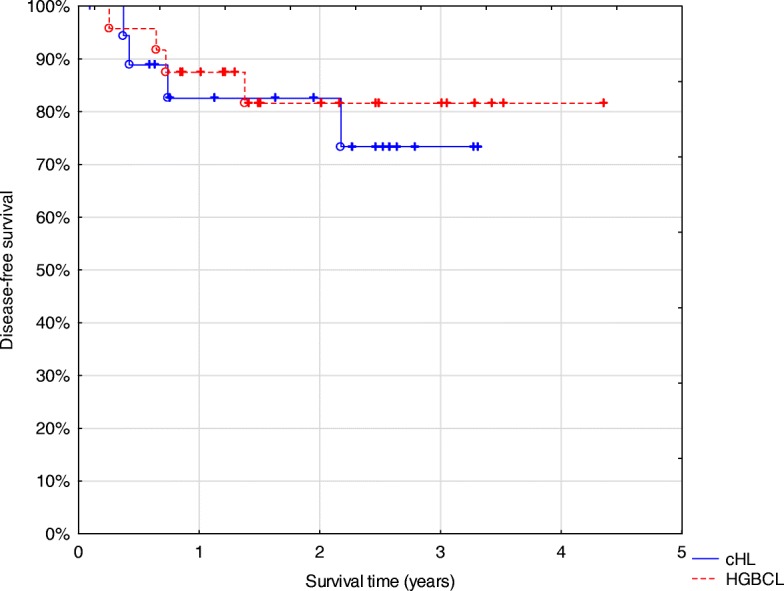
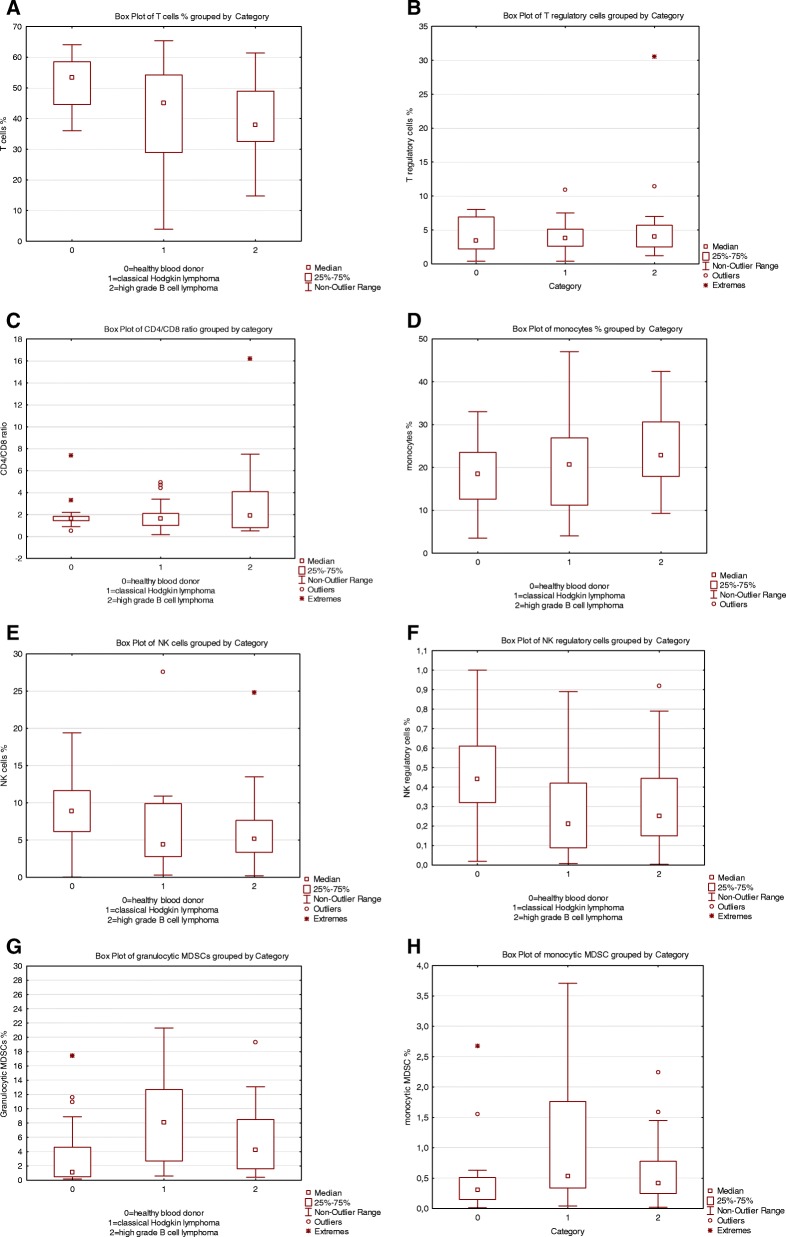
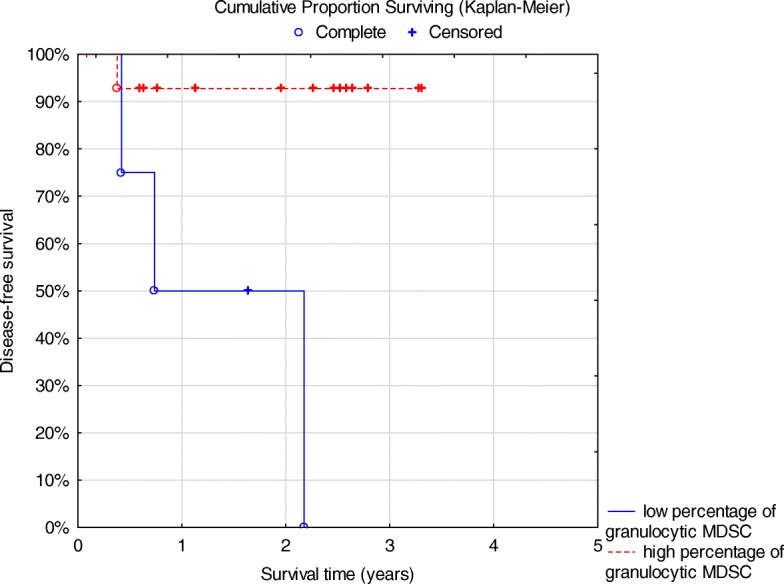
The percentage of CD3-positive T-cells was lower (p = 0.03) in the peripheral blood of lymphoma patients at diagnosis compared to healthy blood donors regardless of lymphoma subtype, although statistically, neither the percentage of monocytes (p = 0.2) nor the T-cell/monocyte ratio (p = 0.055) differed significantly. A significant decrease in the percentage of a subset of regulatory NK cells (CD7/CD3/CD56/CD16) was identified in the peripheral blood of lymphoma patients compared to healthy blood donors (p = 0.003). Lymphoma patients also had more granulocytic myeloid-derived suppressor cells (MDSCs) (p = 0.003) compared to healthy blood donors, whereas monocytic MDSCs did not differ significantly (p = 0.07). A superior disease-free survival was observed for cHL patients who had an increase in the percentage of granulocytic MDSCs (p = 0.04).
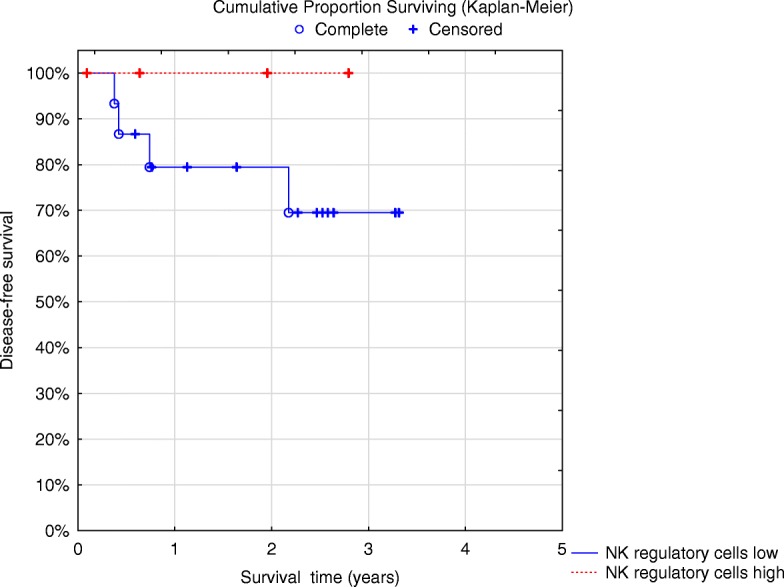
An altered profile of immune cells in the peripheral blood with a decrease in T-cells and regulatory NK-cells was observed in newly diagnosed lymphoma patients. CHL patients with higher percentages of regulatory NK cells and higher percentages of granulocytic MDSCs might have a better outcome, although the number of patients was low.
调节性免疫细胞可能调节淋巴瘤微环境,由于越来越多的淋巴瘤患者接受免疫治疗,因此它们备受关注。本研究旨在探索新诊断的淋巴瘤患者外周血中不同免疫调节细胞亚群的组成与治疗结果的关系。
本研究纳入 43 例新诊断的淋巴瘤患者;其中 24 例为高级别 B 细胞淋巴瘤(HGBCL),19 例为经典霍奇金淋巴瘤(cHL)。前瞻性采集外周血,采用多色流式细胞术鉴定免疫调节细胞,并分析其与健康献血者以及临床特征和结果的关系。
与健康献血者相比,无论淋巴瘤亚型如何,诊断时淋巴瘤患者外周血中 CD3 阳性 T 细胞的比例较低(p=0.03),但单核细胞的比例(p=0.2)和 T 细胞/单核细胞比值(p=0.055)差异无统计学意义。与健康献血者相比,淋巴瘤患者外周血中调节性 NK 细胞(CD7/CD3/CD56/CD16)亚群的比例显著降低(p=0.003)。与健康献血者相比,淋巴瘤患者的粒细胞性髓系来源抑制细胞(MDSCs)也更多(p=0.003),而单核细胞性 MDSCs 差异无统计学意义(p=0.07)。cHL 患者中,粒细胞性 MDSC 比例增加的患者无病生存率更高(p=0.04)。
新诊断的淋巴瘤患者外周血中存在免疫细胞特征改变,表现为 T 细胞和调节性 NK 细胞减少。CHL 患者中,调节性 NK 细胞比例较高、粒细胞性 MDSC 比例较高的患者可能有更好的预后,但患者数量较少。