Wang Yangyang, Wang Jiyu, Zhu Fengfeng, Wang Huiping, Yi Liuying, Huang Keke, Zhai Zhimin
Department of Hematology, Second Hospital of Anhui Medical University, Hefei, Anhui, China.
Immun Inflamm Dis. 2022 May;10(5):e616. doi: 10.1002/iid3.616.
Myeloid-derived suppressor cells (MDSCs) are a heterogeneous cell population with the ability to suppress immune responses. MDSCs usually cluster in cancer, inflammation, and autoimmune diseases. Although there have been some studies on MDSCs in non-Hodgkin lymphoma (NHL), the correlation between the peripheral levels of MDSCs in patients with various subtypes of B cell NHL and clinical features and prognosis remains inconclusive. This study aimed at the issue.
101 patients with B cell NHL and 15 age-matched healthy controls were included in this study. Flow cytometric detection of monocytic-MDSCs (M-MDSCs) and granulocytic-MDSCs (G-MDSCs) was done.
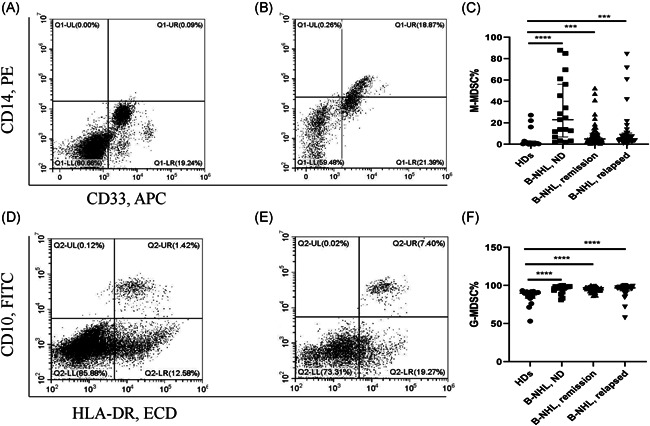
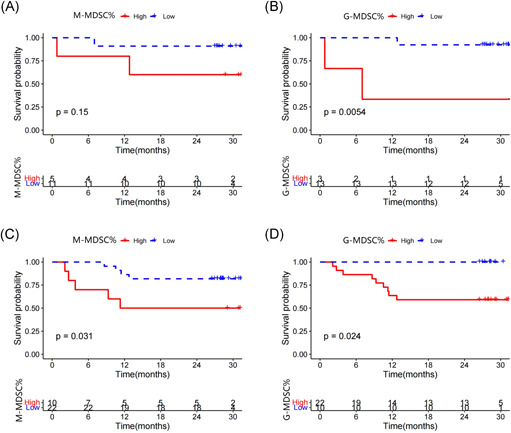
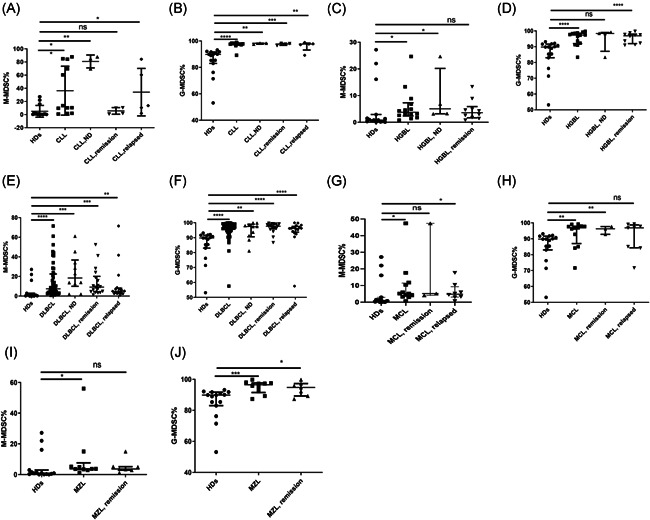
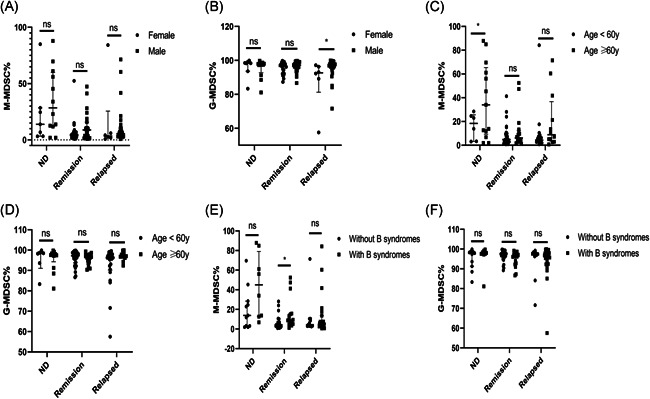
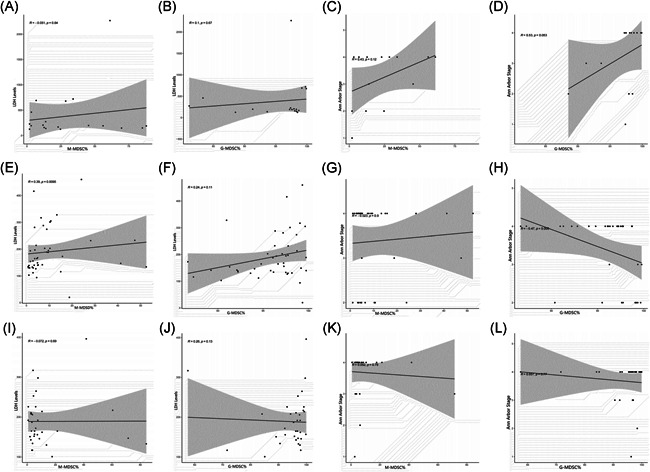
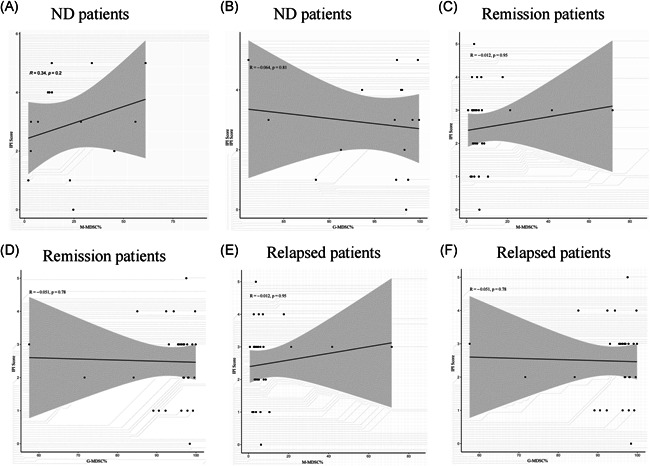
In this study, we found that counts of circulating M-MDSCs and G-MDSCs were significantly increased in different clinical statuses of B-NHL patients compared to healthy controls. Similarly, a significant increase in the levels of M-MDSCs and G-MDSCs was found among the diverse types of B-NHL compared with healthy donors. Stratification studies indicated MDSCs expansion was closely associated with disease progression (tumor stage, LDH levels and B syndromes). Moreover, the overall survival time of patients with G-MDSCs (%) ≥ 98.70% was shorter than patients with G-MDSCs (%) < 98.70% in newly diagnosed B-NHL subgroup, meanwhile, there was a significant difference in survival of patients with M-MDSCs (%) ≥ 7.19% compared to patients with M-MDSCs (%) < 7.19% in relapsed B-NHL subgroup.
Our results suggested that M-MDSCs and G-MDSCs may be a potential and efficient index to evaluate the prognosis of B-NHL patients.
髓源性抑制细胞(MDSCs)是一类具有抑制免疫反应能力的异质性细胞群体。MDSCs通常聚集在癌症、炎症和自身免疫性疾病中。尽管已经有一些关于非霍奇金淋巴瘤(NHL)中MDSCs的研究,但B细胞NHL各亚型患者外周血中MDSCs水平与临床特征及预后之间的相关性仍不明确。本研究针对该问题展开。
本研究纳入了101例B细胞NHL患者和15例年龄匹配的健康对照。采用流式细胞术检测单核细胞型MDSCs(M-MDSCs)和粒细胞型MDSCs(G-MDSCs)。
在本研究中,我们发现与健康对照相比,B-NHL患者不同临床状态下循环M-MDSCs和G-MDSCs计数显著增加。同样,与健康供体相比,不同类型的B-NHL中M-MDSCs和G-MDSCs水平也显著升高。分层研究表明MDSCs扩增与疾病进展(肿瘤分期、乳酸脱氢酶水平和B症状)密切相关。此外,在新诊断的B-NHL亚组中,G-MDSCs(%)≥98.70%的患者总生存时间短于G-MDSCs(%)<98.70%的患者,同时,在复发的B-NHL亚组中,M-MDSCs(%)≥7.19%的患者与M-MDSCs(%)<7.19%的患者生存情况存在显著差异。
我们的结果表明,M-MDSCs和G-MDSCs可能是评估B-NHL患者预后的一个潜在且有效的指标。