Gomes Sofia I F, Merckx Vincent S F T, Hynson Nicole A
1Understanding Evolution Group, Naturalis Biodiversity Center, 2332 AA Leiden, The Netherlands.
2Department of Botany, University of Hawaii Manoa, 3190 Maile Way Room 101, Honolulu, HI 96822 USA.
Biol Invasions. 2018;20(9):2421-2437. doi: 10.1007/s10530-018-1710-7. Epub 2018 Mar 21.
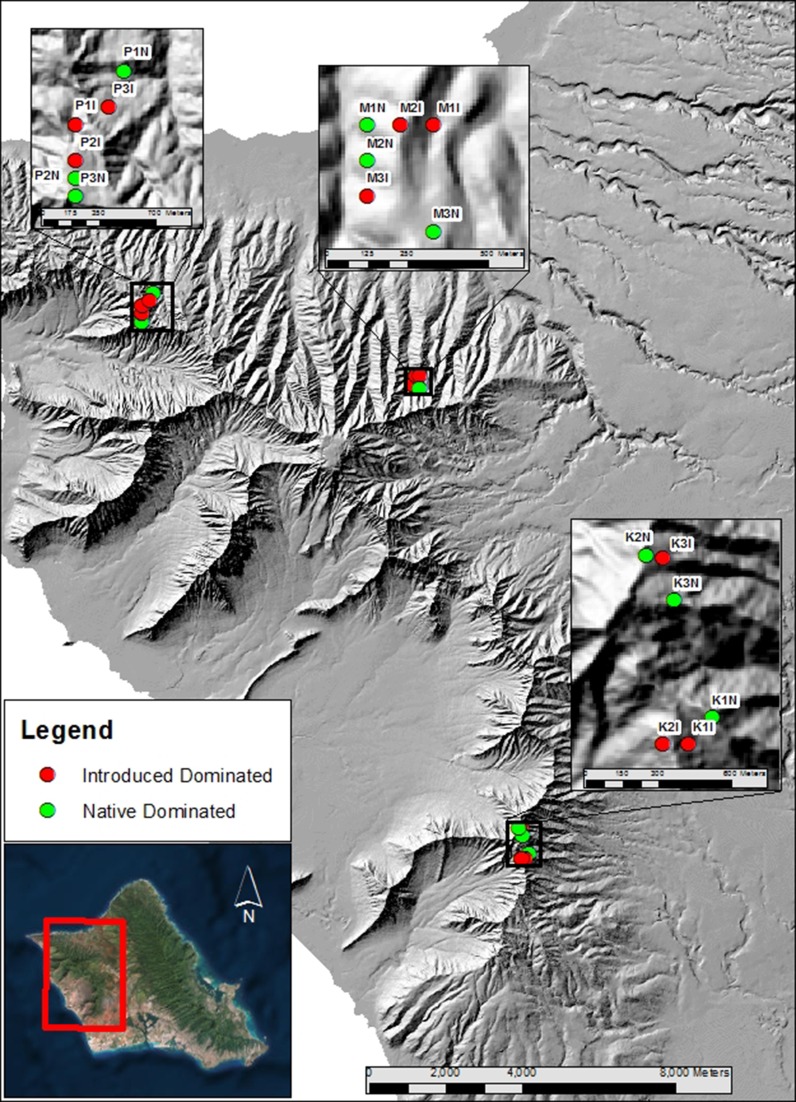
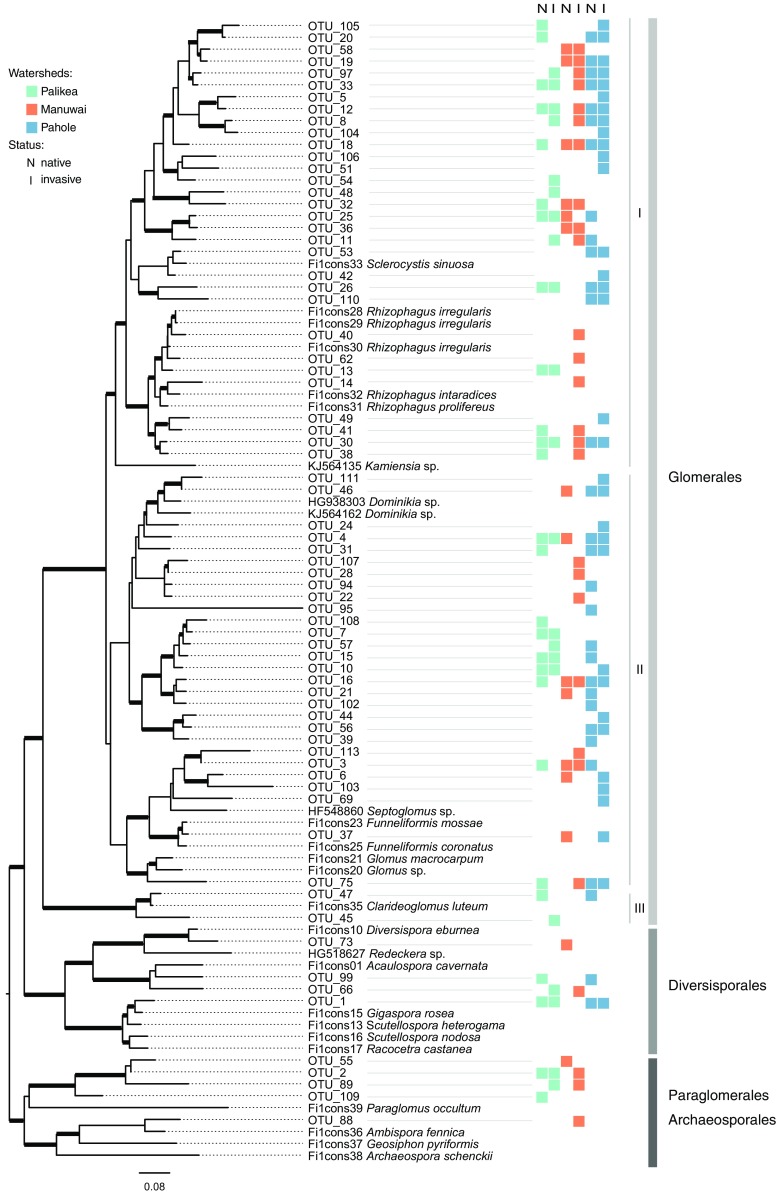
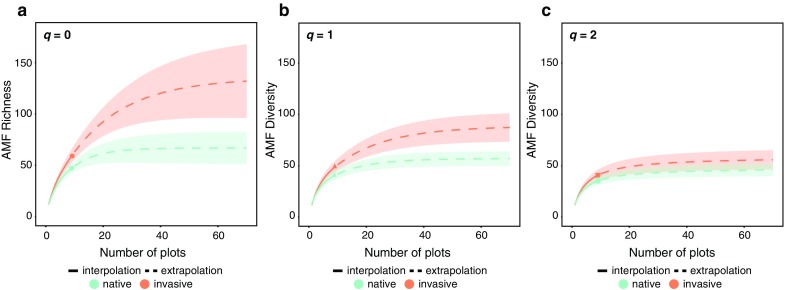
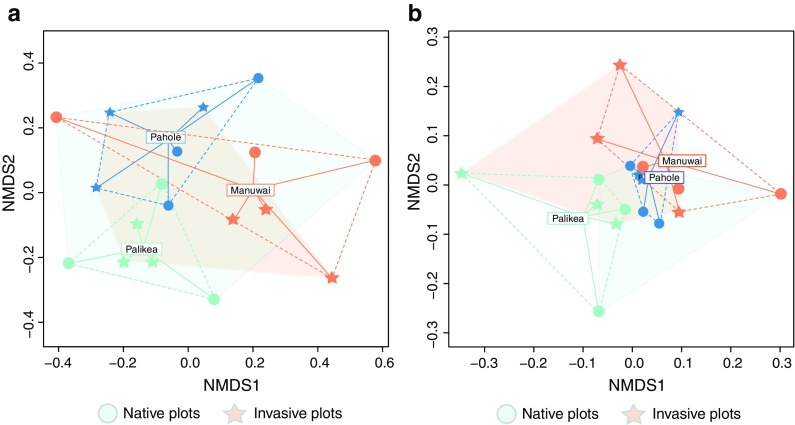
Biological invasions can have various impacts on the diversity of important microbial mutualists such as mycorrhizal fungi, but few studies have tested whether the effects of invasions on mycorrhizal diversity are consistent across spatial gradients. Furthermore, few of these studies have taken place in tropical ecosystems that experience an inordinate rate of invasions into native habitats. Here, we examined the effects of plant invasions dominated by non-native tree species on the diversity of arbuscular mycorrhizal (AM) fungi in Hawaii. To test the hypothesis that invasions result in consistent changes in AM fungal diversity across spatial gradients relative to native forest habitats, we sampled soil in paired native and invaded sites from three watersheds and used amplicon sequencing to characterize AM fungal communities. Whether our analyses considered phylogenetic relatedness or not, we found that invasions consistently increased the richness of AM fungi. However, AM fungal species composition was not related to invasion status of the vegetation nor local environment, but stratified by watershed. Our results suggest that while invasions can lead to an overall increase in the diversity of microbial mutualists, the effects of plant host identity or geographic structuring potentially outweigh those of invasive species in determining the community membership of AM fungi. Thus, host specificity and spatial factors such as dispersal need to be taken into consideration when examining the effects of biological invasions on symbiotic microbes.
生物入侵会对诸如菌根真菌等重要微生物共生体的多样性产生多种影响,但很少有研究测试过入侵对菌根多样性的影响在空间梯度上是否一致。此外,这些研究中很少有在热带生态系统中进行的,而热带生态系统正经历着外来物种对原生栖息地的极高入侵率。在这里,我们研究了以非本地树种为主的植物入侵对夏威夷丛枝菌根(AM)真菌多样性的影响。为了检验相对于原生森林栖息地,入侵会导致AM真菌多样性在空间梯度上产生一致变化这一假设,我们在来自三个流域的成对原生和入侵地点采集土壤,并使用扩增子测序来表征AM真菌群落。无论我们的分析是否考虑系统发育相关性,我们都发现入侵持续增加了AM真菌的丰富度。然而,AM真菌的物种组成与植被的入侵状态或当地环境无关,而是按流域分层。我们的结果表明,虽然入侵会导致微生物共生体的多样性总体增加,但在决定AM真菌的群落组成时,植物宿主身份或地理结构的影响可能超过入侵物种。因此,在研究生物入侵对共生微生物的影响时,需要考虑宿主特异性和诸如扩散等空间因素。