Neuroscience and Mental Health Institute, University of Alberta, Edmonton, Alberta T6G 2E1, Canada.
Department of Pharmacology, University of Alberta, Edmonton, Alberta T6E 2H7, Canada.
eNeuro. 2019 Apr 1;6(2). doi: 10.1523/ENEURO.0024-19.2019. eCollection 2019 Mar-Apr.
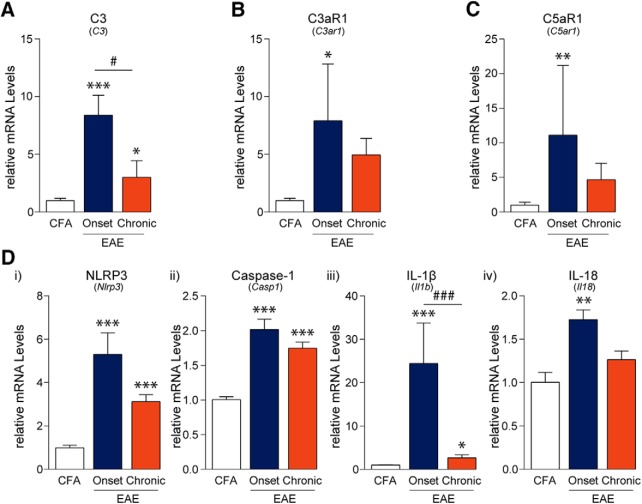
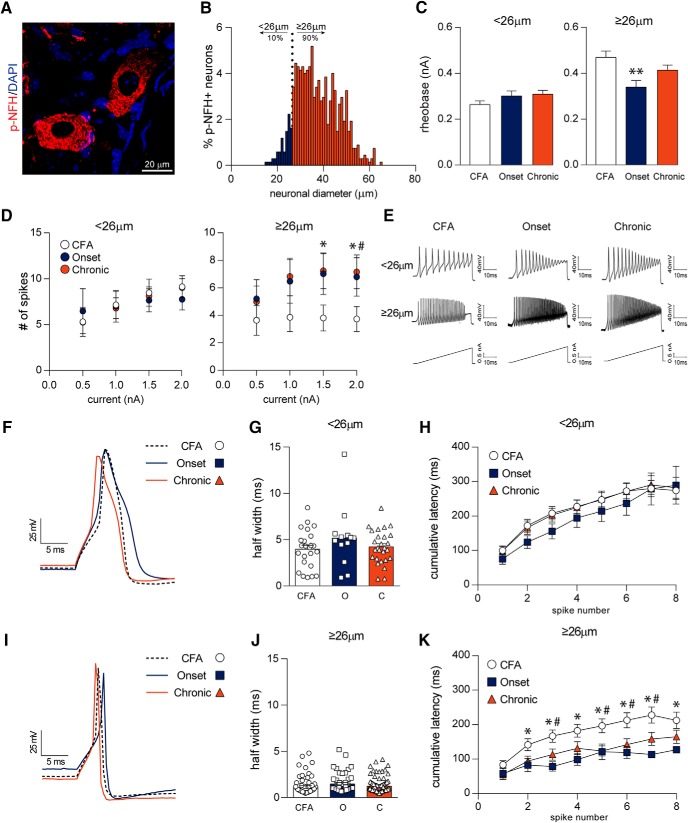
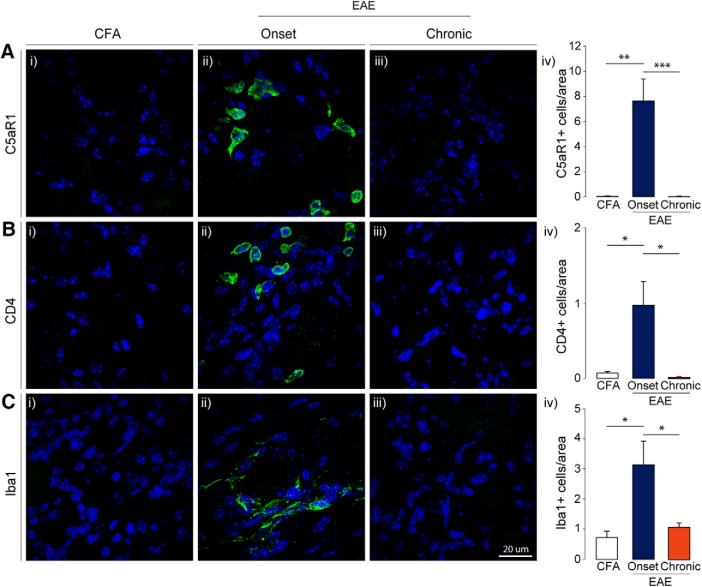
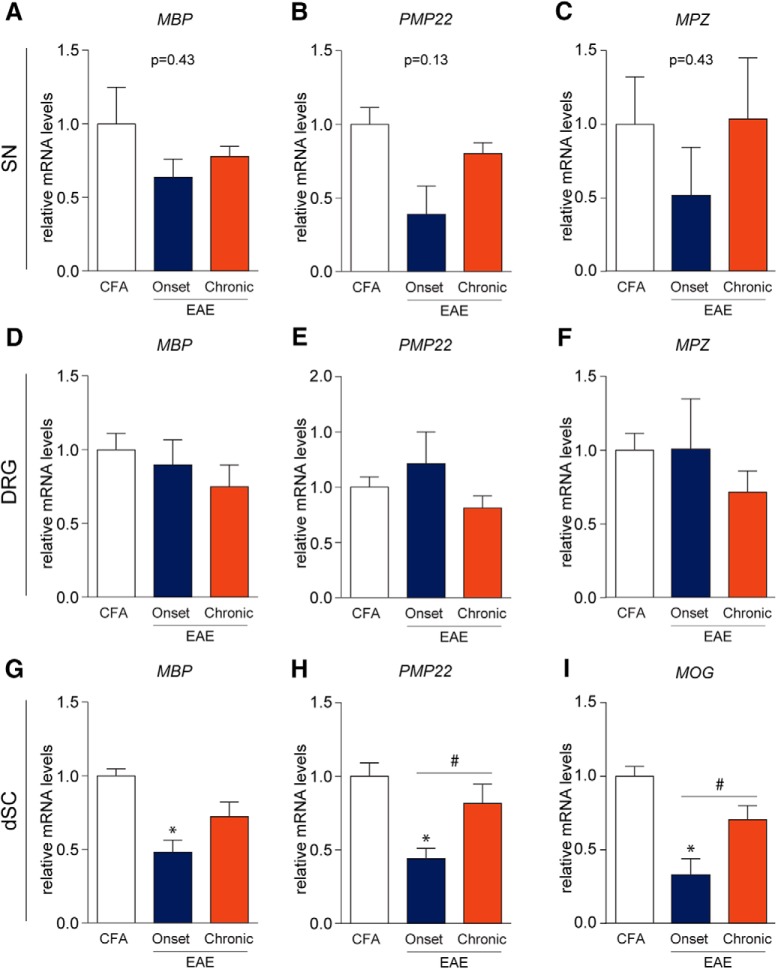
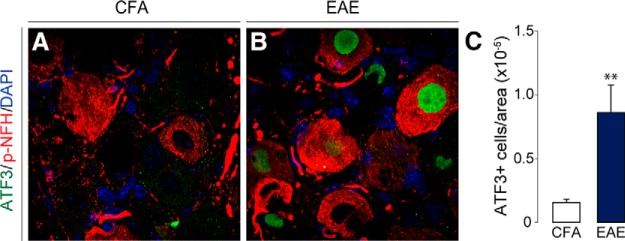
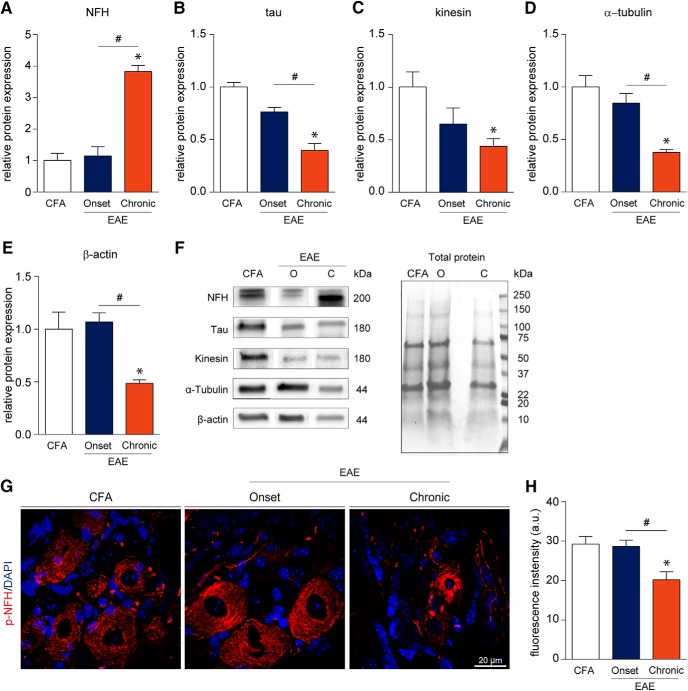
Multiple sclerosis (MS) is an autoimmune, demyelinating disease of the central nervous system. Patients with MS typically present with visual, motor, and sensory deficits. However, an additional complication of MS in large subset of patients is neuropathic pain. To study the underlying immune-mediated pathophysiology of pain in MS we employed the myelin oligodendrocyte glycoprotein (MOG)-induced experimental autoimmune encephalitis (EAE) model in mice. Since sensory neurons are crucial for nociceptive transduction, we investigated the effect of this disease on sensory neurons of the lumbar dorsal root ganglia (DRG). Here, we report the disease was associated with activation of the complement system and the NLRP3 inflammasome in the DRG. We further observe a transient increase in the number of complement component 5a receptor 1-positive (C5aR1+) immune cells, CD4+ T-cells, and Iba1+ macrophages in the DRG. The absence of any significant change in the levels of mRNA for myelin proteins in the DRG and the sciatic nerve suggests that demyelination in the PNS is not a trigger for the immune response in the DRG. However, we did observe an induction of activating transcription factor 3 (ATF3) at disease onset and chronic disruption of cytoskeletal proteins in the DRG demonstrating neuronal injury in the PNS in response to the disease. Electrophysiological analysis revealed the emergence of hyperexcitability in medium-to-large (≥26 µm) diameter neurons, especially at the onset of MOG-EAE signs. These results provide conclusive evidence of immune activation, neuronal injury, and peripheral sensitization in MOG-EAE, a model classically considered to be centrally mediated.
多发性硬化症(MS)是一种中枢神经系统的自身免疫性脱髓鞘疾病。MS 患者通常表现为视觉、运动和感觉缺陷。然而,MS 患者的一个额外并发症是神经病理性疼痛。为了研究 MS 疼痛的潜在免疫介导的病理生理学,我们在小鼠中使用髓鞘少突胶质细胞糖蛋白(MOG)诱导的实验性自身免疫性脑脊髓炎(EAE)模型。由于感觉神经元对于伤害性转导至关重要,我们研究了这种疾病对腰椎背根神经节(DRG)感觉神经元的影响。在这里,我们报告疾病与 DRG 中的补体系统和 NLRP3 炎性体的激活有关。我们进一步观察到,在 DRG 中,补体成分 5a 受体 1 阳性(C5aR1+)免疫细胞、CD4+T 细胞和 Iba1+巨噬细胞的数量短暂增加。DRG 和坐骨神经中髓鞘蛋白的 mRNA 水平没有任何显著变化,这表明周围神经系统的脱髓鞘不是 DRG 免疫反应的触发因素。然而,我们确实在疾病发作时观察到激活转录因子 3(ATF3)的诱导和 DRG 中细胞骨架蛋白的慢性破坏,这表明对疾病的反应导致周围神经系统中的神经元损伤。电生理分析显示,在中等至大(≥26 µm)直径神经元中出现超兴奋性,尤其是在 MOG-EAE 迹象开始时。这些结果提供了确凿的证据,证明了 MOG-EAE 中的免疫激活、神经元损伤和外周致敏,而该模型通常被认为是中枢介导的。