Department of Microbiology and Immunology, University of Rochester Medical Center, Rochester, NY 14642, USA.
The Norwegian College of Fishery Science, University of Tromsø, the Arctic university of Norway, 9037, Tromsø, Norway.
Viruses. 2019 Apr 6;11(4):330. doi: 10.3390/v11040330.
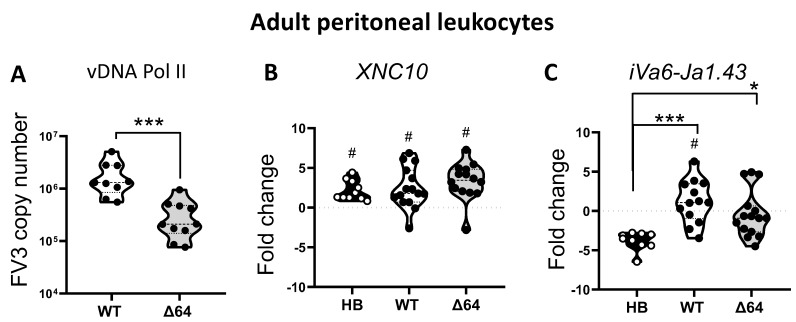
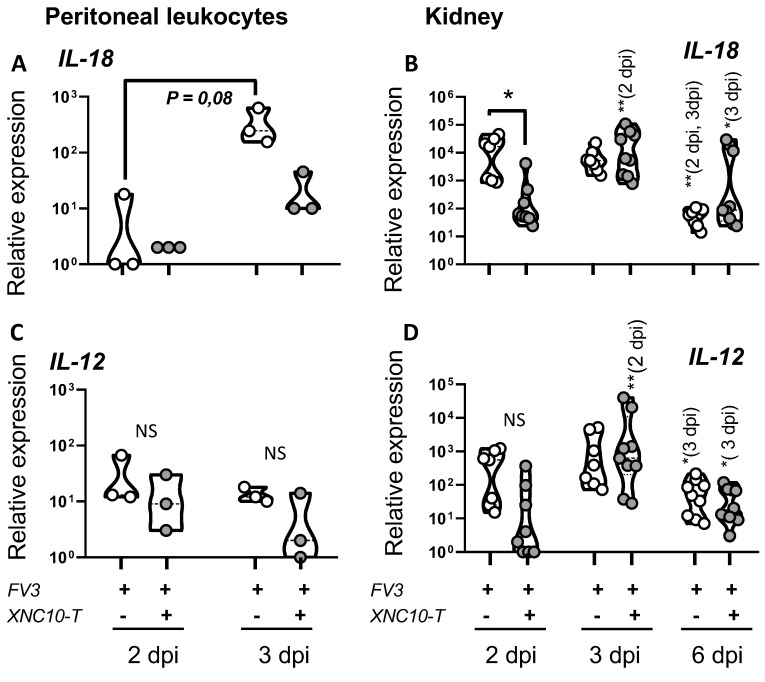
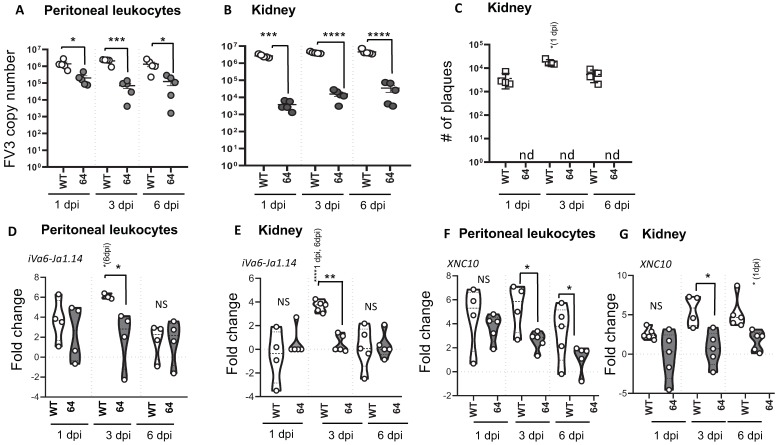
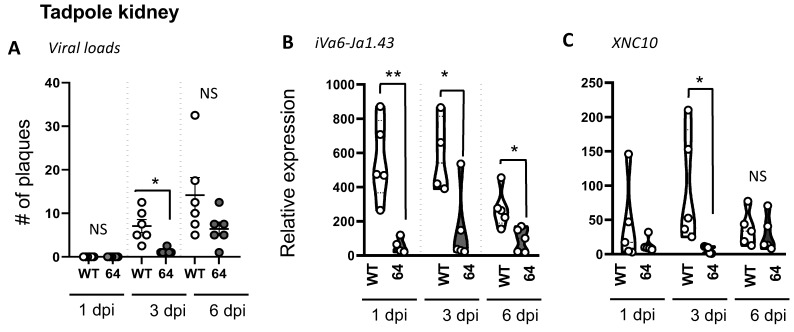
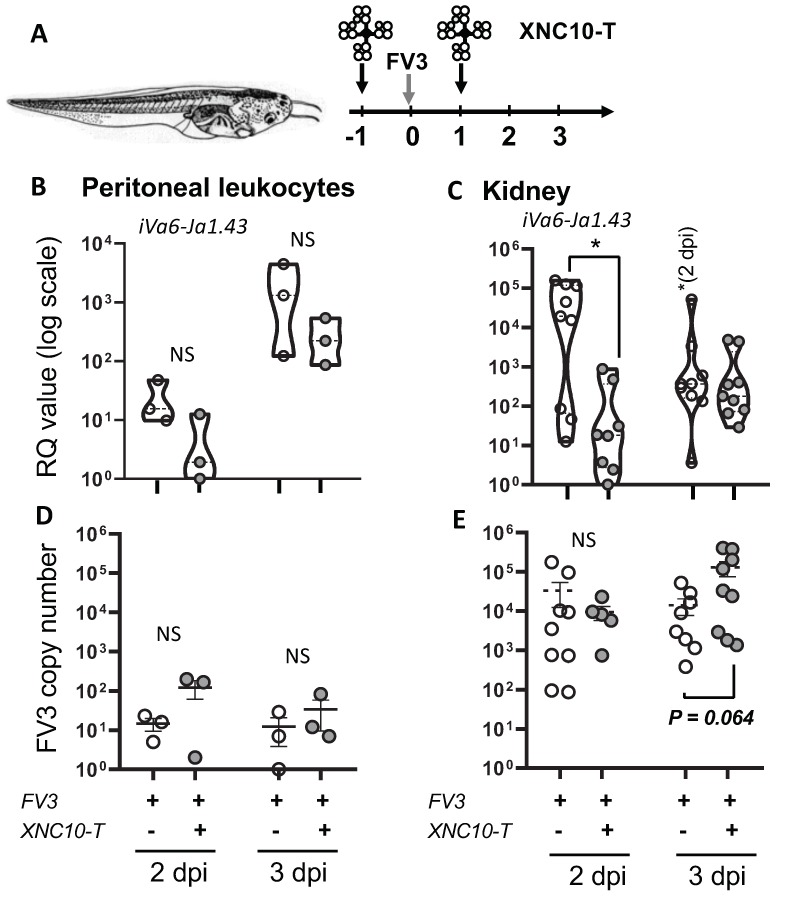
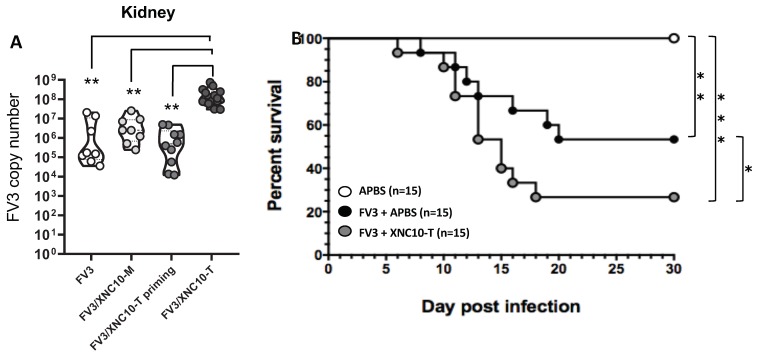
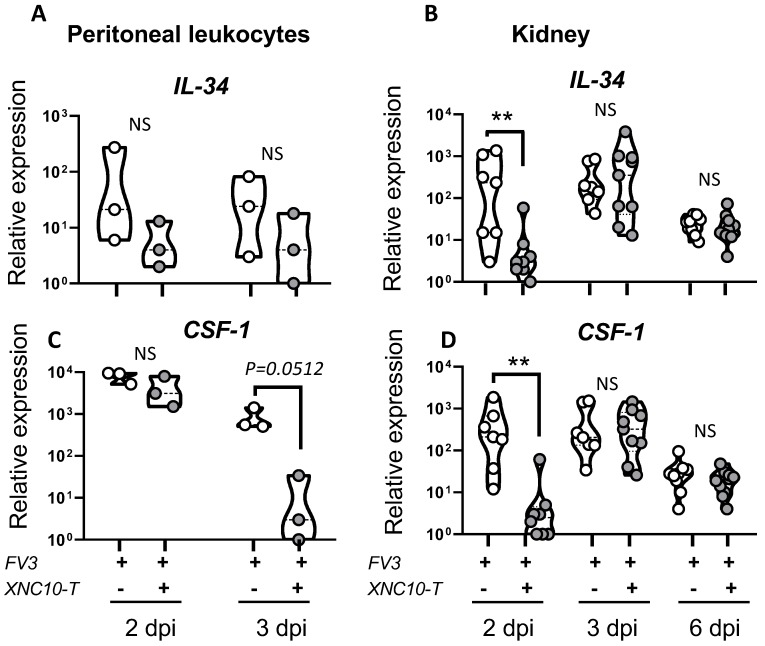
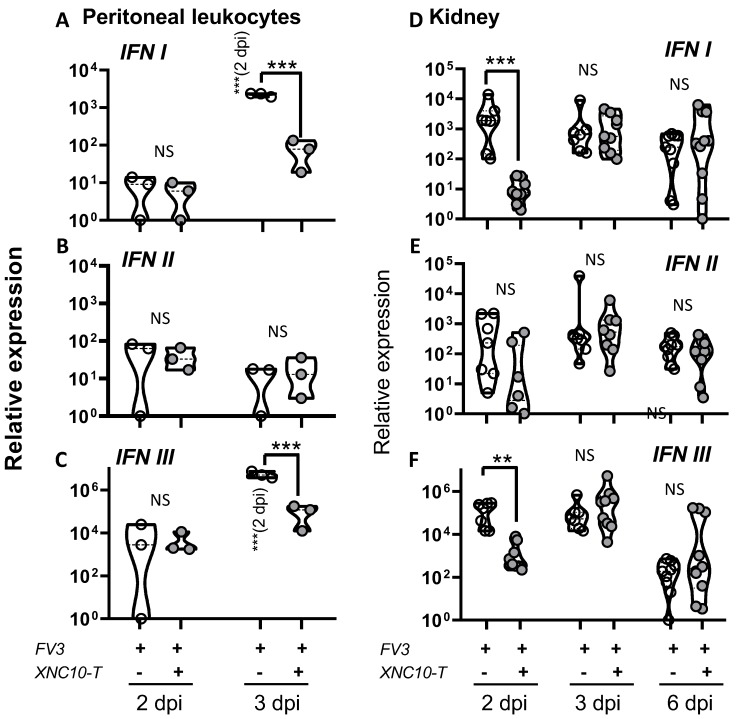
Besides the central role of classical Major Histocompatibility Complex (MHC) class Ia-restricted conventional Cluster of Differentiation 8 (CD8) T cells in antiviral host immune response, the amphibian critically rely on MHC class I-like (mhc1b10.1.L or XNC10)-restricted innate-like (i)T cells (iVα6 T cells) to control infection by the ranavirus Frog virus 3 (FV3). To complement and extend our previous reverse genetic studies showing that iVα6 T cells are required for tadpole survival, as well as for timely and effective adult viral clearance, we examined the conditions and kinetics of iVα6 T cell response against FV3. Using a FV3 knock-out (KO) growth-defective mutant, we found that upregulation of the XNC10 restricting class I-like gene and the rapid recruitment of iVα6 T cells depend on detectable viral replication and productive FV3 infection. In addition, by depletion with XNC10 tetramers, we demonstrated the direct antiviral effector function of iVα6 T cells. Notably, the transitory iV6 T cell defect delayed innate interferon and cytokine gene response, resulting in long-lasting negative inability to control FV3 infection. These findings suggest that in and likely other amphibians, an immune surveillance system based on the early activation of iT cells by non-polymorphic MHC class-I like molecules is important for efficient antiviral immune response.
除了经典的主要组织相容性复合体 (MHC) 类 Ia 限制的传统 CD8 T 细胞在抗病毒宿主免疫反应中的核心作用外,两栖动物严重依赖 MHC 类 I 样(mhc1b10.1.L 或 XNC10)限制的固有样(i)T 细胞(iVα6 T 细胞)来控制蛙病毒 3(FV3)的感染。为了补充和扩展我们之前的反向遗传学研究,该研究表明 iVα6 T 细胞对于蝌蚪的存活以及及时有效的成年病毒清除是必需的,我们检查了 iVα6 T 细胞针对 FV3 的反应条件和动力学。使用 FV3 敲除(KO)生长缺陷突变体,我们发现 XNC10 限制类 I 样基因的上调和 iVα6 T 细胞的快速募集依赖于可检测的病毒复制和有效的 FV3 感染。此外,通过 XNC10 四聚体耗竭,我们证明了 iVα6 T 细胞的直接抗病毒效应功能。值得注意的是,短暂的 iV6 T 细胞缺陷延迟了先天干扰素和细胞因子基因反应,导致长期无法控制 FV3 感染。这些发现表明,在 和可能其他两栖动物中,基于非多态 MHC 类 I 样分子早期激活 iT 细胞的免疫监视系统对于有效的抗病毒免疫反应很重要。