Marișca Oana T, Leopold Nicolae
Faculty of Physics, Babeș-Bolyai University, 400084 Cluj-Napoca, Romania.
IMOGEN Research Institute, County Clinical Emergency Hospital, 400012 Cluj-Napoca, Romania.
Materials (Basel). 2019 Apr 6;12(7):1131. doi: 10.3390/ma12071131.
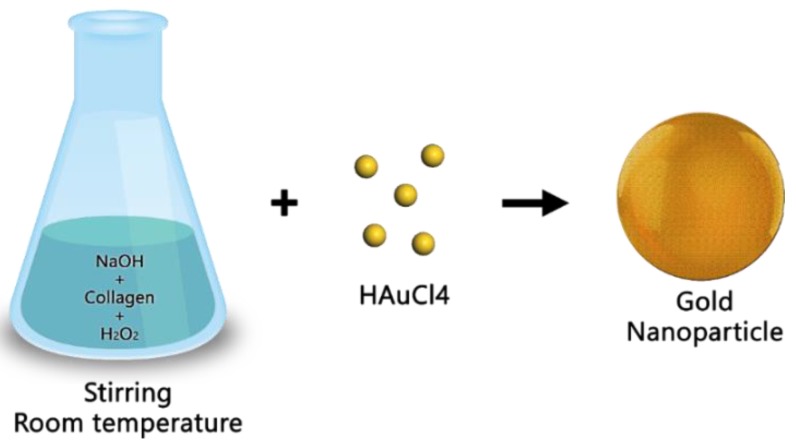
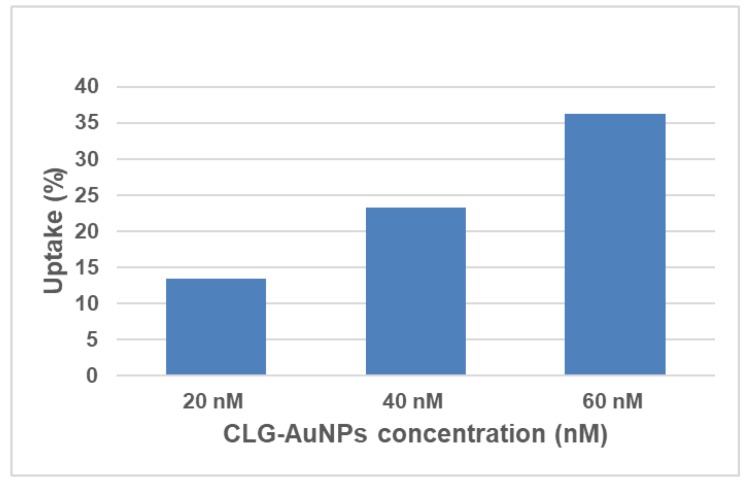
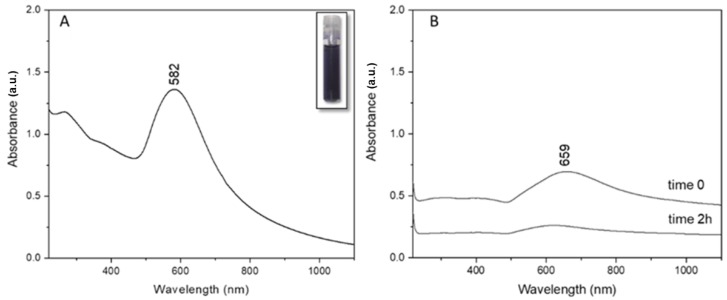
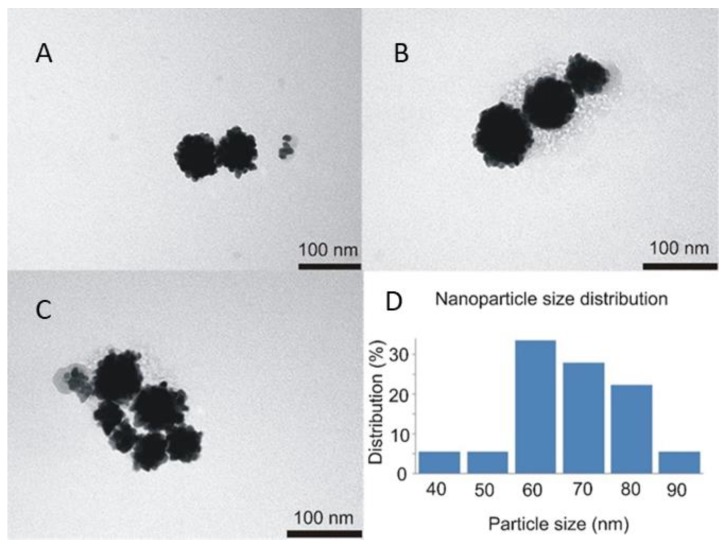
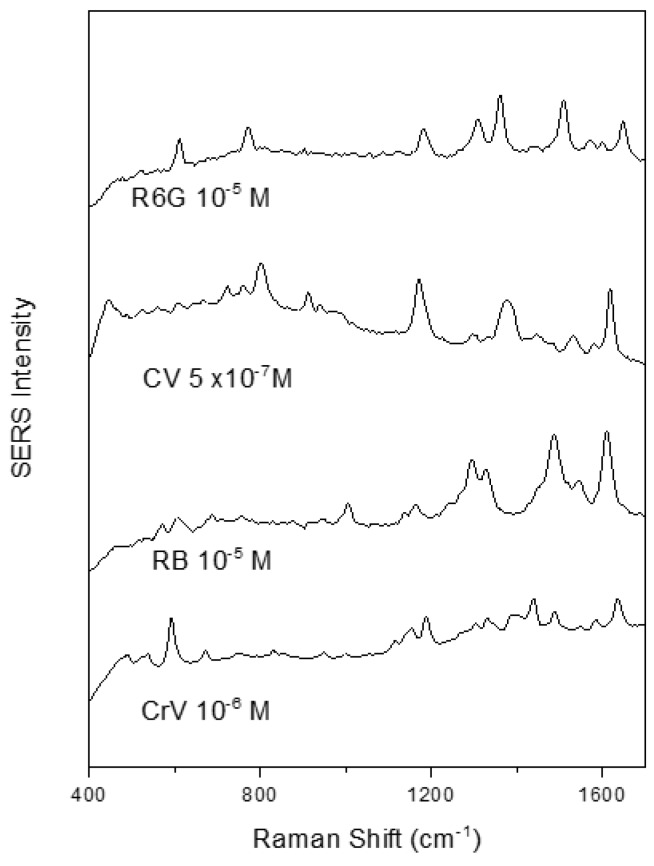
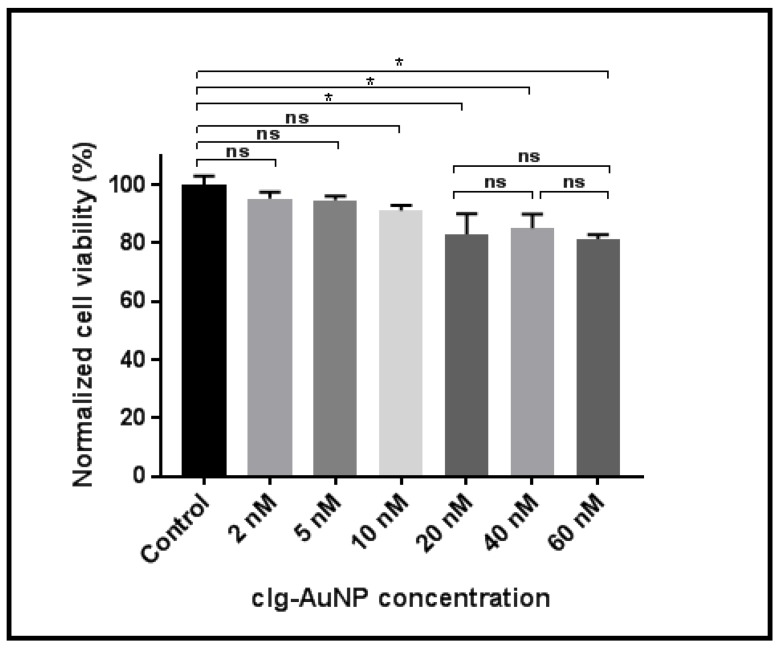
Gold nanoparticles (AuNPs) are the groundwork of a large variety of applications in the biomedical field. Further development and a better understanding of this versatile platform will lead to an expansion of potential applications. In this study, we propose a facile synthesis of AuNPs using hydrogen peroxide as a reducing agent and collagen as a stabilizing agent. Our synthetic approach results in "raspberry"-like AuNPs with a mean diameter of 60 nm, as revealed by electron microscopy. The optical properties of the AuNPs were assessed by UV-Vis and surface-enhanced Raman scattering (SERS), and their stability and in vitro cytotoxicity were evaluated as well. HeLa cell viability values were only modestly affected compared to control, with the highest concentration tested displaying a 20% decrease in cellular viability. The dose-dependent cellular internalization in the 20⁻60 nM range indicate the highest internalization rate at 60 nM and uptake values as high as 35%. This result correlated well with the viability results. These type of anisotropic AuNPs are proposed for biomedical applications such as hyperthermia, contrast agents or imaging. Therefore, our findings offer a platform for potential biological applications such as sensing and imaging, due to their unique physico-chemical features.
金纳米颗粒(AuNPs)是生物医学领域中大量应用的基础。对这个多功能平台的进一步开发和更好理解将带来潜在应用的扩展。在本研究中,我们提出一种简便的合成方法,使用过氧化氢作为还原剂、胶原蛋白作为稳定剂来合成AuNPs。如电子显微镜所示,我们的合成方法得到了平均直径为60nm的“覆盆子”状AuNPs。通过紫外可见光谱(UV-Vis)和表面增强拉曼散射(SERS)评估了AuNPs的光学性质,并对其稳定性和体外细胞毒性进行了评估。与对照组相比,HeLa细胞活力值仅受到适度影响,测试的最高浓度显示细胞活力下降了20%。在20⁻60 nM范围内的剂量依赖性细胞内化表明,在60 nM时内化率最高,摄取值高达35%。这一结果与活力结果密切相关。这类各向异性的AuNPs被提议用于诸如热疗、造影剂或成像等生物医学应用。因此,由于其独特的物理化学特性,我们的研究结果为传感和成像等潜在生物应用提供了一个平台。