Bloise Nora, Massironi Alessio, Della Pina Cristina, Alongi Jenny, Siciliani Stella, Manfredi Amedea, Biggiogera Marco, Rossi Michele, Ferruti Paolo, Ranucci Elisabetta, Visai Livia
Department of Molecular Medicine (DMM), Biochemistry Unit, Center for Health Technologies (CHT), UdR INSTM University of Pavia, Pavia, Italy.
Department of Occupational Medicine, Toxicology and Environmental Risks, Istituti Clinici Scientifici Maugeri S.p.A, IRCCS, Pavia, Italy.
Front Bioeng Biotechnol. 2020 Mar 4;8:132. doi: 10.3389/fbioe.2020.00132. eCollection 2020.
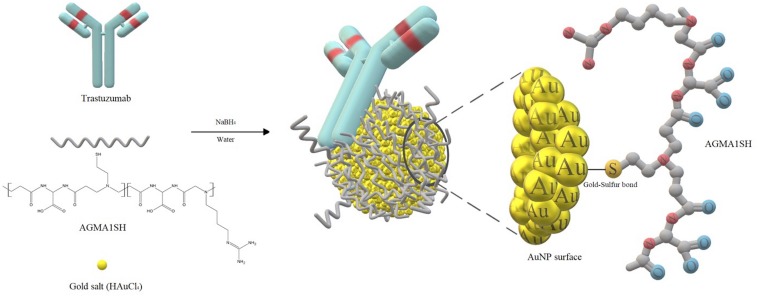
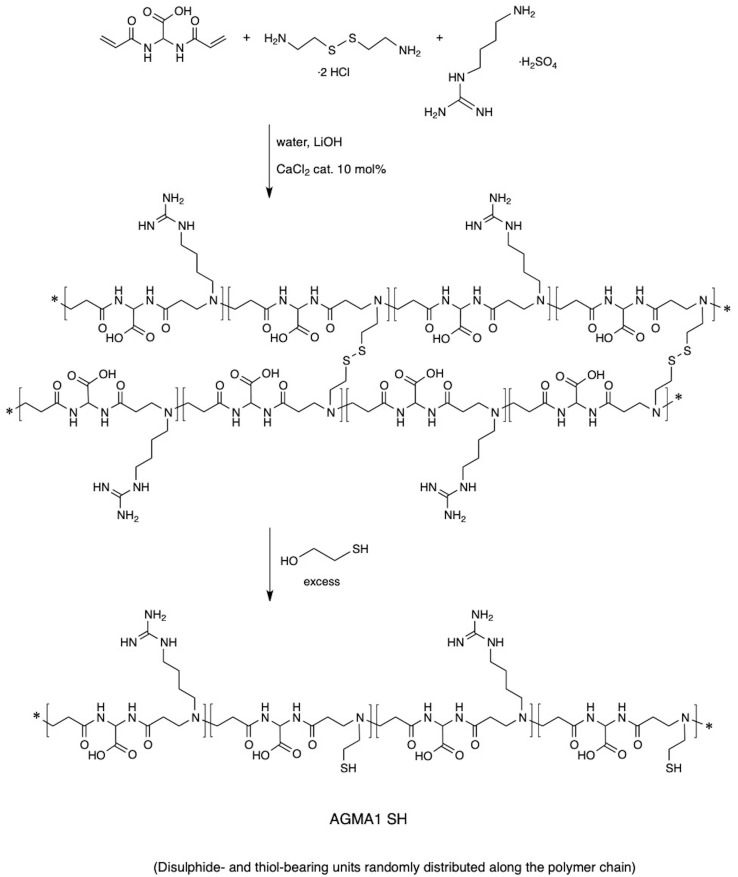
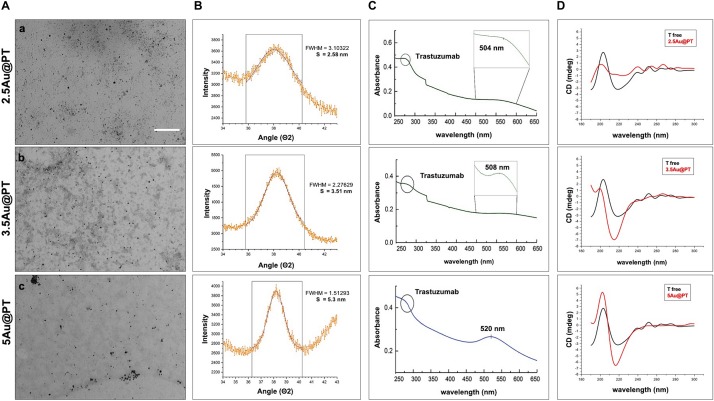
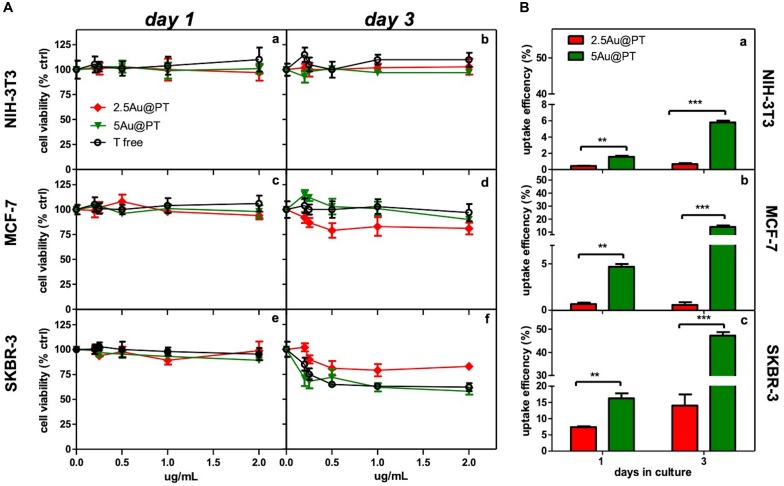
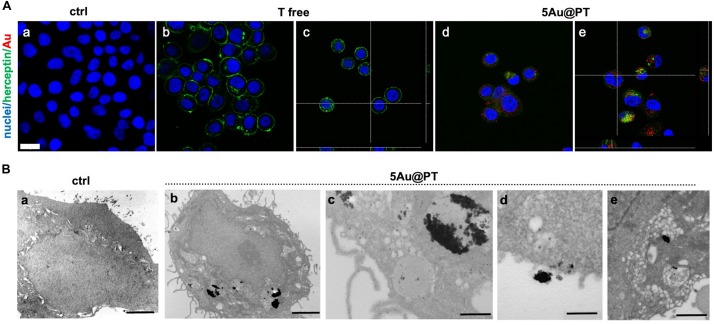
Gold nanoparticles are elective candidate for cancer therapy. Current efforts are devoted to developing innovative methods for their synthesis. Besides, understanding their interaction with cells have become increasingly important for their clinical application. This work aims to describe a simple approach for the synthesis of extra-small gold nanoparticles for breast cancer therapy. In brief, a biocompatible and biodegradable polyamidoamine (named AGMA1-SH), bearing 20%, on a molar basis, thiol-functionalized repeat units, is employed to stabilize and coat extra-small gold nanospheres of different sizes (2.5, 3.5, and 5 nm in gold core), and to generate a nanoplatform for the link with Trastuzumab monoclonal antibody for HER2-positive breast cancer targeting. Dynamic light scattering, transmission electron microscopy, ultraviolet visible spectroscopy, X-ray powder diffraction, circular dichroism, protein quantification assays are used for the characterization. The targeting properties of the nanosystems are explored to achieve enhanced and selective uptake of AGMA1-SH-gold nanoparticles by studies against HER-2 overexpressing cells, SKBR-3 and compared to HER-2 low expressing cells, MCF-7, and normal fibroblast cell line, NIH-3T3. physicochemical characterization demonstrates that gold nanoparticles modified with AGMA1-SH are more stable in aqueous solution than the unmodified ones. Additionally, the greater gold nanoparticles size (5-nm) is associated with a higher stability and conjugation efficiency with Trastuzumab, which retains its folding and anticancer activity after the conjugation. In particular, the larger Trastuzumab functionalized nanoparticles displays the highest efficacy (via the pro-apoptotic protein increase, anti-apoptotic components decrease, survival-proliferation pathways downregulation) and internalization (via the activation of the classical clathrin-mediated endocytosis) in HER-2 overexpressing SKBR-3 cells, without eliciting significant effects on the other cell lines. The use of biocompatible AGMA1-SH for producing covalently stabilized gold nanoparticles to achieve selective targeting, cytotoxicity and uptake is completely novel, offering an important advancement for developing new anticancer conjugated-gold nanoparticles.
金纳米颗粒是癌症治疗的理想候选物。目前的工作致力于开发创新的合成方法。此外,了解它们与细胞的相互作用对于其临床应用变得越来越重要。这项工作旨在描述一种用于合成用于乳腺癌治疗的超小金纳米颗粒的简单方法。简而言之,一种生物相容性和可生物降解的聚酰胺胺(命名为AGMA1-SH),在摩尔基础上含有20%的硫醇官能化重复单元,用于稳定和包覆不同尺寸(金核直径为2.5、3.5和5纳米)的超小金纳米球,并生成一个纳米平台以连接曲妥珠单抗单克隆抗体用于HER2阳性乳腺癌靶向。使用动态光散射、透射电子显微镜、紫外可见光谱、X射线粉末衍射、圆二色性、蛋白质定量分析进行表征。通过针对HER-2过表达细胞SKBR-3的研究,并与HER-2低表达细胞MCF-7和正常成纤维细胞系NIH-3T3进行比较,探索纳米系统的靶向特性,以实现AGMA1-SH-金纳米颗粒的增强和选择性摄取。物理化学表征表明,用AGMA1-SH修饰的金纳米颗粒在水溶液中比未修饰的更稳定。此外,更大尺寸的金纳米颗粒(5纳米)与更高的稳定性以及与曲妥珠单抗的偶联效率相关,曲妥珠单抗在偶联后保留其折叠和抗癌活性。特别是,更大的曲妥珠单抗功能化纳米颗粒在HER-2过表达的SKBR-3细胞中显示出最高的疗效(通过促凋亡蛋白增加、抗凋亡成分减少、生存增殖途径下调)和内化(通过经典网格蛋白介导的内吞作用的激活),而对其他细胞系没有产生显著影响。使用生物相容性的AGMA1-SH来生产共价稳定的金纳米颗粒以实现选择性靶向、细胞毒性和摄取是全新的,为开发新的抗癌偶联金纳米颗粒提供了重要进展。