Łoniewska Beata, Węgrzyn Dagmara, Adamek Karolina, Kaczmarczyk Mariusz, Skonieczna-Żydecka Karolina, Adler Grażyna, Jankowska Agata, Uzar Izabela, Kordek Agnieszka, Celewicz Marta, Łoniewski Igor
Department of Neonatal Diseases, Pomeranian Medical University, 70-111 Szczecin, Poland.
Department of Clinical and Molecular Biochemistry, Pomeranian Medical University, 70-111 Szczecin, Poland.
J Clin Med. 2019 Apr 7;8(4):473. doi: 10.3390/jcm8040473.
It can be hypothetically assumed that maternal and perinatal factors influence the intestinal barrier.
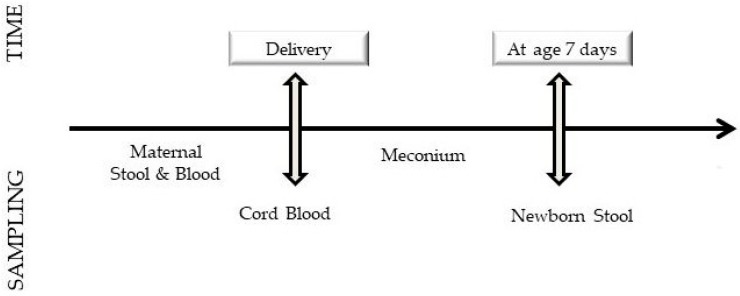
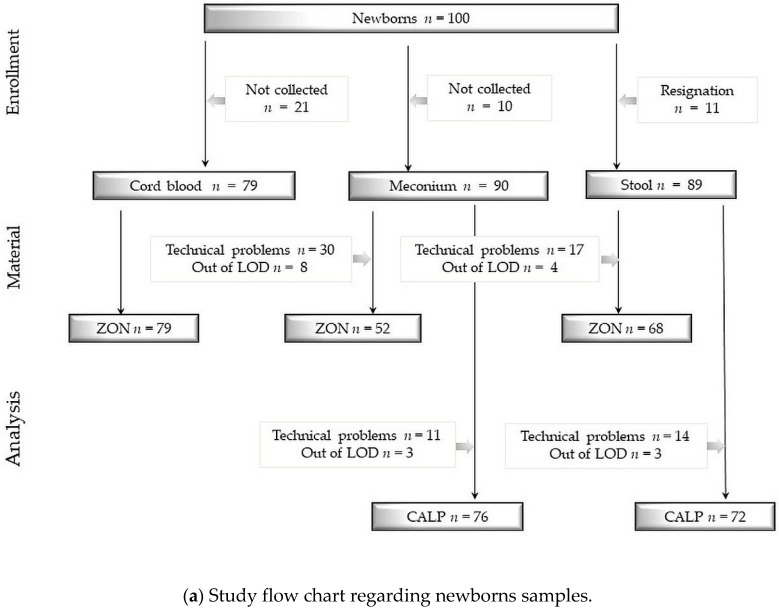
The study was conducted with 100 healthy, full-term newborns breastfed in the first week of life, with similar analyses for their mothers. Zonulin and calprotectin levels were used as intestinal permeability markers.
The median (range) zonulin concentrations (ng/mL) were in mothers: serum, 21.39 (6.39⁻57.54); stool, 82.23 (42.52⁻225.74); and newborns: serum cord blood, 11.14 (5.82⁻52.34); meconium, 54.15 (1.36⁻700.65); and stool at age seven days, 114.41 (29.38⁻593.72). Calprotectin median (range) concentrations (µg/mL) in mothers were: stool, 74.79 (3.89⁻211.77); and newborns: meconium, 154.76 (6.93⁻8884.11); and stool at age seven days 139.12 (11.89⁻627.35). The use of antibiotics during pregnancy resulted in higher zonulin concentrations in umbilical-cord serum and calprotectin concentrations in newborn stool at seven days, while antibiotic therapy during labour resulted in higher zonulin concentrations in the stool of newborns at seven days. Zonulin concentrations in the stool of newborns (at seven days) who were born via caesarean section were higher compared to with vaginal birth. With further analyses, caesarean section was found to have a greater effect on zonulin concentrations than prophylactic administration of antibiotics in the perinatal period. Pregnancy mass gain >18 kg was associated with higher calprotectin concentrations in maternal stool. Body Mass Index (BMI) increase >5.7 during pregnancy was associated with decreased zonulin concentrations in maternal stool and increased calprotectin concentrations in stool of mothers and newborns at seven days. There was also a negative correlation between higher BMI increase in pregnancy and maternal zonulin stool concentrations and a positive correlation between BMI increase in pregnancy and maternal calprotectin stool concentrations.
Maternal-foetal factors such as caesarean section, antibiotic therapy during pregnancy, as well as change in mother's BMI during pregnancy may increase intestinal permeability in newborns. Changes in body mass during pregnancy can also affect intestinal permeability in mothers. However, health consequences associated with increased intestinal permeability during the first days of life are unknown. Additionally, before the zonulin and calprotectin tests can be adopted as universal diagnostic applications to assess increased intestinal permeability, validation of these tests is necessary.
可以假设母婴和围产期因素会影响肠道屏障。
该研究对100名健康足月新生儿进行,这些新生儿在出生后第一周进行母乳喂养,并对其母亲进行了类似分析。采用连蛋白和钙卫蛋白水平作为肠道通透性标志物。
母亲的连蛋白浓度中位数(范围)(ng/mL)为:血清,21.39(6.39⁻57.54);粪便,82.23(42.52⁻225.74);新生儿的为:脐血血清,11.14(5.82⁻52.34);胎粪,54.15(1.36⁻700.65);出生7天时的粪便,114.41(29.38⁻593.72)。母亲钙卫蛋白浓度中位数(范围)(µg/mL)为:粪便,74.79(3.89⁻211.77);新生儿的为:胎粪,154.76(6.93⁻8884.11);出生7天时的粪便,139.12(11.89⁻627.35)。孕期使用抗生素会导致脐血血清中连蛋白浓度升高以及出生7天时新生儿粪便中钙卫蛋白浓度升高,而分娩时使用抗生素会导致出生7天时新生儿粪便中连蛋白浓度升高。剖宫产出生的新生儿(出生7天时)粪便中的连蛋白浓度高于阴道分娩的新生儿。进一步分析发现,剖宫产对连蛋白浓度的影响大于围产期预防性使用抗生素。孕期体重增加超过18 kg与母亲粪便中钙卫蛋白浓度升高有关。孕期体重指数(BMI)增加超过5.7与母亲粪便中连蛋白浓度降低以及母亲和出生7天新生儿粪便中钙卫蛋白浓度升高有关。孕期BMI升高幅度较大与母亲粪便中连蛋白浓度呈负相关,与母亲粪便中钙卫蛋白浓度呈正相关。
剖宫产、孕期抗生素治疗以及孕期母亲BMI变化等母婴因素可能会增加新生儿的肠道通透性。孕期体重变化也会影响母亲的肠道通透性。然而,生命最初几天肠道通透性增加所带来的健康后果尚不清楚。此外,在将连蛋白和钙卫蛋白检测作为评估肠道通透性增加的通用诊断应用之前,有必要对这些检测进行验证。