Song Kwanwoo, Lee Jinwook, Choi Seong-O, Kim Jooyoun
Department of Textiles, Merchandising and Fashion Design, Seoul National University, Seoul 08826, Korea.
Department of Chemical Education, Seoul National University, Seoul 08826, Korea.
Polymers (Basel). 2019 Mar 14;11(3):498. doi: 10.3390/polym11030498.
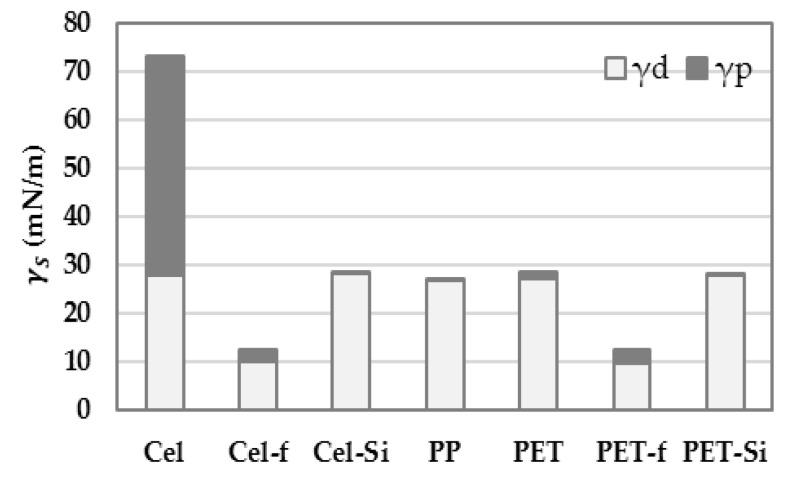
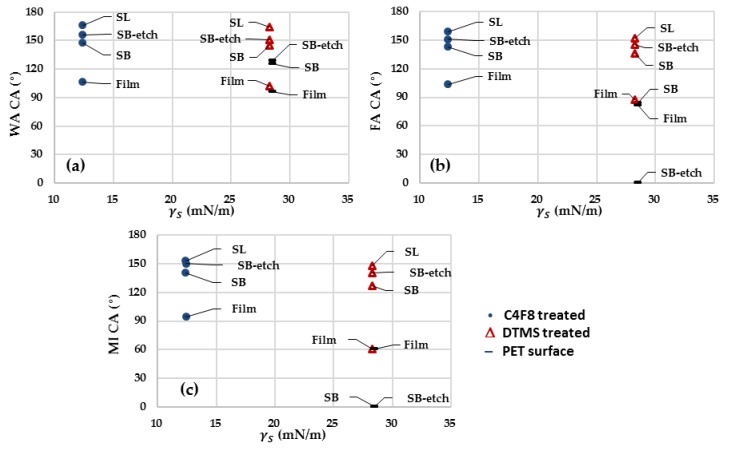
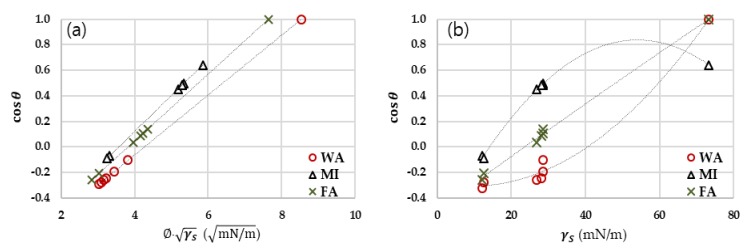
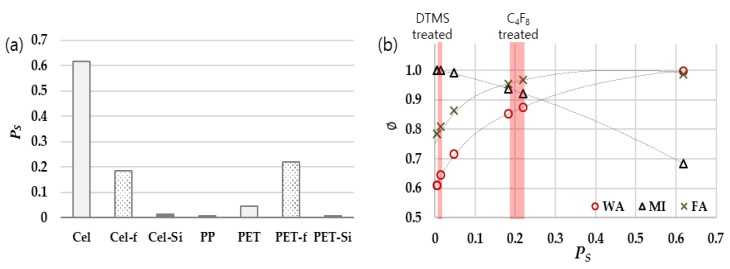
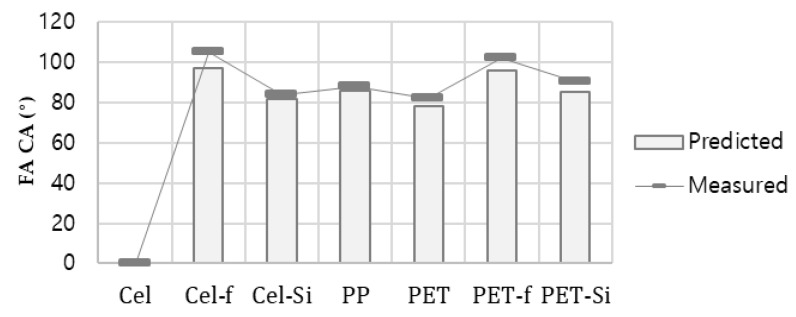
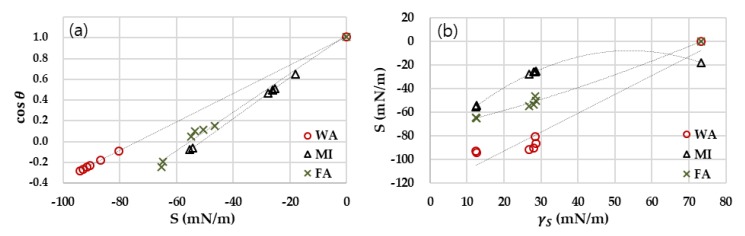
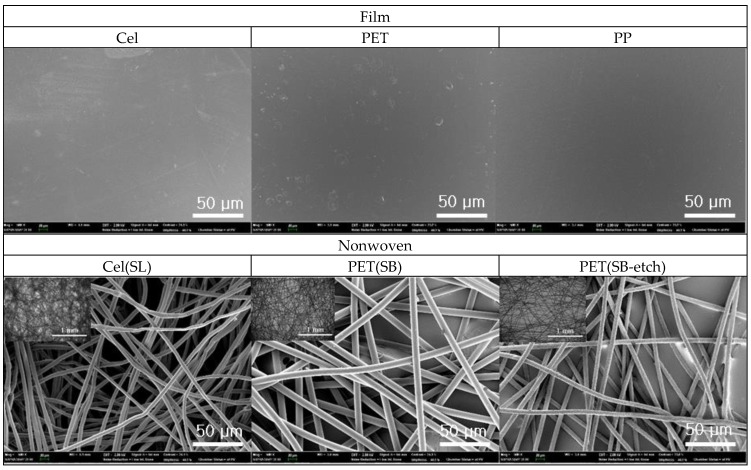
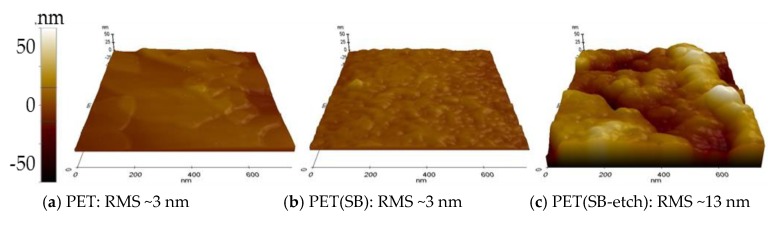
With various options of anti-wetting finish methods, this study intends to provide basic information that can be applied in selecting a relevant anti-wetting chemical to grant protection from spreading of liquids with different surface energy profiles. With such an aim, the anti-wetting effectiveness of fluorinated coating and silane coating was investigated for liquids having different surface energy components, water (WA), methylene iodide (MI) and formamide (FA). The wetting thermodynamics was experimentally investigated by analyzing dispersive and polar component surface energies of solids and liquids. The role of surface roughness in wettability was examined for fibrous nonwoven substrates that have varied surface roughness. The presence of roughness enhanced the anti-wetting performance of the anti-wetting treated surfaces. While the effectiveness of different anti-wetting treatments was varied depending on the liquid polarities, the distinction of different treatments was less apparent for the roughened fibrous surfaces than the film surfaces. This study provides experimental validation of wetting thermodynamics and the practical interpretation of anti-wetting finishing.
鉴于有多种抗湿整理方法可供选择,本研究旨在提供基础信息,以便在选择相关抗湿化学品时加以应用,从而防止具有不同表面能分布的液体扩散。出于这一目的,针对具有不同表面能成分的液体,即水(WA)、二碘甲烷(MI)和甲酰胺(FA),研究了氟化涂层和硅烷涂层的抗湿效果。通过分析固体和液体的色散分量表面能和极性分量表面能,对润湿热力学进行了实验研究。针对具有不同表面粗糙度的纤维非织造基材,考察了表面粗糙度在润湿性中的作用。粗糙度的存在增强了抗湿处理表面的抗湿性能。虽然不同抗湿处理的效果因液体极性而异,但对于粗糙的纤维表面而言,不同处理之间的差异不如薄膜表面那么明显。本研究提供了润湿热力学的实验验证以及抗湿整理的实际解读。