Department of Neurosurgery, Affiliated Hospital of YouJiang Medical University for Nationalities, Baise, Guangxi, China (mainland).
YouJiang Medical University for Nationalities, Baise, Guangxi, China (mainland).
Med Sci Monit. 2019 Apr 9;25:2583-2590. doi: 10.12659/MSM.913895.
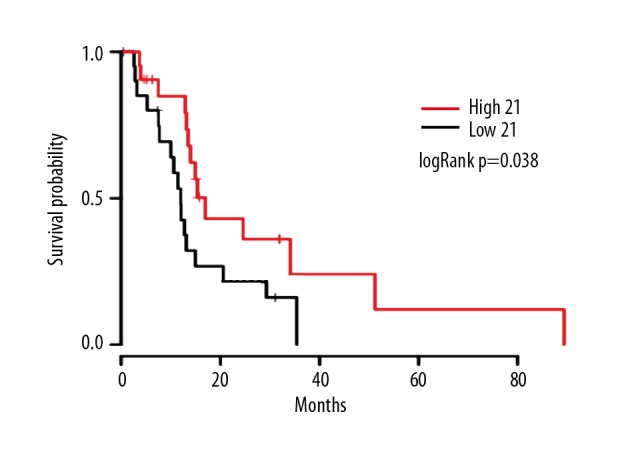
Glioblastoma multiforme (GBM) is the most common primary CNS cancer and has a poor prognosis. This study searched for significant genes and the mechanisms involved in GBM. We used the Gene Expression Omnibus (GEO) to test the WHO normal and IV glioma database, used R tool to identify the significant gene, and finally, combined these with The Cancer Genome Atlas (TCGA) to verify the significant genes. Subsequently, we explored the biological mechanisms involved. Phytanoyl-CoA 2-hydroxylase-interacting protein-like gene (PHYHIPL) is downregulated in grade IV glioma (GBM). The downregulation of PHYHIPL in GBM is accompanied by poor overall survival in the TCGA database, which indicates that PHYHIPL is a protection gene in GBM development. Bioinformatics analysis shows that the poor prognosis with downregulated PHYHIPL may be the result of the TNF signaling pathway and the IL-17 signaling pathway, but good prognosis accompanied by upregulated PHYHIPL may be the result of retrograde endocannabinoid signaling and the cAMP signaling pathway. Protein-protein interactions (PPI) net indicated that PHYHIPL may play a vital role in cell metabolism, and we hypothesize that the downregulation mechanism may be the result of mutations of the ß-catenin gene and the endogenous siRNA, as shown in previous studies. PHYHIPL may be a target gene for the treatment and prognosis of GBM.
多形性胶质母细胞瘤(GBM)是最常见的原发性中枢神经系统癌症,预后不良。本研究旨在寻找与 GBM 相关的重要基因及其机制。我们使用基因表达综合数据库(GEO)测试了 WHO 正常和 IV 级神经胶质瘤数据库,使用 R 工具识别了重要基因,最后结合癌症基因组图谱(TCGA)验证了这些重要基因。随后,我们探讨了相关的生物学机制。植烷酰辅酶 A 2-羟化酶相互作用蛋白样基因(PHYHIPL)在 IV 级神经胶质瘤(GBM)中下调。TCGA 数据库显示,GBM 中 PHYHIPL 的下调与总生存期不良相关,表明 PHYHIPL 是 GBM 发展过程中的保护基因。生物信息学分析表明,下调 PHYHIPL 导致不良预后可能与 TNF 信号通路和 IL-17 信号通路有关,而上调 PHYHIPL 导致良好预后可能与逆行内源性大麻素信号通路和 cAMP 信号通路有关。蛋白质-蛋白质相互作用(PPI)网络表明,PHYHIPL 可能在细胞代谢中发挥重要作用,我们假设下调机制可能是由于β-连环蛋白基因和内源性 siRNA 的突变,如先前的研究所示。PHYHIPL 可能是 GBM 治疗和预后的一个靶基因。