1Department of Biomedical Engineering, Tel Aviv University, Tel Aviv, Israel.
2The Sagol School of Neuroscience, Tel-Aviv University, Tel-Aviv, Israel.
NPJ Syst Biol Appl. 2019 Apr 4;5:12. doi: 10.1038/s41540-019-0089-0. eCollection 2019.
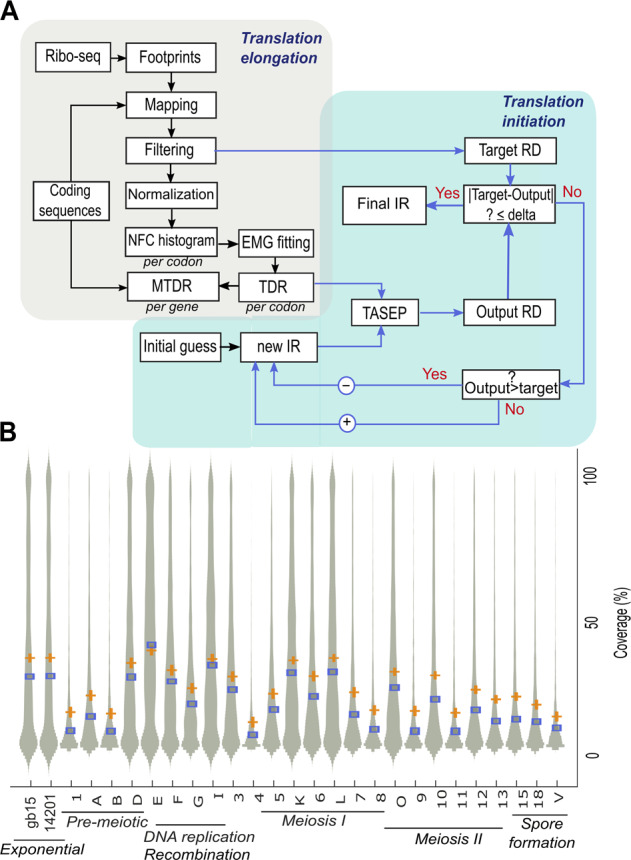
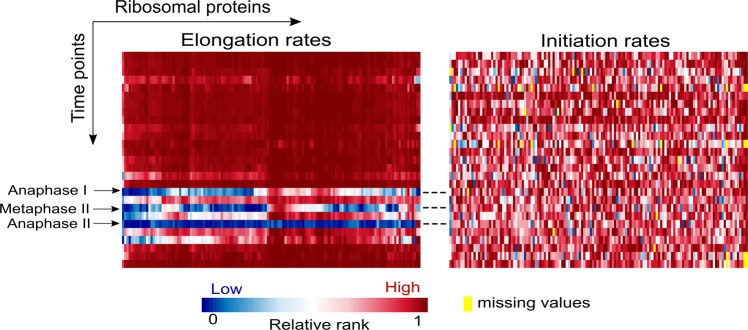
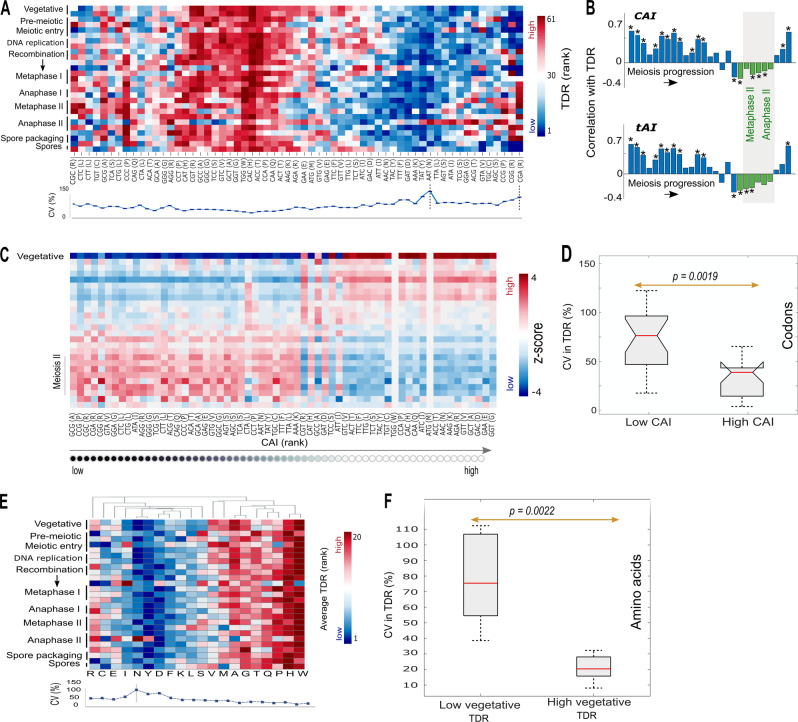
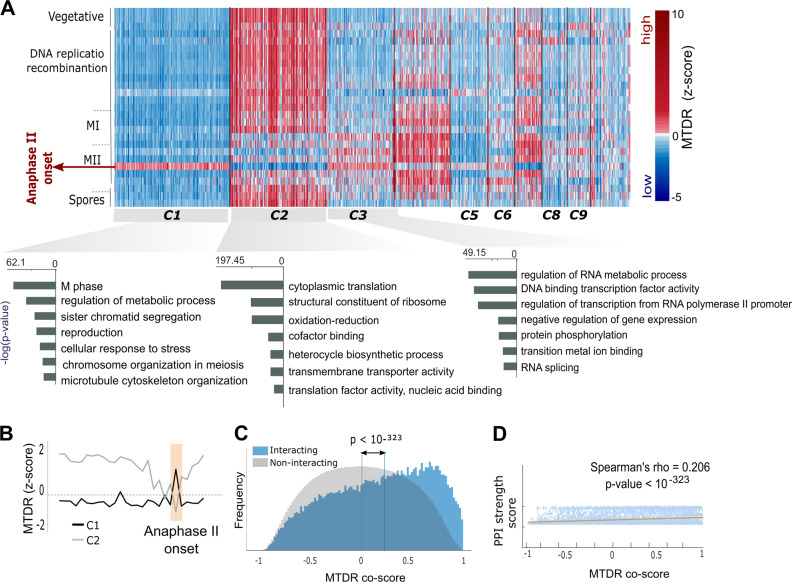
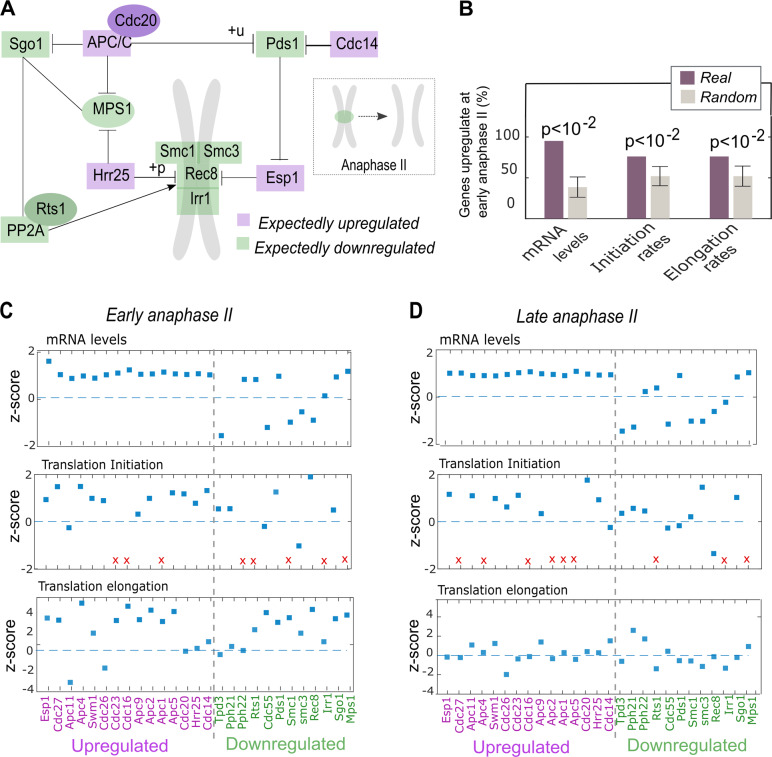
The ability to dynamically control mRNA translation has a great impact on many intracellular processes. Whereas it is believed that translational control in eukaryotes occurs mainly at initiation, the condition-specific changes at the elongation level and their potential regulatory role remain unclear. Using computational approaches applied to ribosome profiling data, we show that elongation rate is dynamic and can change considerably during the yeast meiosis to facilitate the selective translation of stage-specific transcripts. We observed unique elongation changes during meiosis II, including a global inhibition of translation elongation at the onset of anaphase II accompanied by a sharp shift toward increased elongation for genes required at this meiotic stage. We also show that ribosomal proteins counteract the global decreased elongation by maintaining high initiation rates. Our findings provide new insights into gene expression regulation during meiosis and demonstrate that codon usage evolved, among others, to optimize timely translation.
动态控制 mRNA 翻译的能力对许多细胞内过程有重大影响。虽然人们认为真核生物中的翻译控制主要发生在起始阶段,但伸长水平的条件特异性变化及其潜在的调节作用尚不清楚。我们使用应用于核糖体图谱数据的计算方法表明,延伸速度是动态的,在酵母减数分裂过程中会发生很大变化,以促进特定阶段转录本的选择性翻译。我们在减数分裂 II 期间观察到独特的延伸变化,包括在后期 II 开始时翻译延伸的全局抑制,同时向在此减数分裂阶段所需的基因的延伸急剧增加。我们还表明核糖体蛋白通过维持高起始率来抵抗全局延伸的降低。我们的发现为减数分裂过程中的基因表达调控提供了新的见解,并表明密码子使用进化了,除其他外,是为了优化及时翻译。