INSERM UMR-S935, F-94807 Villejuif, France.
Institut de Radioprotection et de Sûreté Nucléaire (IRSN), F-92262 Fontenay-aux-Roses, France.
Int J Mol Sci. 2019 Apr 8;20(7):1737. doi: 10.3390/ijms20071737.
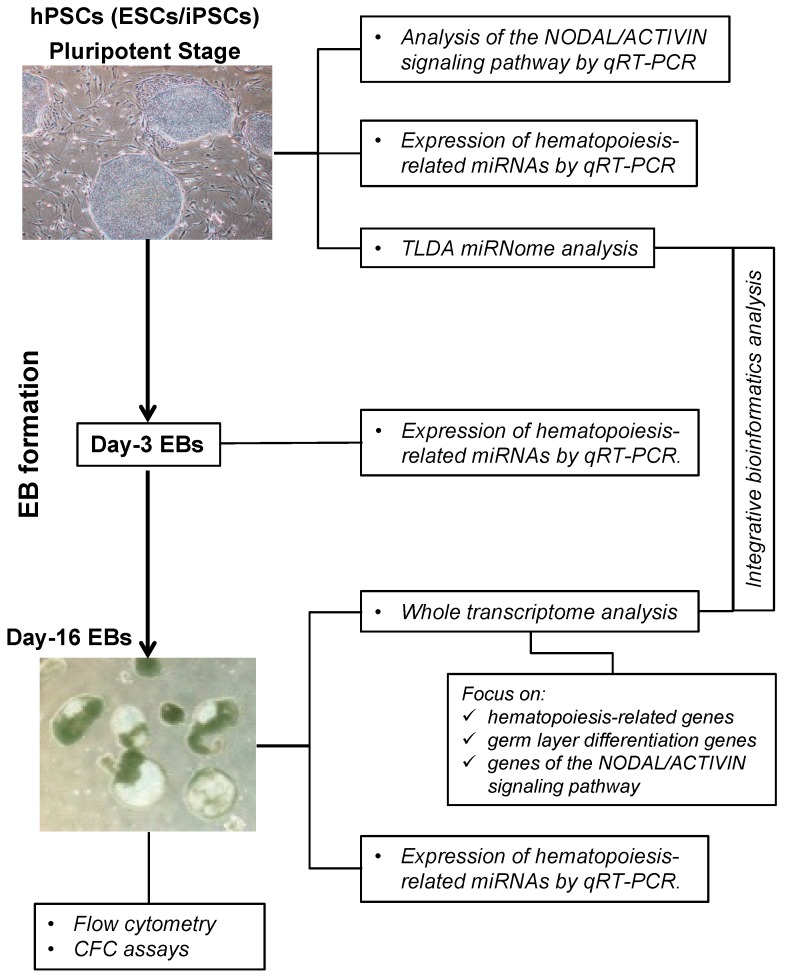
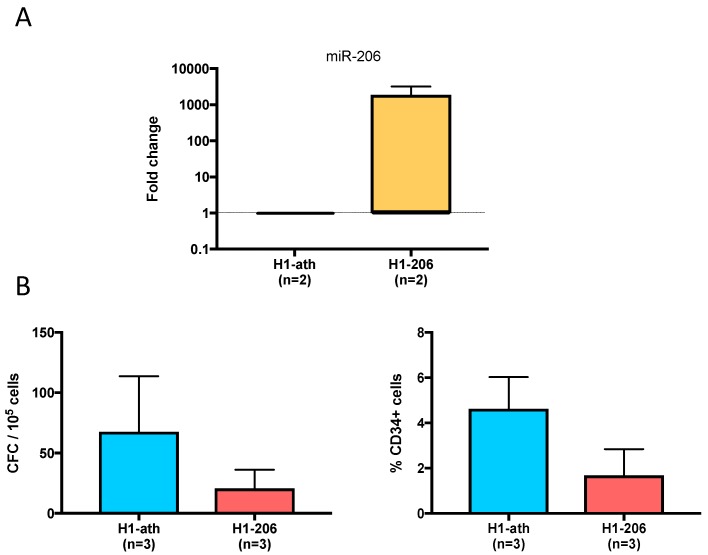
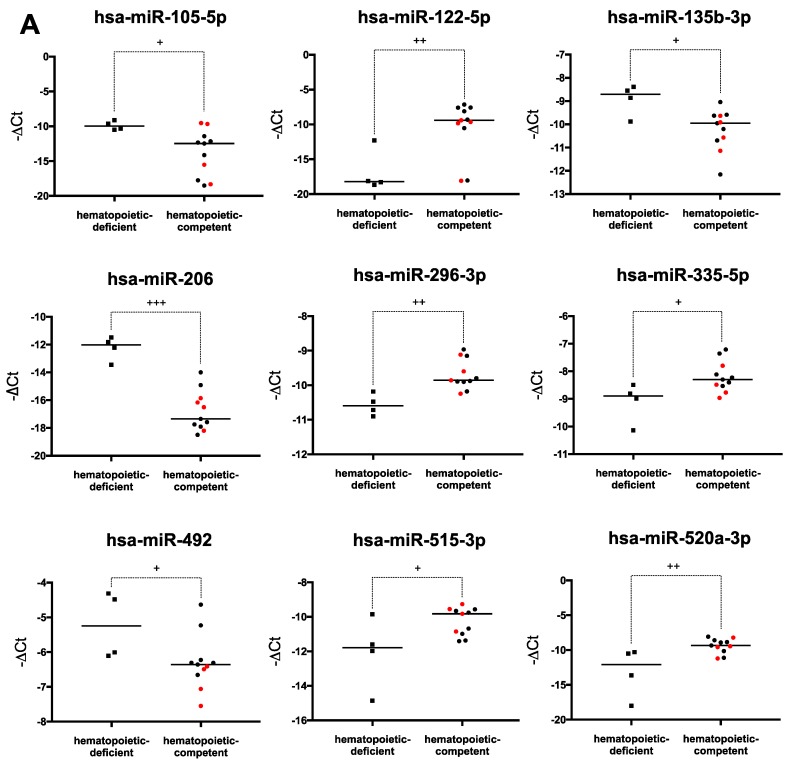
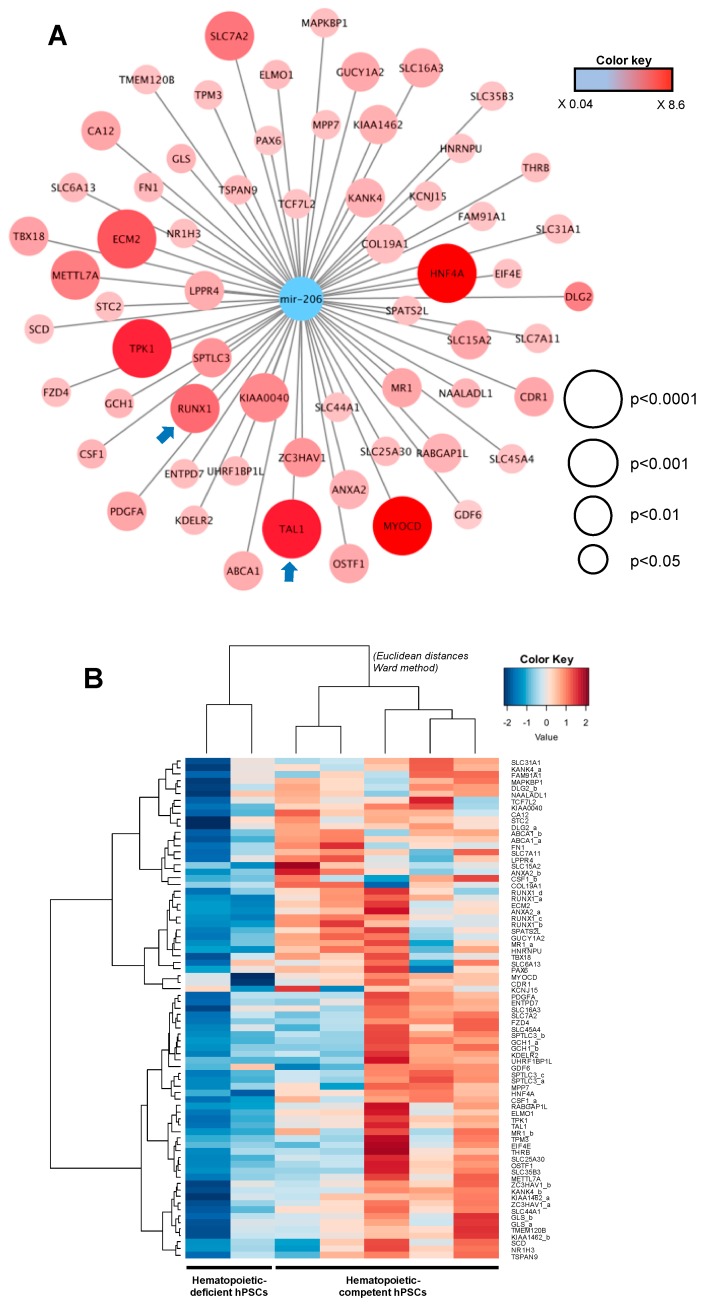
Although human pluripotent stem cells (hPSCs) can theoretically differentiate into any cell type, their ability to produce hematopoietic cells is highly variable from one cell line to another. The underlying mechanisms of this heterogeneity are not clearly understood. Here, using a whole miRNome analysis approach in hPSCs, we discovered that their hematopoietic competency was associated with the expression of several miRNAs and conversely correlated to that of miR-206 specifically. Lentiviral-based miR-206 ectopic expression in H1 hematopoietic competent embryonic stem (ES) cells markedly impaired their differentiation toward the blood lineage. Integrative bioinformatics identified a potential miR-206 target gene network which included hematopoietic master regulators RUNX1 and TAL1. This work sheds light on the critical role of miR-206 in the generation of blood cells off hPSCs. Our results pave the way for future genetic manipulation of hPSCs aimed at increasing their blood regenerative potential and designing better protocols for the generation of bona fide hPSC-derived hematopoietic stem cells.
虽然人类多能干细胞(hPSCs)理论上可以分化为任何细胞类型,但它们产生造血细胞的能力在不同细胞系之间差异很大。这种异质性的潜在机制尚不清楚。在这里,我们使用 hPSCs 的全微小 RNA 组分析方法,发现它们的造血能力与几种微小 RNA 的表达相关,特别是与 miR-206 的表达相关。基于慢病毒的 miR-206 异位表达在造血能力强的 H1 胚胎干细胞(ES)细胞中显著损害了它们向血液谱系的分化。综合生物信息学鉴定出一个潜在的 miR-206 靶基因网络,其中包括造血主调控因子 RUNX1 和 TAL1。这项工作揭示了 miR-206 在 hPSC 造血细胞生成中的关键作用。我们的结果为未来 hPSC 的遗传操作铺平了道路,旨在提高其血液再生潜力,并设计更好的方案来生成真正的 hPSC 衍生造血干细胞。