Szymańska-Chargot Monika, Chylińska Monika, Gdula Karolina, Kozioł Arkadiusz, Zdunek Artur
Institute of Agrophysics, Polish Academy of Sciences, Doswiadczalna 4, 20-290 Lublin, Poland.
Polymers (Basel). 2017 Oct 9;9(10):495. doi: 10.3390/polym9100495.
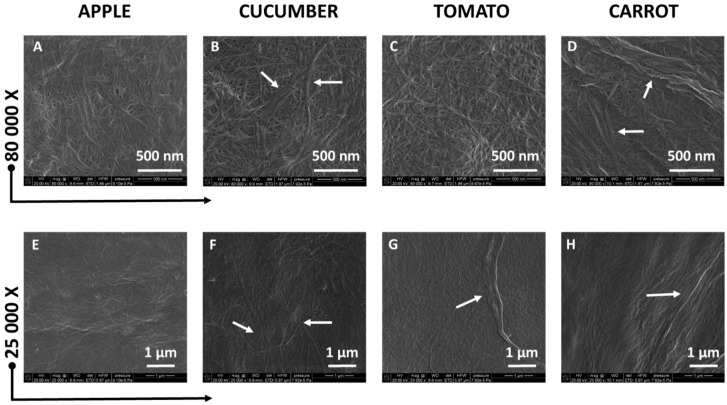
A new fractionation process was developed to achieve valorization of fruit and vegetable pomaces. The importance of the residues from fruits and vegetables is still growing; therefore; the study presents the novel route of a fractioning process for the conversion of agro-industrial biomasses, such as pomaces, into useful feedstocks with potential application in the fields of fuels, chemicals, and polymers. Hence, the biorefinery process is expected to convert them into various by-products offering a great diversity of low-cost materials. The final product of the process is the cellulose of the biofuel importance. The study presents the novel route of the fractioning process for the conversion of agro-industrial biomasses, such as pomaces, into useful feedstocks with a potential application in the fields of fuels, chemicals, and polymers. Therefore the aim of this paper was to present the novel route of the pomaces fraction and the characterization of residuals. Pomaces from apple, cucumber, carrot, and tomato were treated sequentially with water, acidic solution, alkali solution, and oxidative reagent in order to obtain fractions reach in sugars, pectic polysaccharides, hemicellulose, cellulose, and lignin. Pomaces were characterized by dry matter content, neutral detergent solubles, hemicellulose, cellulose, and lignin. Obtained fractions were characterized by the content of pectins expressed as galacturonic acid equivalent and hemicelluloses expressed as a xyloglucan equivalent. The last fraction and residue was cellulose characterized by crystallinity degree by X-ray diffractometer (XRD), microfibril diameter by atomic force microscope (AFM), and overall morphology by scanning electron microscope (SEM). The hemicelluloses content was similar in all pomaces. Moreover, all the materials were characterized by the high pectins level in extracts evaluated as galacturonic acid content. The lignins content compared with other plant biomasses was on a very low level. The cellulose fraction was the highest in cucumber pomace. The cellulose fraction was characterized by crystallinity degree, microfibril diameter, and overall morphology. Isolated cellulose had a very fine structure with relatively high crystalline index but small crystallites.
开发了一种新的分级工艺,以实现果蔬渣的增值利用。水果和蔬菜残渣的重要性仍在不断增加;因此,该研究提出了一种将农业工业生物质(如果渣)转化为有用原料的分级工艺新途径,这些原料在燃料、化学品和聚合物领域具有潜在应用价值。因此,生物精炼工艺有望将它们转化为各种副产品,提供种类繁多的低成本材料。该工艺的最终产品是具有生物燃料重要性的纤维素。该研究提出了将农业工业生物质(如果渣)转化为有用原料的分级工艺新途径,这些原料在燃料、化学品和聚合物领域具有潜在应用价值。因此,本文的目的是介绍果渣分级的新途径以及残渣的特性。对苹果、黄瓜、胡萝卜和番茄的果渣依次用水、酸性溶液、碱性溶液和氧化试剂进行处理,以获得富含糖、果胶多糖、半纤维素、纤维素和木质素的级分。果渣通过干物质含量、中性洗涤剂可溶物、半纤维素、纤维素和木质素进行表征。所得级分通过以半乳糖醛酸当量表示的果胶含量和以木葡聚糖当量表示的半纤维素含量进行表征。最后一级分和残渣是纤维素,通过X射线衍射仪(XRD)测定结晶度、原子力显微镜(AFM)测定微纤丝直径以及扫描电子显微镜(SEM)测定整体形态。所有果渣中的半纤维素含量相似。此外,所有材料提取物中的果胶水平都很高,以半乳糖醛酸含量评估。与其他植物生物质相比,木质素含量非常低。黄瓜果渣中的纤维素级分最高。纤维素级分通过结晶度、微纤丝直径和整体形态进行表征。分离出的纤维素具有非常精细的结构,结晶指数相对较高,但微晶较小。