Wang Xiaohong, Ackermann Maximilian, Neufurth Meik, Wang Shunfeng, Li Qiang, Feng Qingling, Schröder Heinz C, Müller Werner E G
ERC Advanced Investigator Grant Research Group at the Institute for Physiological Chemistry, University Medical Center of the Johannes Gutenberg University, Mainz, Duesbergweg 6, 55128 Mainz, Germany.
Institute of Functional and Clinical Anatomy, University Medical Center of the Johannes Gutenberg University, Johann Joachim Becher Weg 13, D-55099 Mainz, Germany.
Polymers (Basel). 2017 Nov 4;9(11):575. doi: 10.3390/polym9110575.
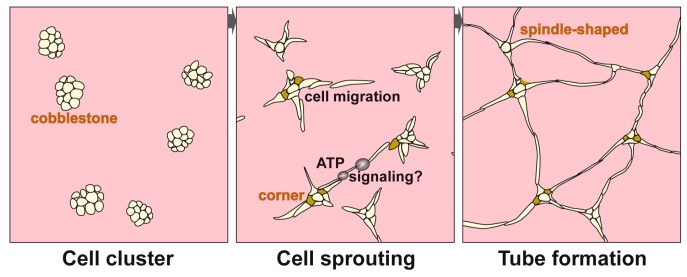
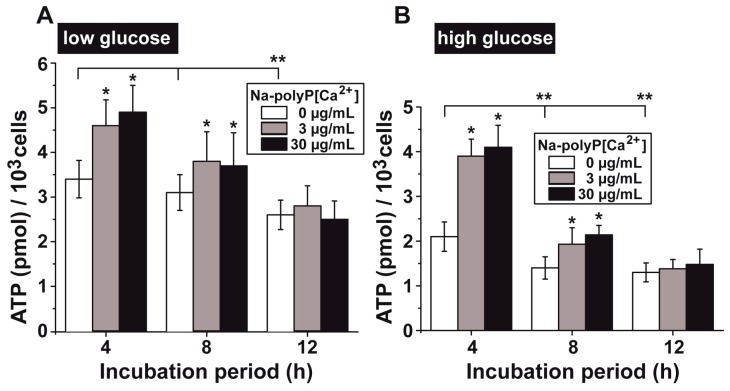
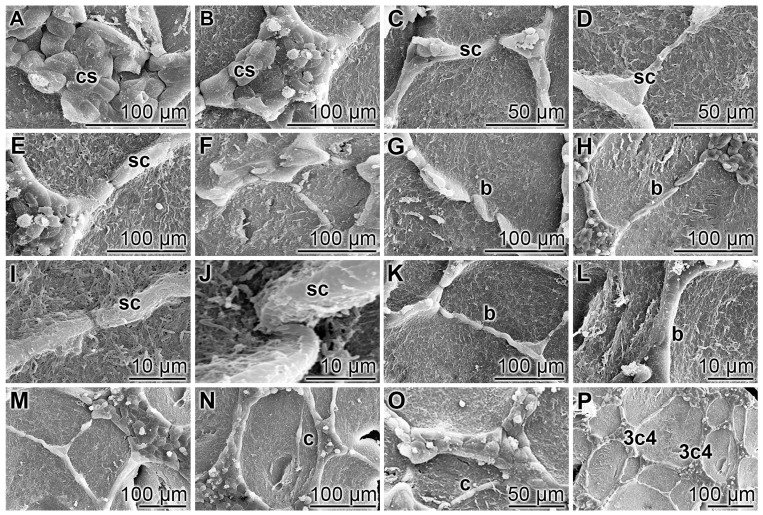
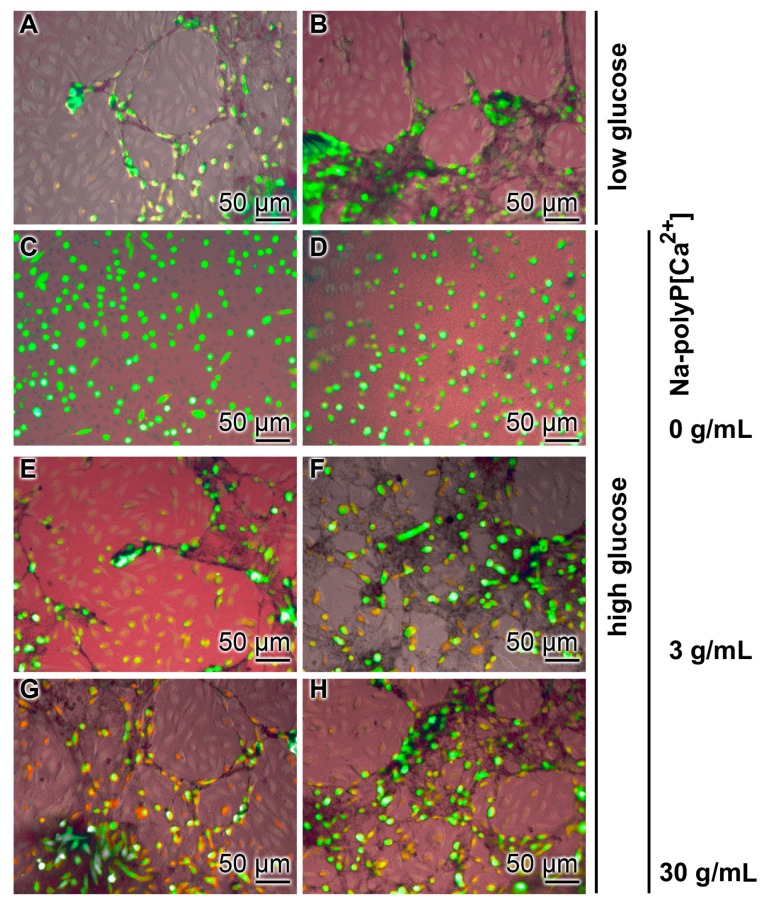
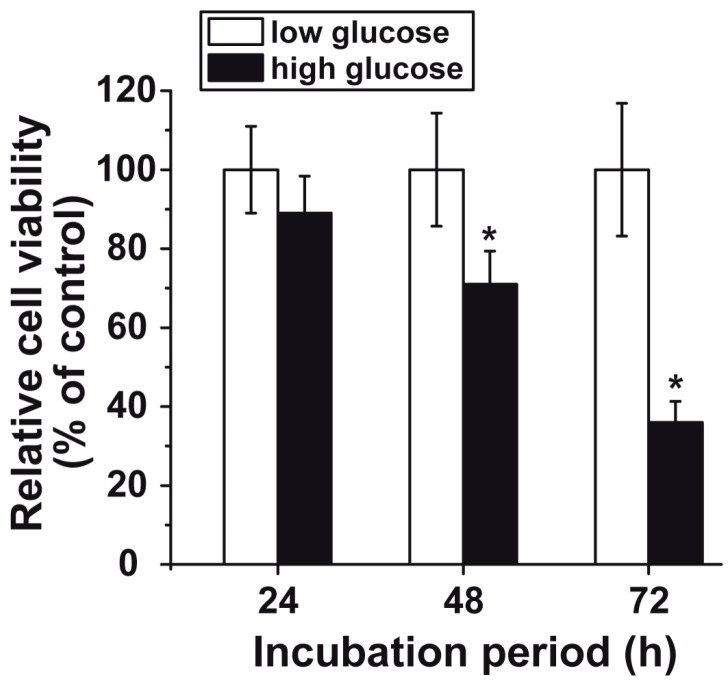
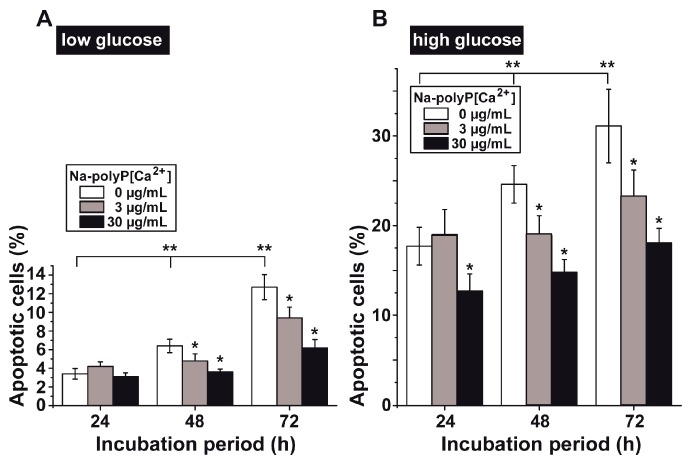
Micro-vascularization is a fast, energy-dependent process that is compromised by elevated glucose concentrations such as in diabetes mellitus disease. Here, we studied the effect of the physiological bioinorganic polymer, polyphosphate (polyP), on the reduced ATP content and impaired function of endothelial cells cultivated under "high glucose" (35 mM diabetes mellitus conditions) concentrations. This high-energy biopolymer has been shown to provide a source of metabolic energy, stored in its phosphoanhydride bonds. We show that exposure of human umbilical vein endothelial cells (HUVEC cells) to "high glucose" levels results in reduced cell viability, increased apoptotic cell death, and a decline in intracellular ATP level. As a consequence, the ability of HUVEC cells to form tube-like structures in the in vitro cell tube formation assay was almost completely abolished under "high glucose" conditions. Those cells were grown onto a physiological collagen scaffold (collagen/basement membrane extract). We demonstrate that these adverse effects of increased glucose levels can be reversed by administration of polyP to almost normal values. Using Na-polyP, complexed in a stoichiometric (molar) ratio to Ca ions and in the physiological concentration range between 30 and 300 µM, an almost complete restoration of the reduced ATP pool of cells exposed to "high glucose" was found, as well as a normalization of the number of apoptotic cells and energy-dependent tube formation. It is concluded that the adverse effects on endothelial cells caused by the metabolic energy imbalance at elevated glucose concentrations can be counterbalanced by polyP, potentially opening new strategies for treatment of the micro-vascular complications in diabetic patients.
微血管形成是一个快速的、能量依赖的过程,会受到诸如糖尿病中升高的葡萄糖浓度的影响。在此,我们研究了生理性生物无机聚合物多聚磷酸盐(polyP)对在“高葡萄糖”(35 mM糖尿病条件)浓度下培养的内皮细胞中ATP含量降低和功能受损的影响。这种高能生物聚合物已被证明能提供一种代谢能量来源,存储在其磷酸酐键中。我们发现,人脐静脉内皮细胞(HUVEC细胞)暴露于“高葡萄糖”水平会导致细胞活力降低、凋亡性细胞死亡增加以及细胞内ATP水平下降。因此,在“高葡萄糖”条件下,HUVEC细胞在体外细胞管形成试验中形成管状结构的能力几乎完全丧失。这些细胞生长在生理性胶原支架(胶原/基底膜提取物)上。我们证明,通过给予多聚磷酸盐,可将葡萄糖水平升高的这些不利影响逆转至几乎正常的值。使用与钙离子以化学计量(摩尔)比络合且生理浓度范围在30至300 μM之间的Na-多聚磷酸盐,发现暴露于“高葡萄糖”的细胞中降低的ATP池几乎完全恢复,同时凋亡细胞数量和能量依赖的管形成也恢复正常。得出的结论是,多聚磷酸盐可以抵消高葡萄糖浓度下代谢能量失衡对内皮细胞造成的不利影响,这可能为治疗糖尿病患者的微血管并发症开辟新的策略。