Abdul Rahman Nur Hayati, Chieng Buong Woei, Ibrahim Nor Azowa, Abdul Rahman Norizah
Department of Chemistry, Faculty of Science, Universiti Putra Malaysia, 43400 UPM Serdang, Malaysia.
Materials Processing and Technology Laboratory, Institute of Advanced Technology, Universiti Putra Malaysia, 43400 UPM Serdang, Malaysia.
Polymers (Basel). 2017 Nov 7;9(11):588. doi: 10.3390/polym9110588.
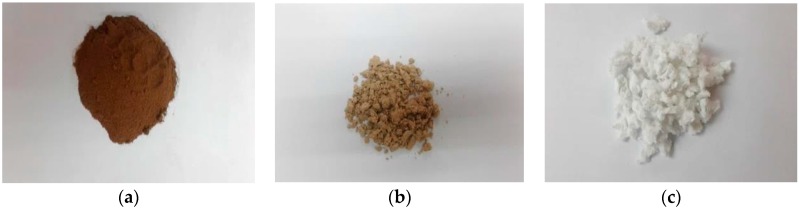
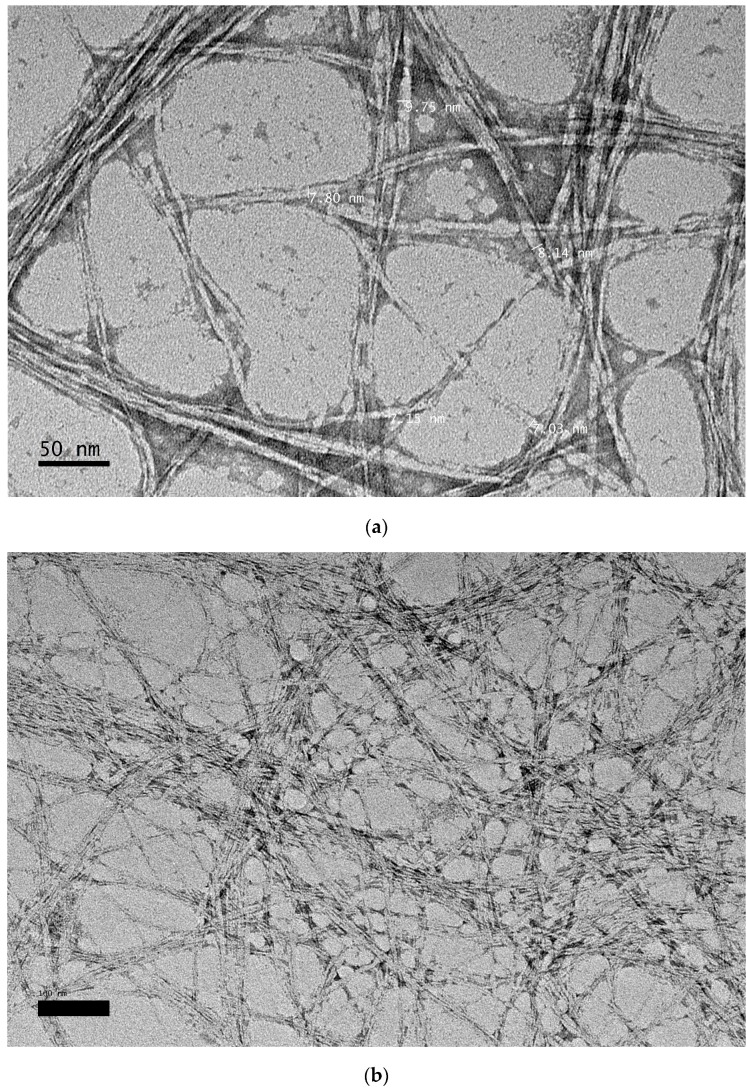
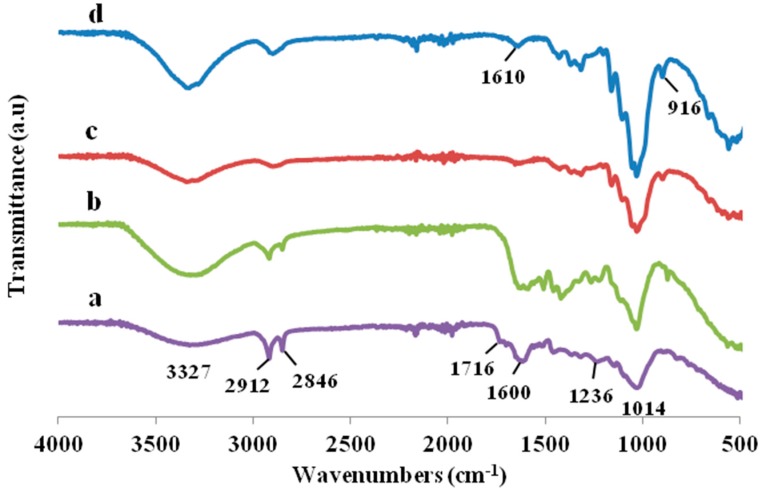
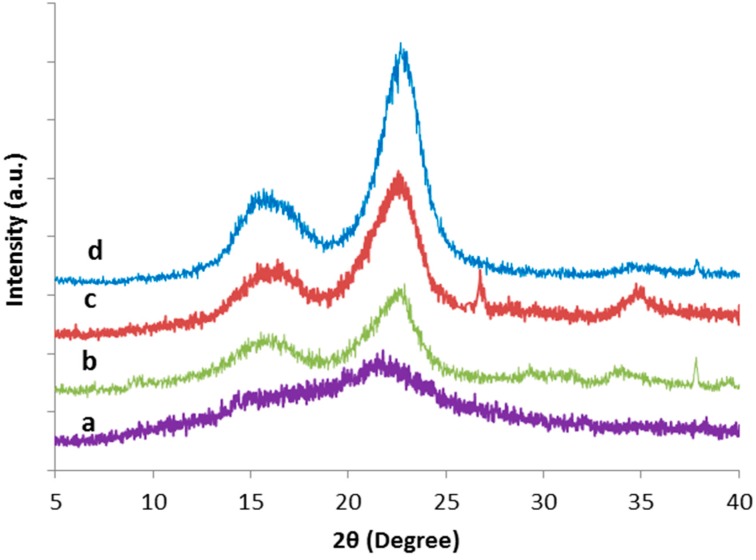
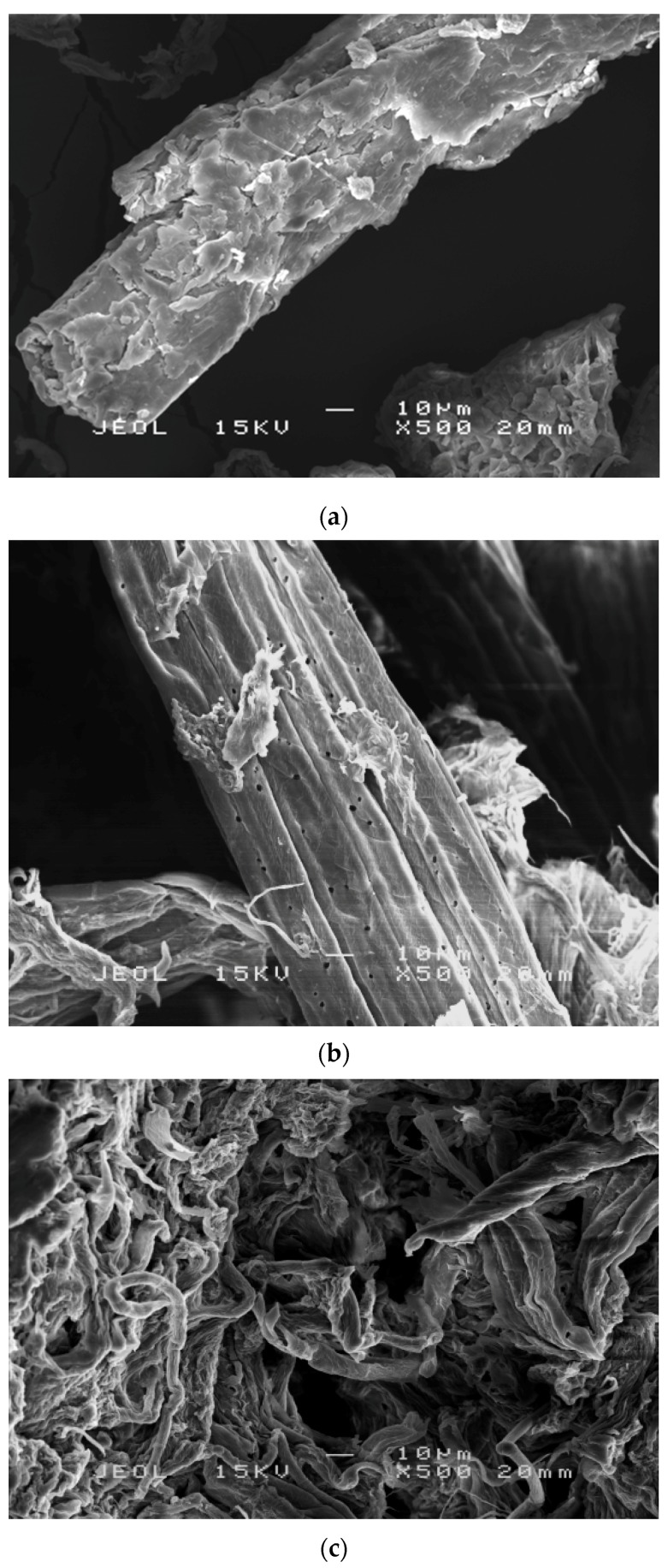
The aim was to explore the utilization of tea leaf waste fibers (TLWF) as a source for the production of cellulose nanocrystals (CNC). TLWF was first treated with alkaline, followed by bleaching before being hydrolyzed with concentrated sulfuric acid. The materials attained after each step of chemical treatments were characterized and their chemical compositions were studied. The structure analysis was examined by Fourier transform infrared (FTIR) spectroscopy and X-ray diffraction (XRD). From FTIR analysis, two peaks at 1716 and 1207 cm-which represent C=O stretching and C⁻O stretching, respectively-disappeared in the spectra after the alkaline and bleaching treatments indicated that hemicellulose and lignin were almost entirely discarded from the fiber. The surface morphology of TLWF before and after chemical treatments was investigated by scanning electron microscopy (SEM) while the dimension of CNC was determined by transmission electron microscopy (TEM). The extraction of CNC increased the surface roughness and the crystallinity index of fiber from 41.5% to 83.1%. Morphological characterization from TEM revealed the appearance of needle-like shaped CNCs with average diameter of 7.97 nm. The promising results from all the analyses justify TLWF as a principal source of natural materials which can produce CNC.
目的是探索将茶叶废料纤维(TLWF)用作生产纤维素纳米晶体(CNC)的原料。TLWF首先用碱处理,然后进行漂白,再用浓硫酸水解。对化学处理各步骤后得到的材料进行表征,并研究其化学组成。通过傅里叶变换红外(FTIR)光谱和X射线衍射(XRD)进行结构分析。从FTIR分析可知,在碱处理和漂白处理后的光谱中,分别代表C=O伸缩振动和C⁻O伸缩振动的1716和1207 cm处的两个峰消失了,这表明半纤维素和木质素几乎完全从纤维中去除。通过扫描电子显微镜(SEM)研究了化学处理前后TLWF的表面形态,而通过透射电子显微镜(TEM)确定了CNC的尺寸。CNC的提取使纤维的表面粗糙度和结晶度指数从41.5%提高到83.1%。TEM的形态表征显示出平均直径为7.97 nm的针状CNC的出现。所有分析的良好结果证明TLWF是可生产CNC的天然材料的主要来源。