State Key Laboratory of Crop Genetics and Germplasm Enhancement, MOA Key Laboratory of Plant Nutrition and Fertilization in Low-Middle Reaches of the Yangtze River, Nanjing Agricultural University, Nanjing 210095, China.
CAAS-IRRI Joint Laboratory for Genomics-Assisted Germplasm Enhancement, Agricultural Genomics Institute in Shenzhen, Chinese Academy of Agricultural Sciences, Shenzhen (518000), China.
Genes (Basel). 2019 Apr 9;10(4):290. doi: 10.3390/genes10040290.
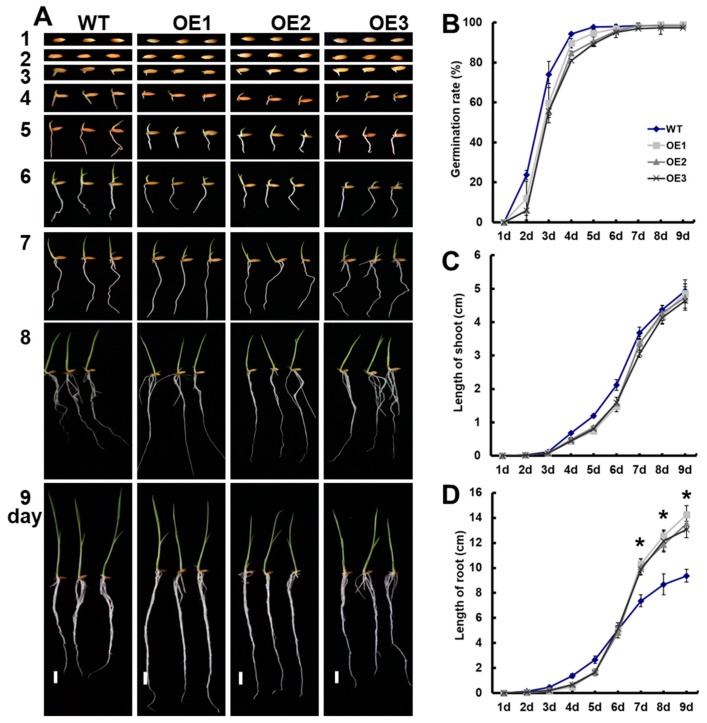
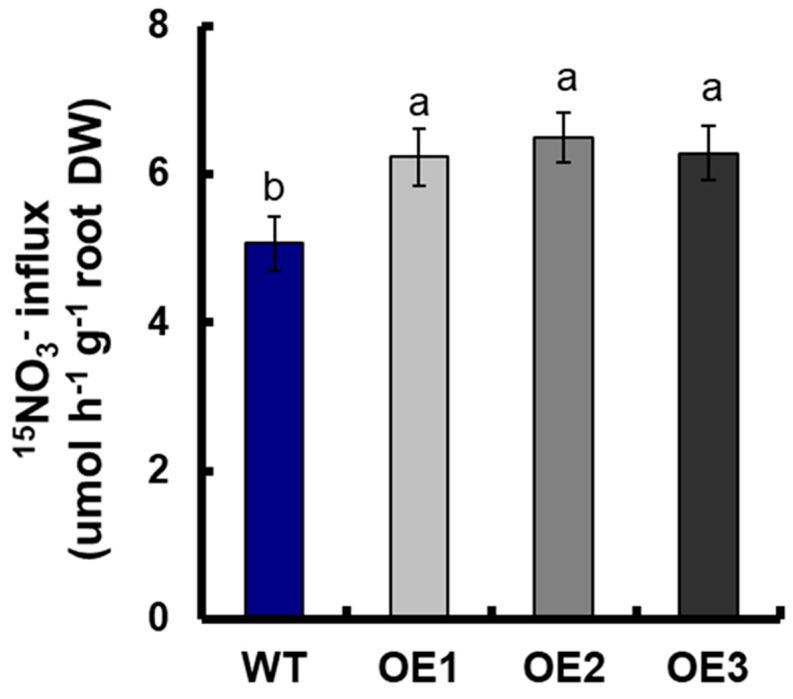
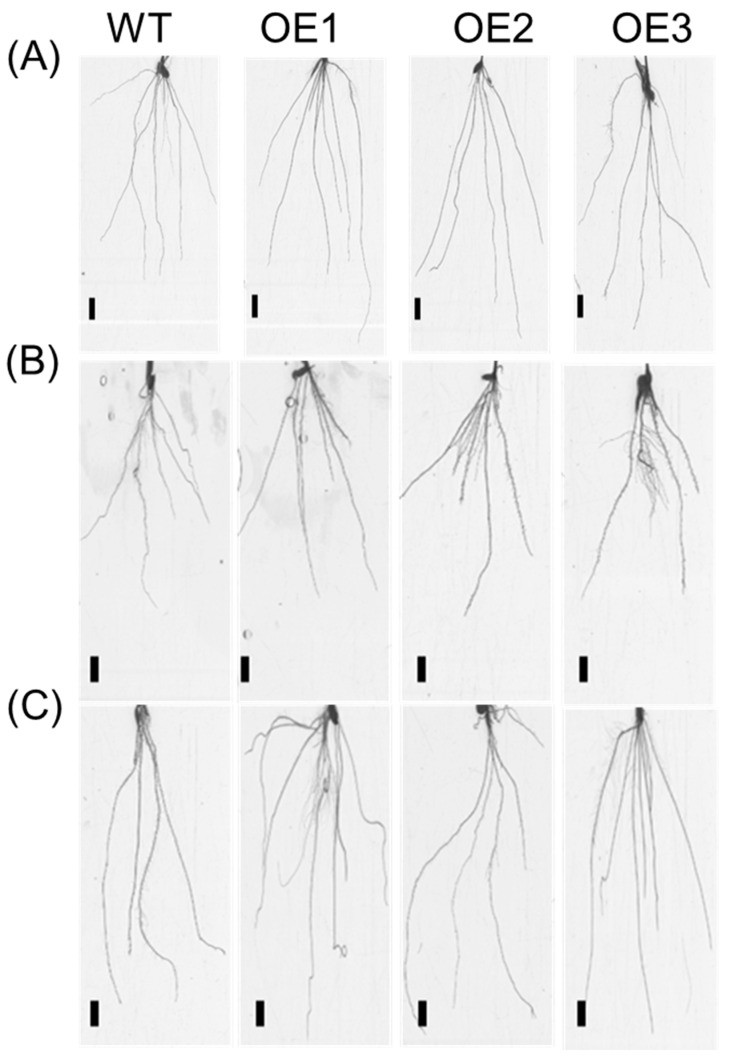
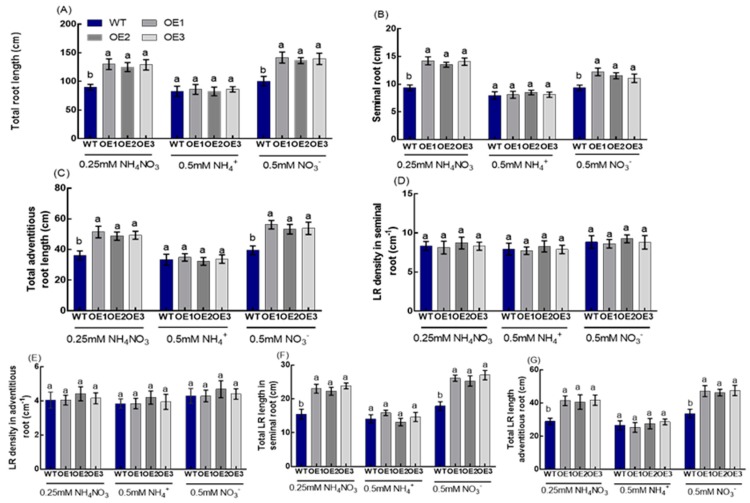
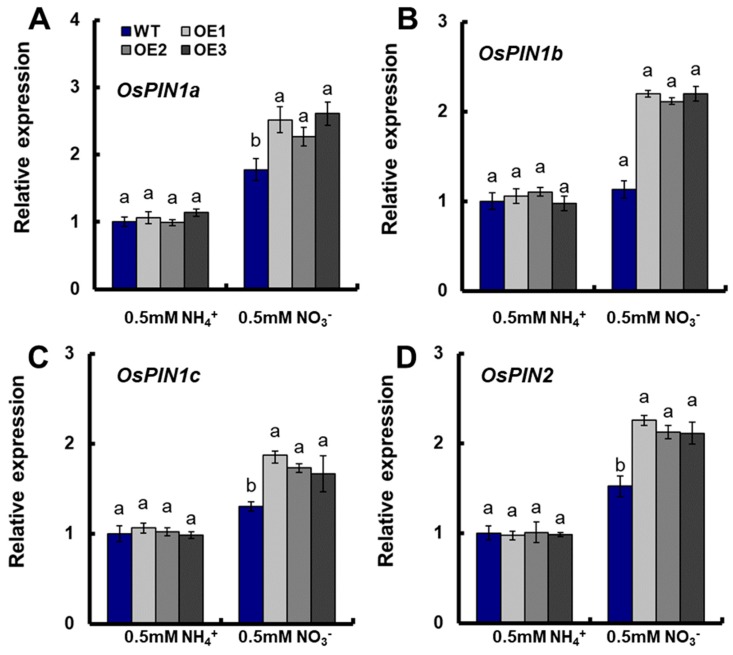
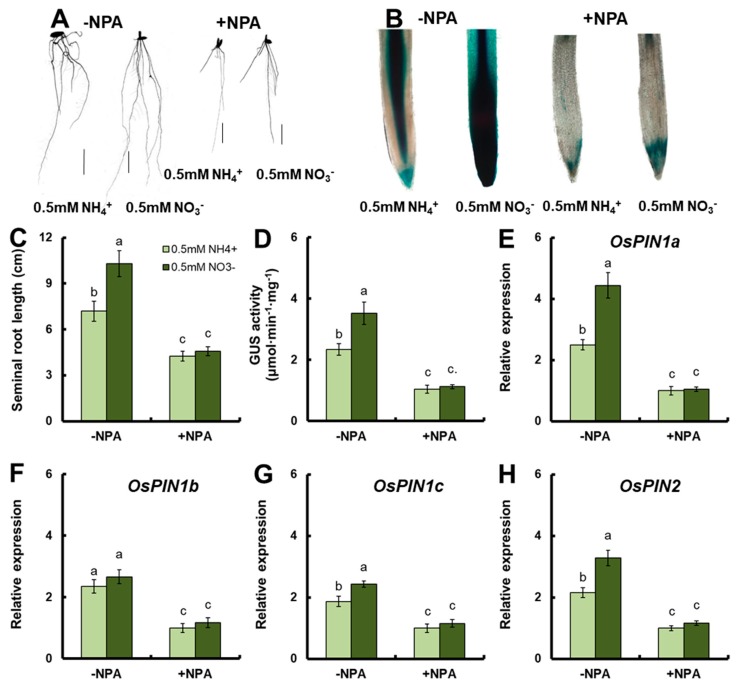
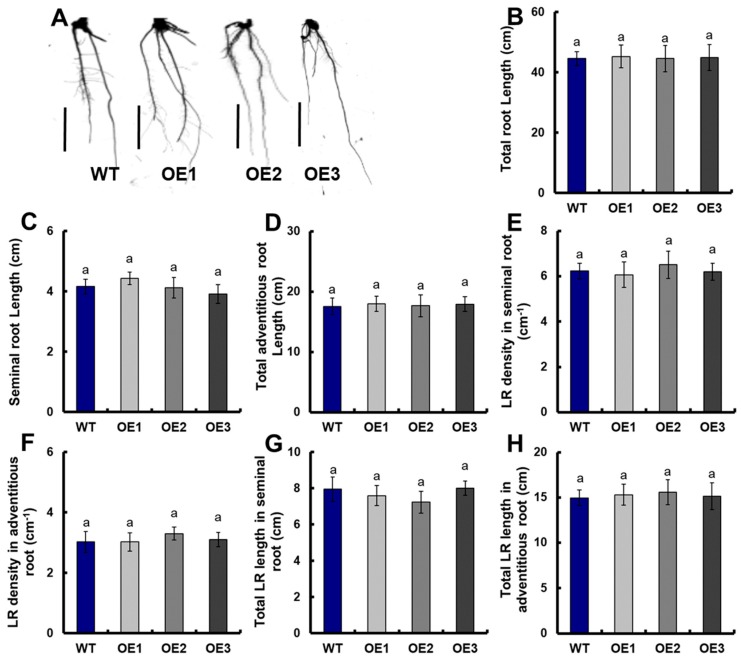
Root morphology is essential for plant survival. NO₃ is not only a nutrient, but also a signal substance affecting root growth in plants. However, the mechanism of NO₃-mediated root growth in rice remains unclear. In this study, we investigated the effect of on root elongation and nitrate signaling-mediated auxin transport using overexpression lines. We observed that the overexpression of increased the total root length in rice, including the seminal root length, total adventitious root length, and total lateral root length in seminal roots and adventitious roots under 0.5-mM NO₃⁻ conditions, but not under 0.5-mM NH₄⁺ conditions. Compared with wild type (WT), the NO₃ influx rate of transgenic lines increased by 24.3%, and the expressions of auxin transporter genes and ) also increased significantly under 0.5-mM NO₃ conditions. There were no significant differences in root length, ß-glucuronidase (GUS) activity, and the expressions of and in the transgenic line between 0.5-mM NO₃ and 0.5-mM NH₄⁺ treatments together with N-1-naphthylphalamic acid (NPA) treatment. When exogenous NPA was added to 0.5-mM NO₃ nutrient solution, there were no significant differences in the total root length and expressions of and between transgenic plants and WT, although the NO₃ influx rate of transgenic lines increased by 25.2%. These results indicated that is involved in the pathway of nitrate-dependent root elongation by regulating auxin transport to roots; i.e., overexpressing promotes an effect on root growth upon NO₃ treatment that requires active polar auxin transport.
根系形态对植物的生存至关重要。硝酸盐不仅是一种营养物质,还是一种信号物质,影响植物根系的生长。然而,硝酸盐介导的水稻根系生长的机制尚不清楚。在这项研究中,我们利用过表达系研究了对根伸长和硝酸盐信号介导的生长素运输的影响。我们观察到,过表达增加了水稻的总根长,包括在 0.5mM NO₃⁻条件下的主根长度、总不定根长度和主根和不定根的总侧根长度,但在 0.5mM NH₄⁺条件下没有。与野生型(WT)相比,转基因系的硝酸盐流入率增加了 24.3%,在 0.5mM NO₃条件下,生长素转运基因和的表达也显著增加。在 0.5mM NO₃和 0.5mM NH₄⁺处理以及 N-1-萘基苯甲酰胺(NPA)处理下,过表达系的根长、β-葡萄糖醛酸酶(GUS)活性和在 0.5mM NO₃条件下的表达没有显著差异。当外源 NPA 添加到 0.5mM NO₃营养液中时,尽管转基因系的硝酸盐流入率增加了 25.2%,但转基因植物和 WT 之间的总根长和和的表达没有显著差异。这些结果表明,通过调节生长素向根的极性运输,参与了硝酸盐依赖的根伸长途径;即,过表达促进了 NO₃处理对根生长的影响,这需要活跃的极性生长素运输。