Nakai Keita, Ishihara Kazuhiko, Kappl Michael, Fujii Syuji, Nakamura Yoshinobu, Yusa Shin-Ichi
Department of Applied Chemistry, University of Hyogo, 2167 Shosha, Himeji, Hyogo 671-2280, Japan.
Department of Materials Engineering, The University of Tokyo, 7-3-1 Hongo, Bunkyo-ku, Tokyo 113-8656, Japan.
Polymers (Basel). 2017 Feb 4;9(2):49. doi: 10.3390/polym9020049.
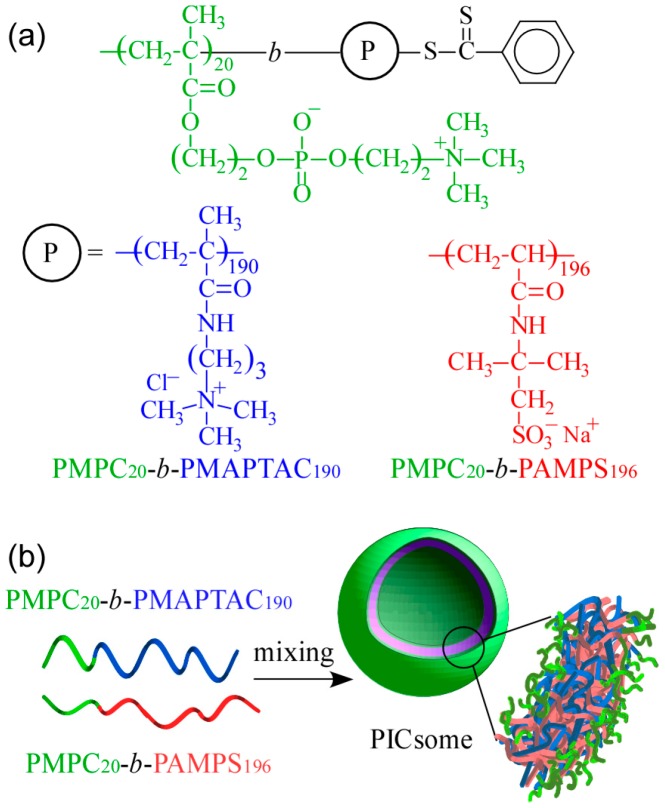
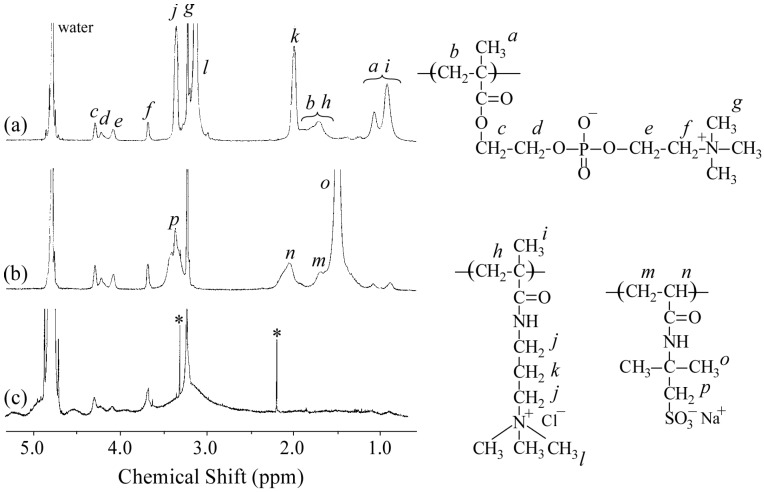
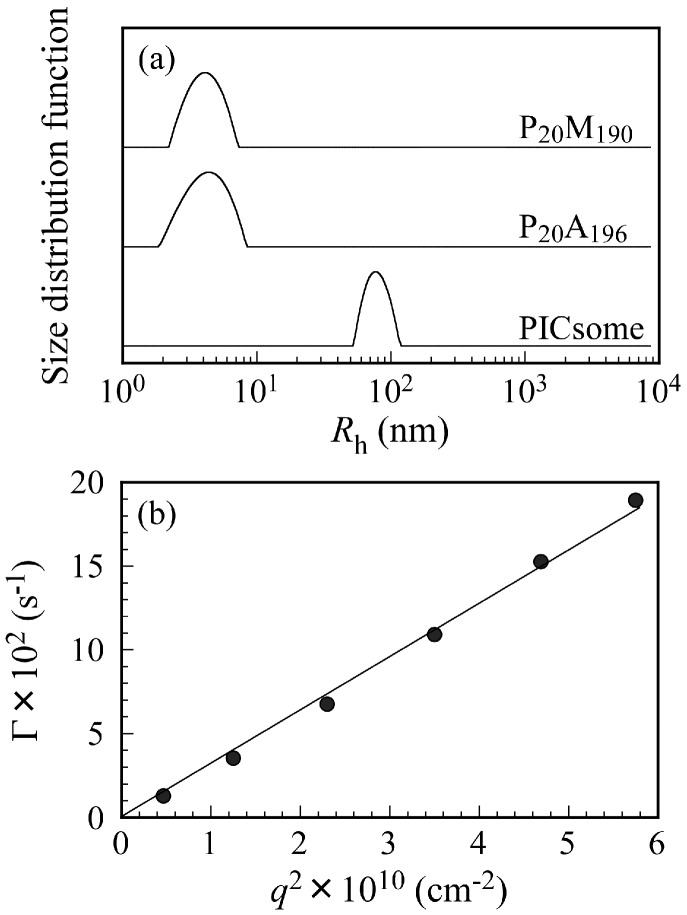
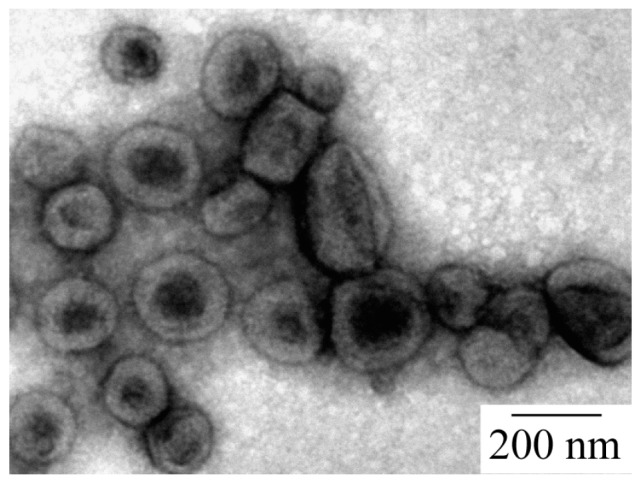
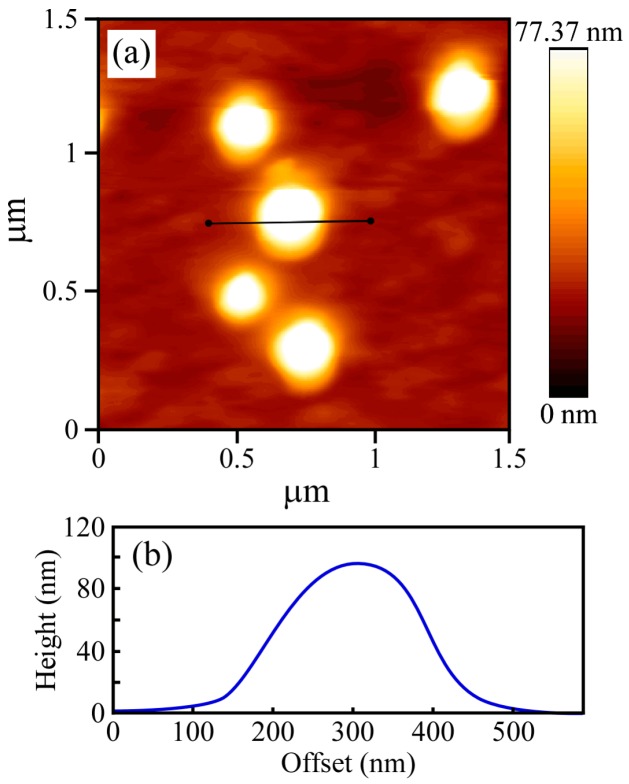
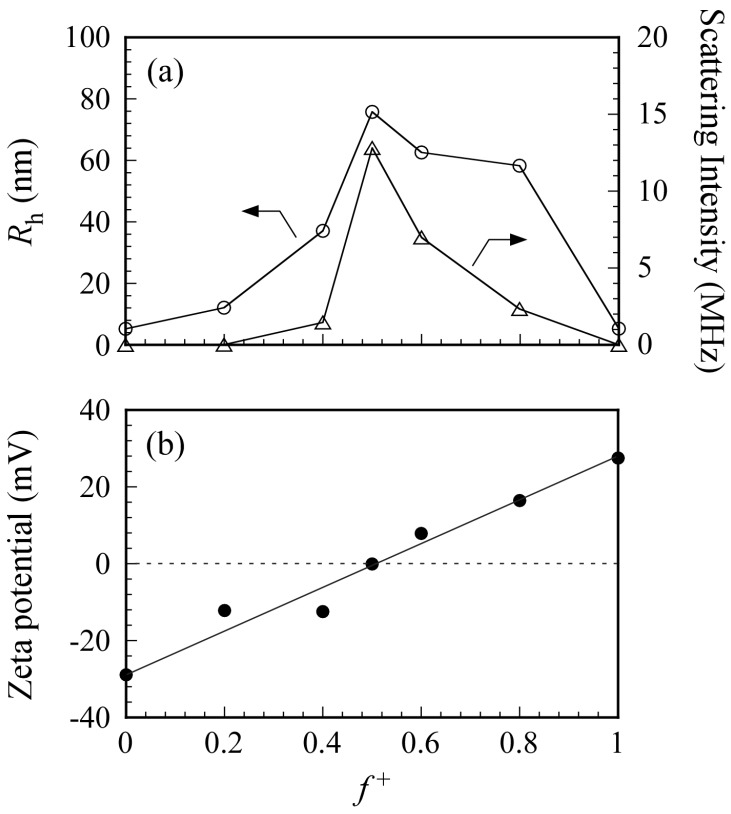
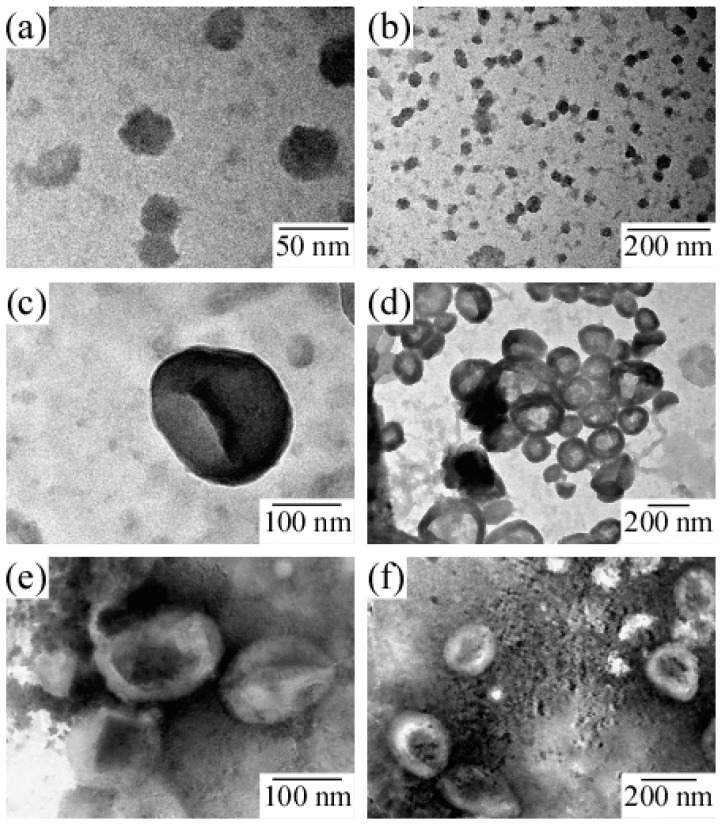
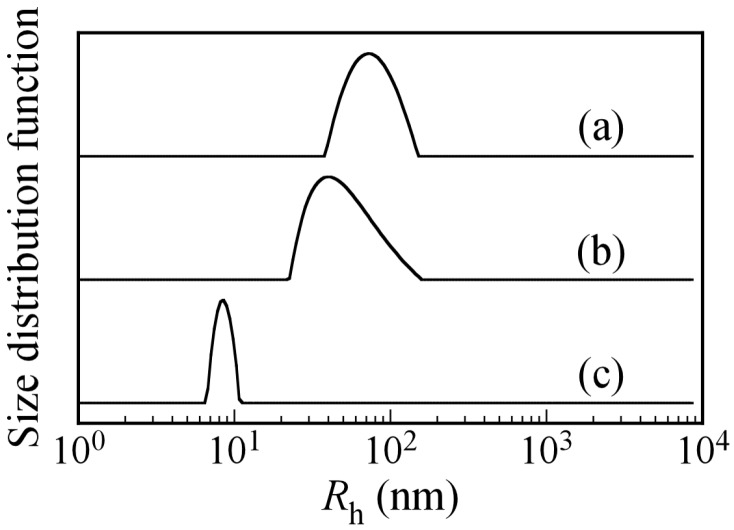
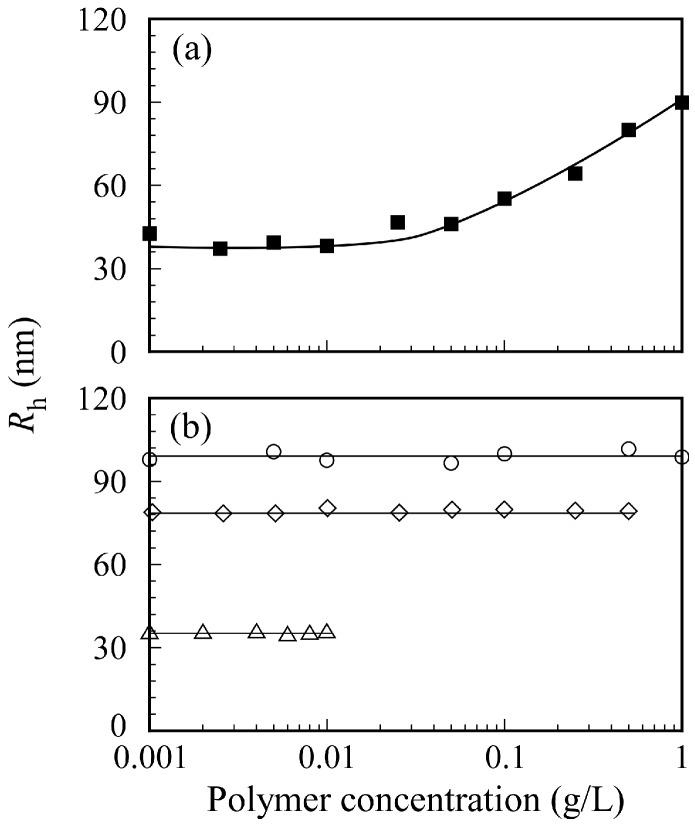
Diblock copolymers consisting of a hydrophilic poly(2-(methacryloyloxy)ethyl phosphorylcholine) (PMPC) block and either a cationic or anionic block were prepared from (3-(methacrylamido)propyl)trimethylammonium chloride (MAPTAC) or sodium 2-(acrylamido)-2-methylpropanesulfonate (AMPS). Polymers were synthesized via reversible addition-fragmentation chain transfer (RAFT) radical polymerization using a PMPC macro-chain transfer agent. The degree of polymerization for PMPC, cationic PMAPTAC, and anionic PAMPS blocks was 20, 190, and 196, respectively. Combining two solutions of oppositely charged diblock copolymers, PMPC--PMAPTAC and PMPC--PAMPS, led to the spontaneous formation of polyion complex vesicles (PICsomes). The PICsomes were characterized using ¹H NMR, static abd dynamic light scattering, transmittance electron microscopy (TEM), and atomic force microscopy. Maximum hydrodynamic radius () for the PICsome was observed at a neutral charge balance of the cationic and anionic diblock copolymers. The value and aggregation number () of PICsomes in 0.1 M NaCl was 78.0 nm and 7770, respectively. A spherical hollow vesicle structure was observed in TEM images. The hydrodynamic size of the PICsomes increased with concentration of the diblock copolymer solutions before mixing. Thus, the size of the PICsomes can be controlled by selecting an appropriate preparation method.
由亲水性聚(2-(甲基丙烯酰氧基)乙基磷酰胆碱)(PMPC)嵌段与阳离子或阴离子嵌段组成的二嵌段共聚物,是由(3-(甲基丙烯酰胺基)丙基)三甲基氯化铵(MAPTAC)或2-(丙烯酰胺基)-2-甲基丙烷磺酸钠(AMPS)制备而成。使用PMPC大分子链转移剂,通过可逆加成-断裂链转移(RAFT)自由基聚合反应合成聚合物。PMPC、阳离子型PMAPTAC和阴离子型PAMPS嵌段的聚合度分别为20、190和196。将带相反电荷的二嵌段共聚物PMPC-PMAPTAC和PMPC-PAMPS的两种溶液混合,会自发形成聚离子复合囊泡(PICsomes)。使用¹H NMR、静态和动态光散射、透射电子显微镜(TEM)和原子力显微镜对PICsomes进行表征。在阳离子和阴离子二嵌段共聚物的电荷平衡为中性时,观察到PICsome的最大流体动力学半径()。在0.1 M NaCl中,PICsomes的 值和聚集数()分别为78.0 nm和7770。在TEM图像中观察到球形中空囊泡结构。混合前,PICsomes的流体动力学尺寸随二嵌段共聚物溶液浓度的增加而增大。因此,可以通过选择合适的制备方法来控制PICsomes的尺寸。