Department of Marine and Environmental Sciences, Northeastern University, 430 Nahant Road, Nahant, MA 01908
G3 (Bethesda). 2019 Jun 5;9(6):1851-1867. doi: 10.1534/g3.119.400088.
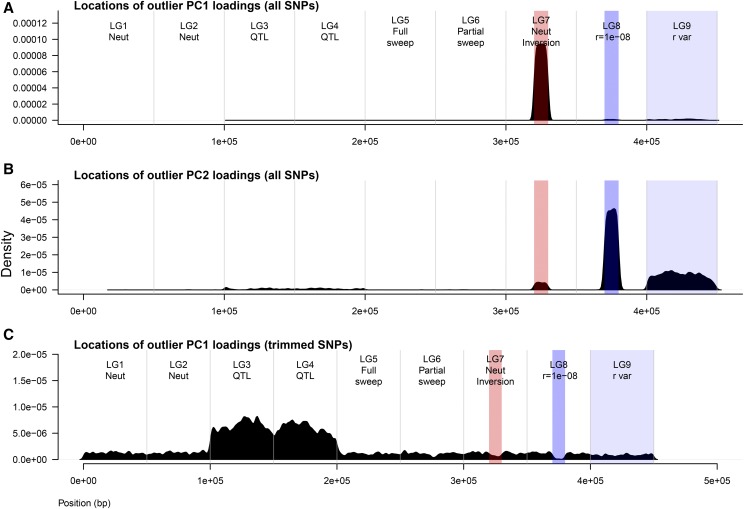
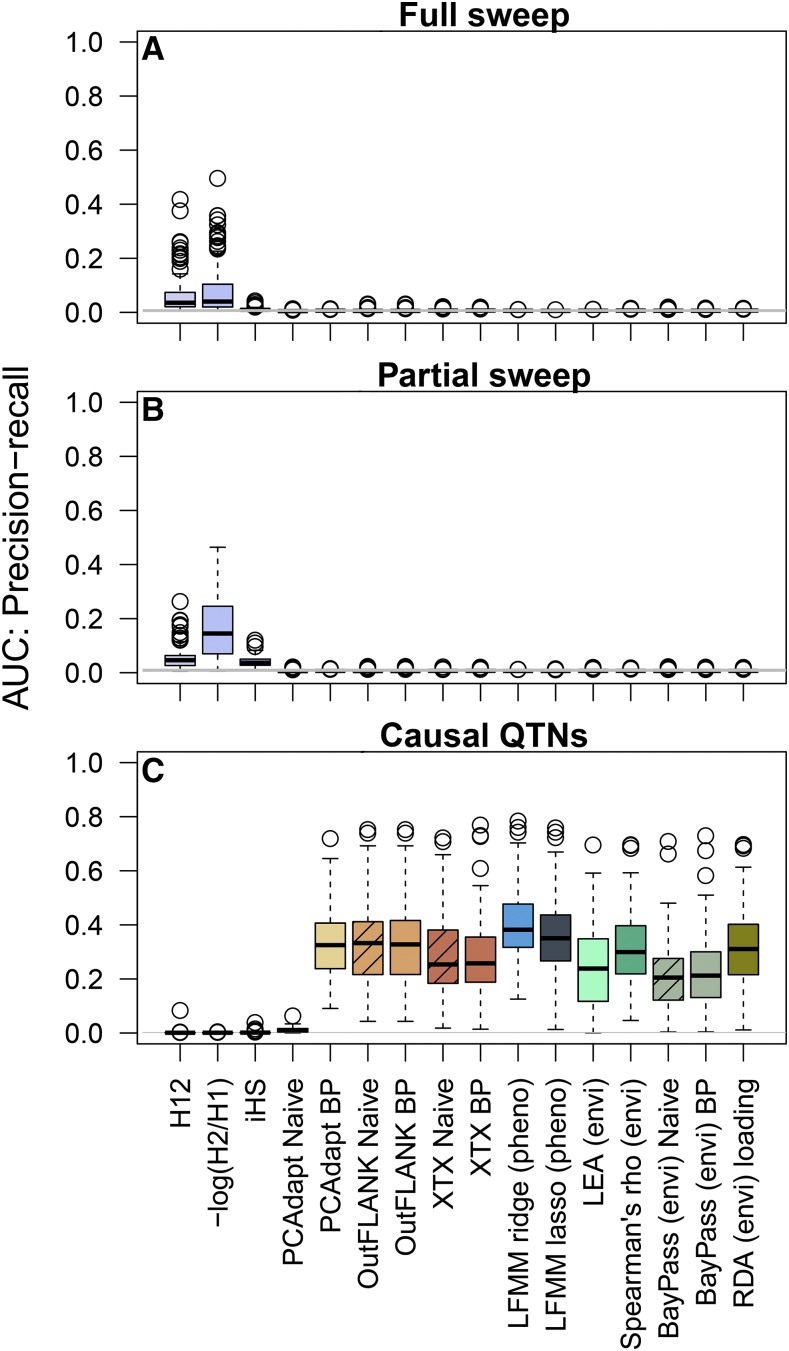
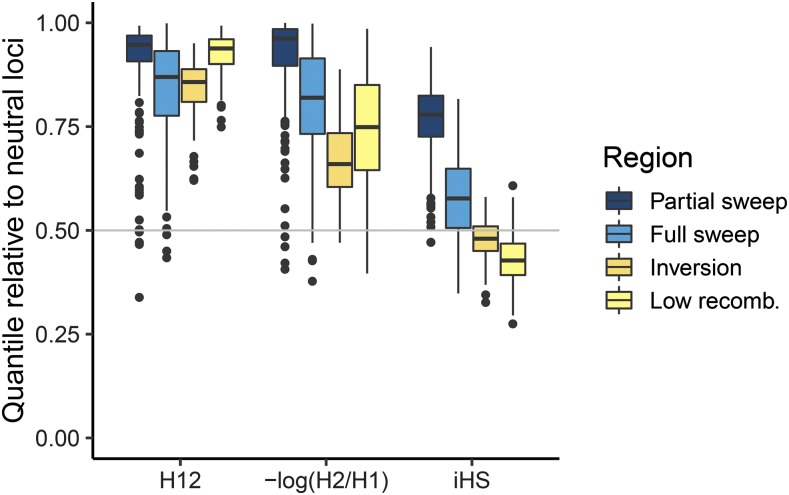
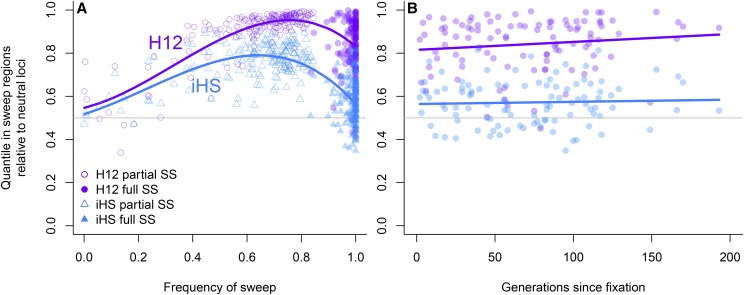
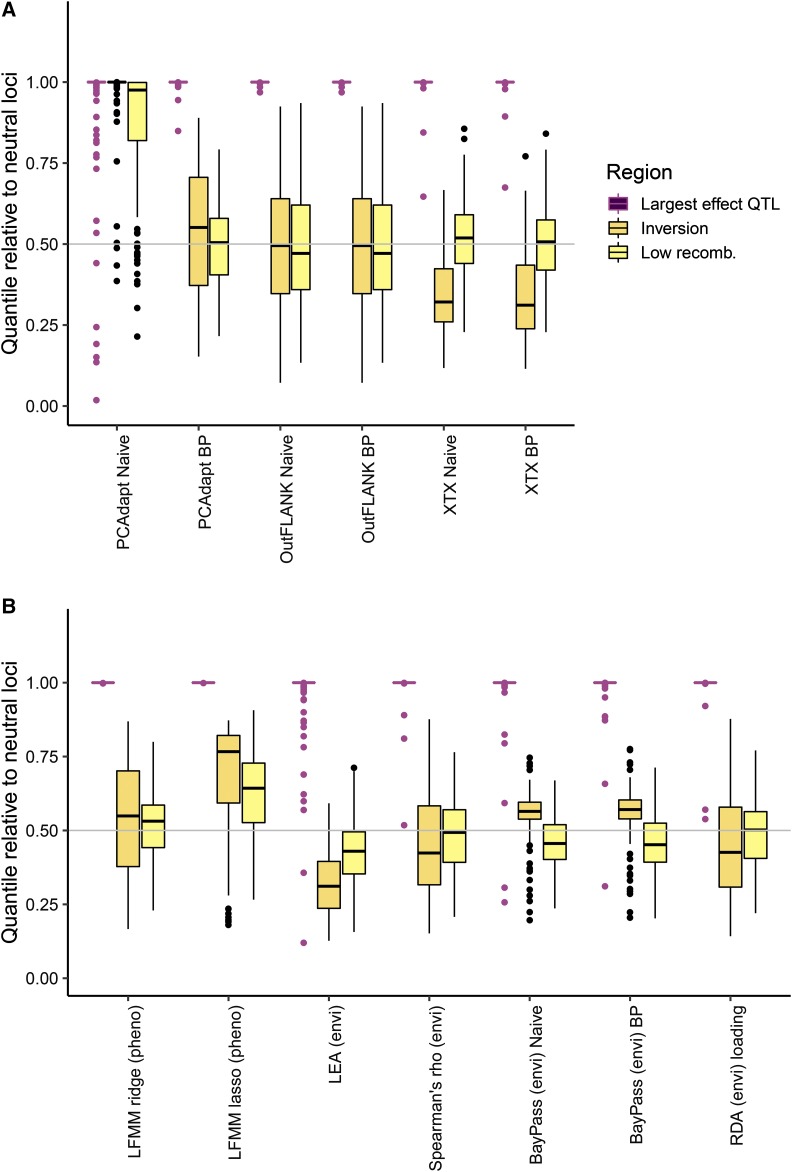
Recently, there has been an increasing interest in identifying the role that regions of low recombination or inversion play in adaptation of species to local environments. Many examples of groups of adapted genes located within inversions are arising in the literature, in part inspired by theory that predicts the evolution of these so-called "supergenes." We still, however, have a poor understanding of how genomic heterogeneity, such as varying rates of recombination, may confound signals of selection. Here, I evaluate the effect of neutral inversions and recombination variation on genome scans for selection, including tests for selective sweeps, differentiation outlier tests, and association tests. There is considerable variation among methods in their performance, with some methods being unaffected and some showing elevated false positive signals within a neutral inversion or region of low recombination. In some cases the false positive signal can be dampened or removed, if it is possible to use a quasi-independent set of SNPs to parameterize the model before performing the test. These results will be helpful to those seeking to understand the importance of regions of low recombination in adaptation.
最近,人们越来越关注鉴定那些在物种适应局部环境中起作用的低重组或倒位区域。文献中出现了越来越多的位于倒位区内的适应基因群的例子,部分原因是受到了预测这些所谓的“超级基因”进化的理论的启发。然而,我们仍然对基因组异质性(如重组率的变化)如何干扰选择信号知之甚少。在这里,我评估了中性倒位和重组变异对选择基因组扫描的影响,包括对选择扫荡、分化异常值测试和关联测试的影响。在性能方面,不同方法之间存在相当大的差异,有些方法不受影响,而有些方法在中性倒位或低重组区域内显示出升高的假阳性信号。在某些情况下,如果在进行测试之前可以使用一组准独立的 SNPs 来参数化模型,那么可以减轻或消除假阳性信号。这些结果将有助于那些试图了解低重组区域在适应中的重要性的人。