Department of Clinical Chemistry and Clinical Pharmacology, University Hospital Bonn, Bonn, Germany.
German Center for Infection Research (DZIF), Partner Site Bonn-Cologne, Bonn, Germany.
Front Immunol. 2019 Mar 27;10:371. doi: 10.3389/fimmu.2019.00371. eCollection 2019.
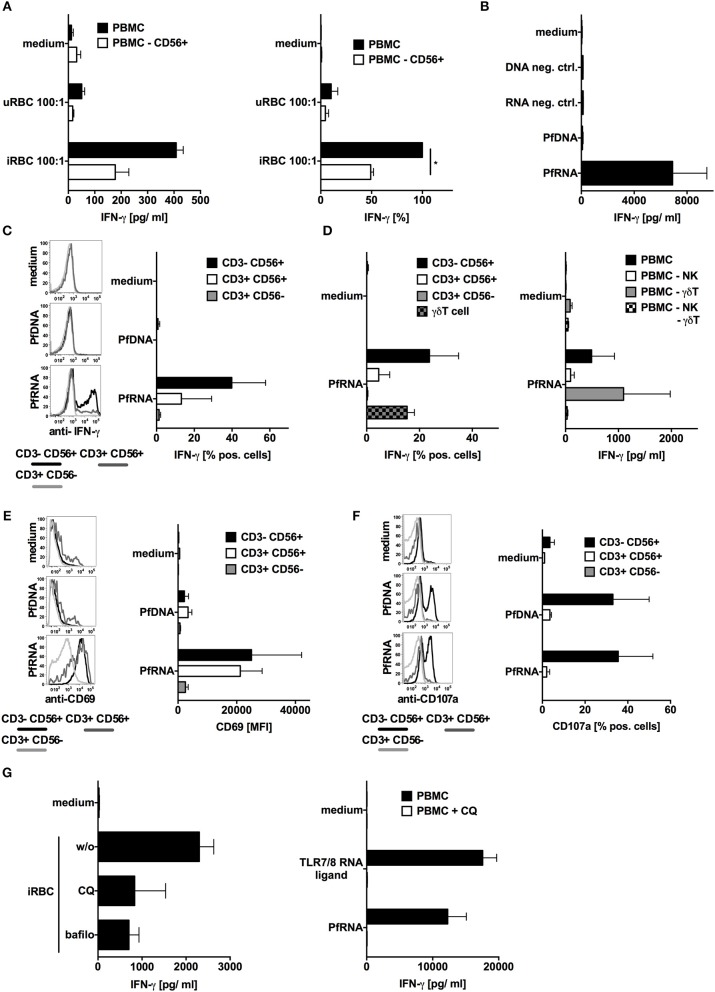
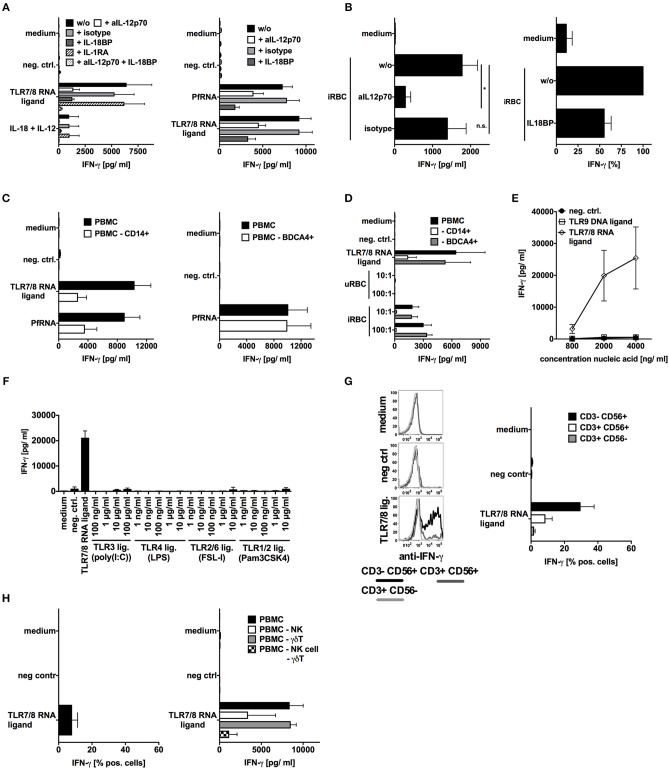
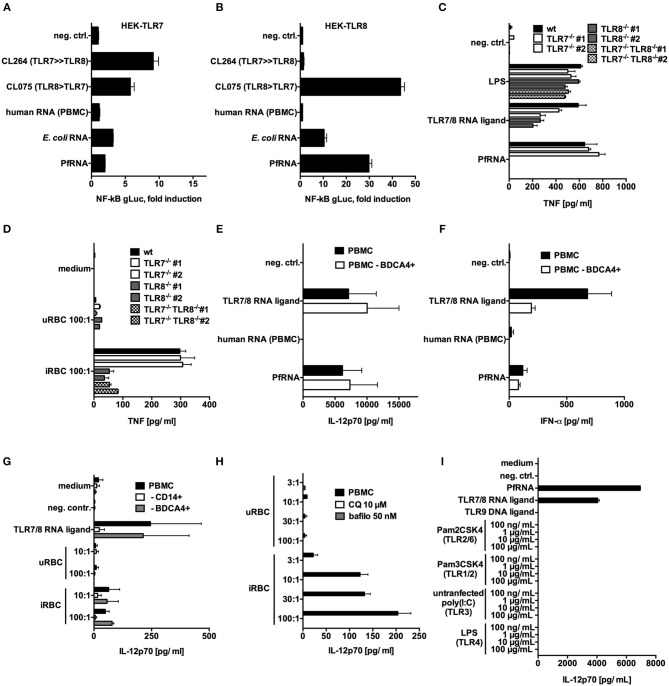
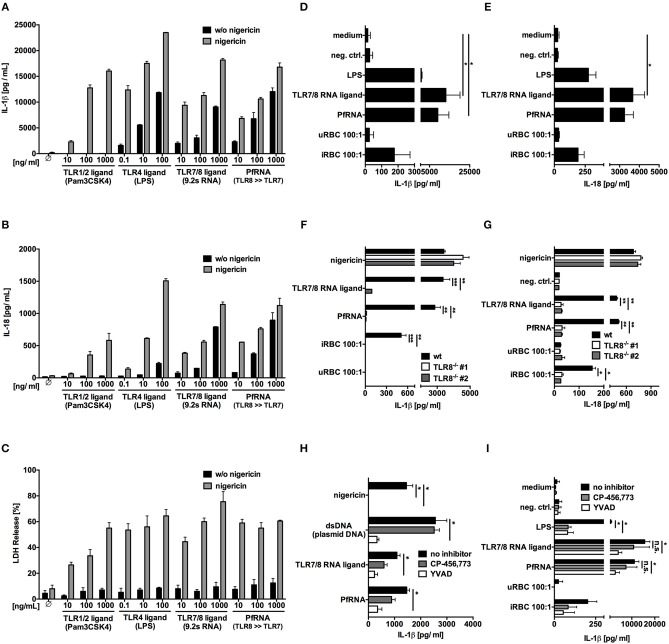
During blood-stage malaria, the innate immune system initiates the production of pro-inflammatory cytokines, including IFN-γ, that are critical to host defense and responsible for severe disease. Nonetheless, the innate immune pathways activated during this process in human malaria remain poorly understood. Here, we identify TLR8 as an essential sensor of -infected red blood cells (iRBC). In human immune cells, iRBC and RNA purified from iRBC were detected by TLR8 but not TLR7 leading to IFN-γ induction in NK cells. While TLR7 and 9 have been shown to lead to IFN-γ in mice, our data demonstrate that TLR8 was the only TLR capable of inducing IFN-γ release in human immune cells. This unique capacity was mediated by the release of IL-12p70 and bioactive IL-18 from monocytes, the latter via a hitherto undescribed pathway. Altogether, our data are the first reported activation of TLR8 by protozoan RNA and demonstrate both the critical role of TLR8 in human blood-stage malaria and its unique functionality in the human immune system. Moreover, our study offers important evidence that mouse models alone may not be sufficient to describe the human innate immune response to malaria.
在红内期疟疾中,固有免疫系统会启动促炎细胞因子(包括 IFN-γ)的产生,这对宿主防御至关重要,并导致严重疾病。尽管如此,人类疟疾在这一过程中激活的固有免疫途径仍知之甚少。在这里,我们确定 TLR8 是感染的红细胞(iRBC)的重要传感器。在人类免疫细胞中,iRBC 和从 iRBC 中纯化的 RNA 通过 TLR8 而不是 TLR7 检测到,导致 NK 细胞中 IFN-γ 的诱导。虽然 TLR7 和 9 已被证明在小鼠中导致 IFN-γ,但我们的数据表明 TLR8 是唯一能够在人类免疫细胞中诱导 IFN-γ 释放的 TLR。这种独特的能力是通过单核细胞中 IL-12p70 和生物活性 IL-18 的释放介导的,后者通过迄今尚未描述的途径。总而言之,我们的数据首次报道了 TLR8 被原生动物 RNA 激活,并证明了 TLR8 在人类红内期疟疾中的关键作用及其在人类免疫系统中的独特功能。此外,我们的研究提供了重要证据,表明仅使用小鼠模型可能不足以描述人类对疟疾的固有免疫反应。