a Section on Gerontology and Geriatric Medicine , Wake Forest School of Medicine , Winston-Salem , NC , USA.
b Health and Exercise Science , Wake Forest University , Winston Salem , NC , USA.
Med Educ Online. 2019 Dec;24(1):1596708. doi: 10.1080/10872981.2019.1596708.
Filming teaching sessions were reported in the medical literature in the 1980s and 1990s but appear to have been an underreported and/or underutilized teaching tool since that time. National faculty development programs, such as the Harvard Macy Institute (HMI) Program for Educators in Health Professions and the Stanford Faculty Development Center for Medical Teachers program, have attempted to bridge this gap in formal instruction in teaching skills through microteaching sessions involving videos for self- and peer-assessment and feedback.
Current video-feedback faculty development initiatives are time intensive and impractical to implement broadly at an institutional level. Further, results of peer feedback have not been frequently reported in the literature at the institutional level. Our research aims to propose a convenient and effective process for incorporating video analysis into faculty devleopment programs.
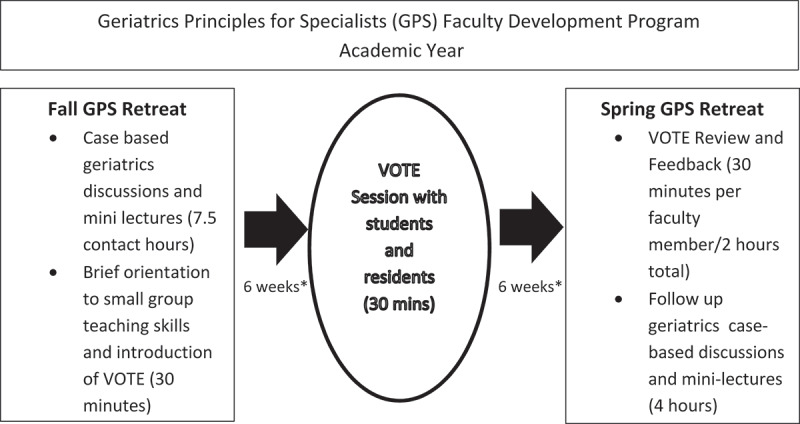
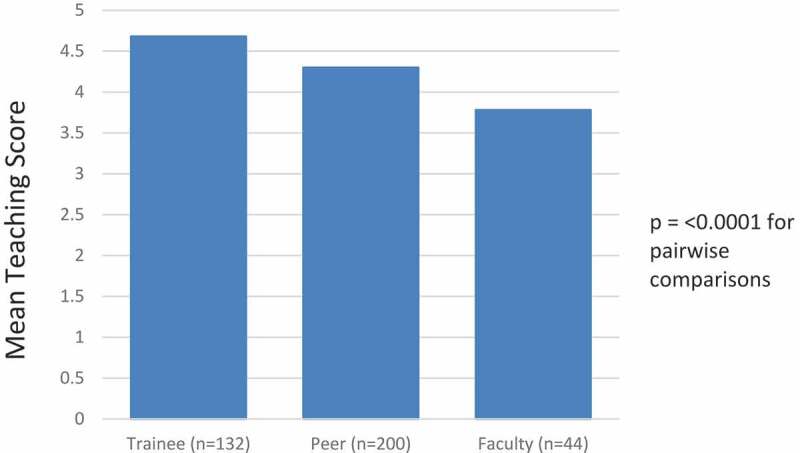
Our work describes a novel technique using video-recorded, simulated teaching exercises to compile multi-dimensional feedback as an aid in faculty development programs that promote teaching-skill development. This research evaluated the effectiveness of a focused teaching practicum designed for faculty in multiple specialty departments with large numbers of older patients into a geriatrics-based faculty development program. Effectiveness of the practicum is evaluated using quantitative scoring and qualitative analysis of self-reflection as well as peer and trainee input.
VOTE sessions demonstrate an important exportable product which enable faculty to receive a detailed 360-degree assessment of their teaching.
This intervention can be easily replicated and revised, as needed, to fit into the educational curriculum at other academic medical centers.
早在 20 世纪 80 年代和 90 年代,医学文献中就有关于拍摄教学课程的报道,但自此之后,这类教学工具似乎并未得到广泛报道和/或利用。国家教师发展项目,如哈佛 Macy 研究所(HMI)卫生专业教育者计划和斯坦福医学教师发展中心计划,试图通过涉及自我和同伴评估和反馈的视频的微教学课程来弥补正式教学技能方面的差距。
当前的视频反馈教师发展计划需要大量时间,在机构层面广泛实施不切实际。此外,同伴反馈的结果在机构层面的文献中也没有经常报道。我们的研究旨在提出一种将视频分析纳入教师发展计划的便捷有效的方法。
我们的工作描述了一种使用视频记录的模拟教学练习来汇编多维反馈的新方法,作为促进教学技能发展的教师发展计划的辅助手段。这项研究评估了一项针对多专科部门的教师的聚焦教学实习的效果,这些部门有大量老年患者,这些教师将参与基于老年医学的教师发展计划。通过定量评分和自我反思以及同伴和学员的投入的定性分析来评估实习的有效性。
投票会议展示了一种重要的可出口产品,使教师能够对其教学进行详细的 360 度评估。
这种干预措施可以很容易地复制和修改,以适应其他学术医疗中心的教育课程。