DGUT-CNAM Institute, Dongguan University of Technology, Dongguan 523106, China.
CSIR-Central Mechanical Engineering Research Institute, Durgapur, West Bengal 713209, India.
Sensors (Basel). 2019 Apr 10;19(7):1706. doi: 10.3390/s19071706.
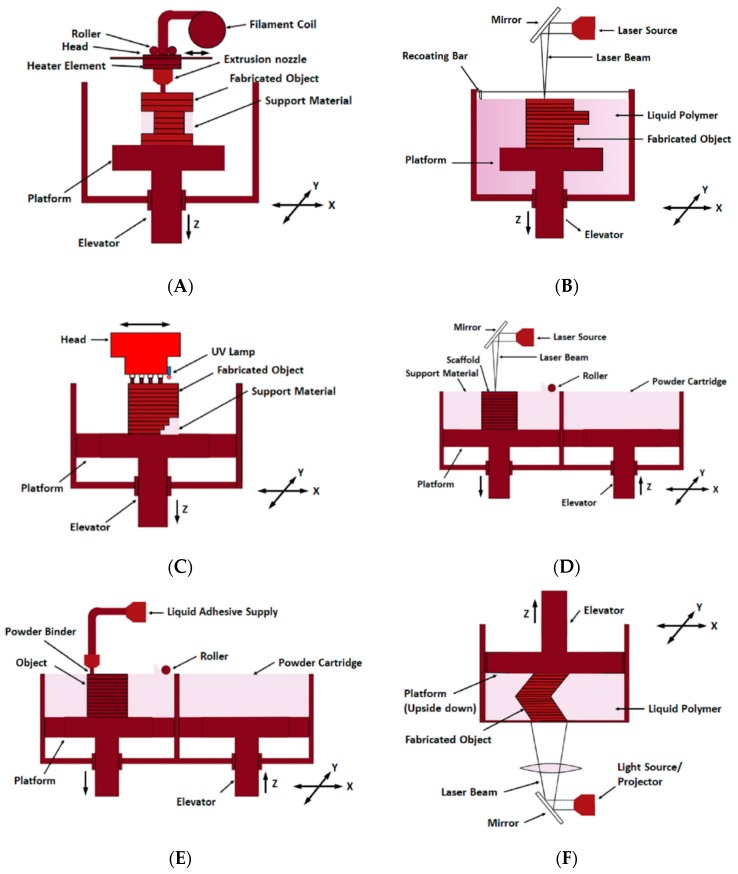
This paper showcases a substantial review on some of the significant work done on 3D printing of sensors for biomedical applications. The importance of 3D printing techniques has bloomed in the sensing world due to their essential advantages of quick fabrication, easy accessibility, processing of varied materials and sustainability. Along with the introduction of the necessity and influence of 3D printing techniques for the fabrication of sensors for different healthcare applications, the paper explains the individual methodologies used to develop sensing prototypes. Six different 3D printing techniques have been explained in the manuscript, followed by drawing a comparison between them in terms of their advantages, disadvantages, materials being processed, resolution, repeatability, accuracy and applications. Finally, a conclusion of the paper is provided with some of the challenges of the current 3D printing techniques about the developed sensing prototypes, their corresponding remedial solutions and a market survey determining the expenditure on 3D printing for biomedical sensing prototypes.
本文对生物医学应用中传感器的 3D 打印工作进行了大量综述。由于 3D 打印技术具有快速制造、易于获取、处理多种材料和可持续性等重要优势,因此在传感领域得到了蓬勃发展。本文在介绍 3D 打印技术在不同医疗保健应用中制造传感器的必要性和影响的同时,解释了用于开发传感原型的各个方法。本文介绍了六种不同的 3D 打印技术,并在它们的优势、劣势、处理的材料、分辨率、可重复性、准确性和应用方面进行了比较。最后,本文提供了一些关于当前 3D 打印技术开发的传感原型的挑战、相应的补救措施以及确定用于生物医学传感原型的 3D 打印支出的市场调查的结论。