Division of Hematology, Children's Center for Cancer and Blood Diseases, Children's Hospital Los Angeles, Keck School of Medicine, University of Southern California, Los Angeles.
Biomedical Engineering, Viterbi School of Engineering, University of Southern California, Los Angeles.
Haematologica. 2020 Jan;105(1):83-90. doi: 10.3324/haematol.2018.211391. Epub 2019 Apr 11.
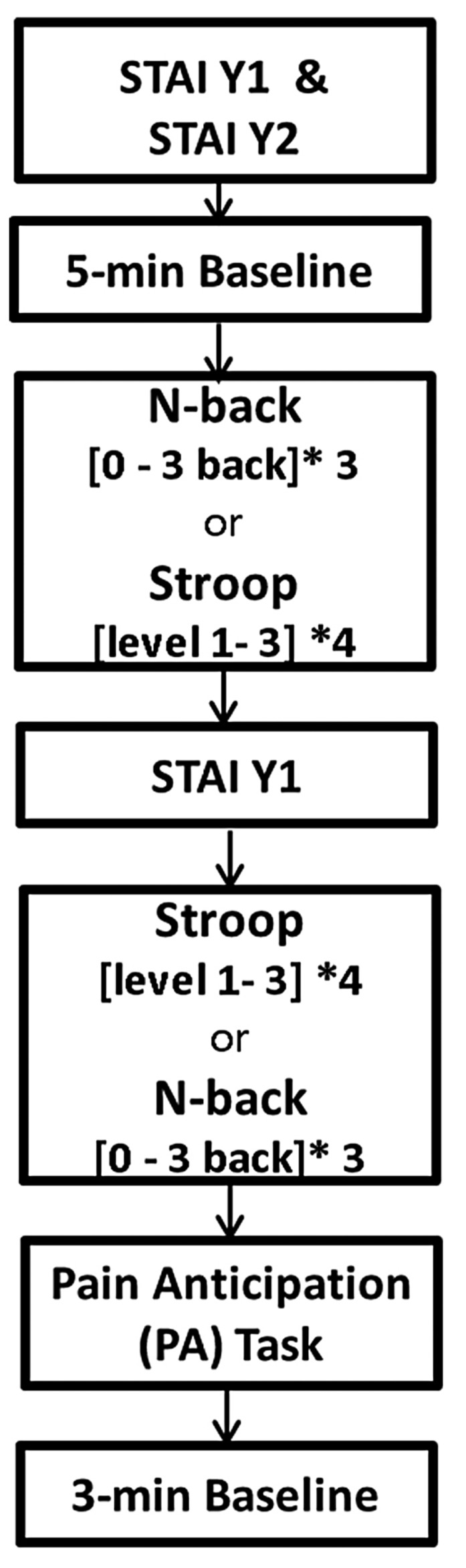
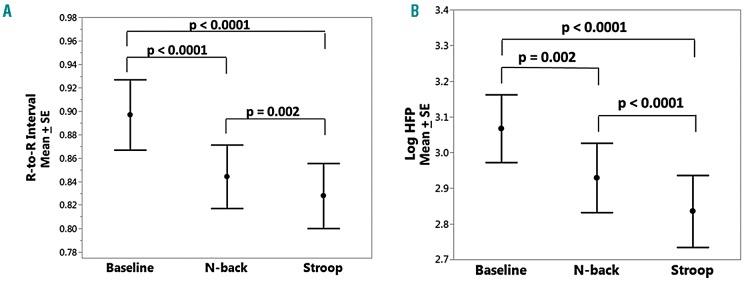
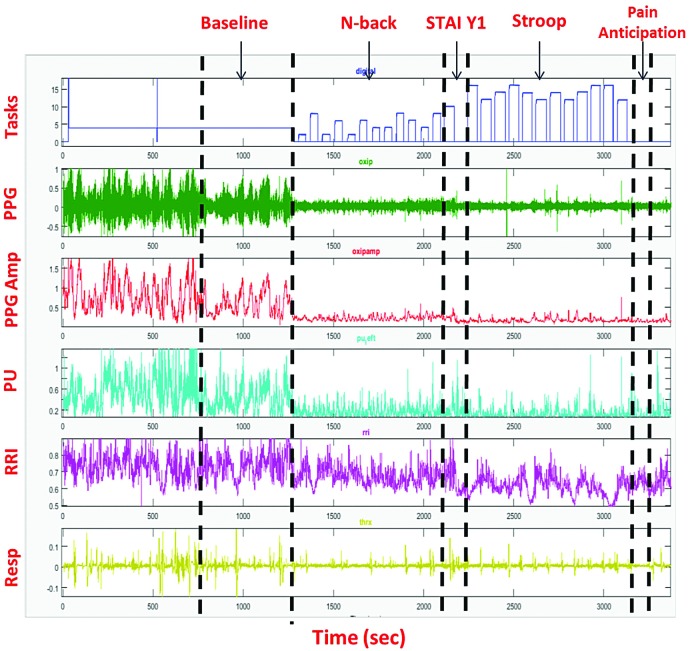
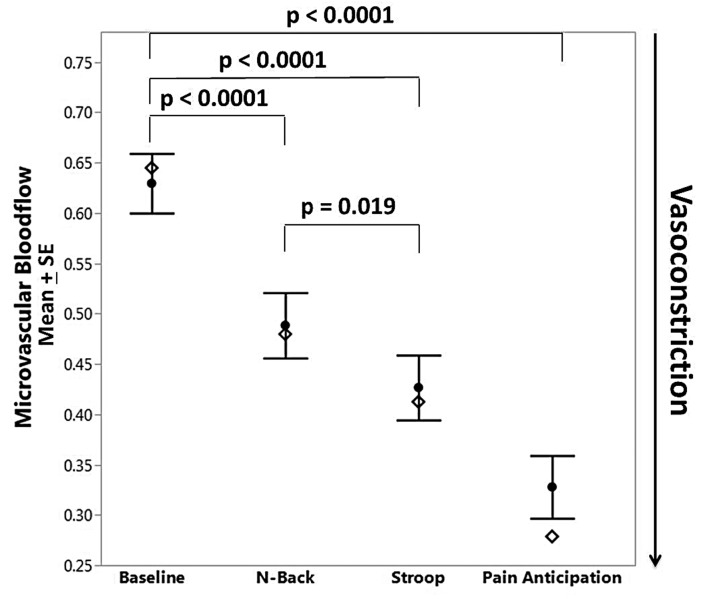
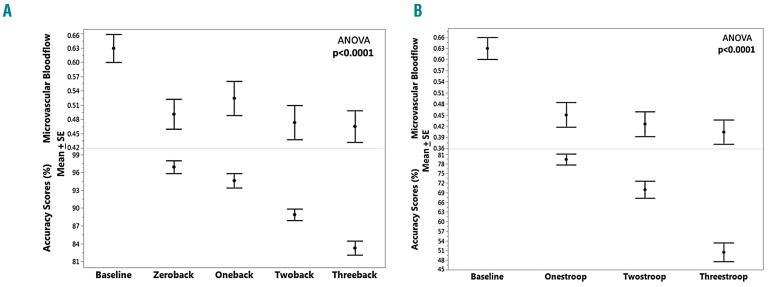
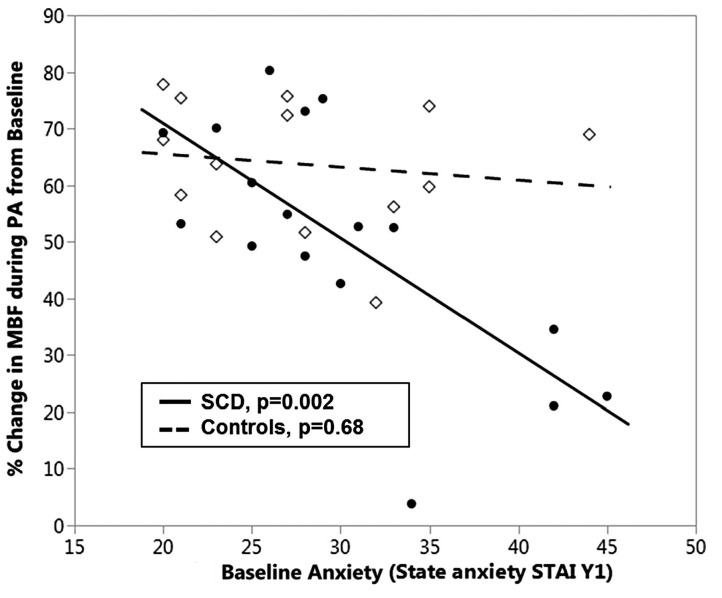
Vaso-occlusive crisis (VOC) is a hallmark of sickle cell disease (SCD) and occurs when deoxygenated sickled red blood cells occlude the microvasculature. Any stimulus, such as mental stress, which decreases microvascular blood flow will increase the likelihood of red cell entrapment resulting in local vaso-occlusion and progression to VOC. Neurally mediated vasoconstriction might be the physiological link between crisis triggers and vaso-occlusion. In this study, we determined the effect of mental stress on microvascular blood flow and autonomic nervous system reactivity. Sickle cell patients and controls performed mentally stressful tasks, including a memory task, conflict test and pain anticipation test. Blood flow was measured using photoplethysmography, autonomic reactivity was derived from electrocardiography and perceived stress was measured by the State-Trait Anxiety Inventory questionnaire. Stress tasks induced a significant decrease in microvascular blood flow, parasympathetic withdrawal and sympathetic activation in all subjects. Of the various tests, pain anticipation caused the highest degree of vasoconstriction. The magnitude of vasoconstriction, sympathetic activation and perceived stress was greater during the Stroop conflict test than during the N-back memory test, indicating the relationship between magnitude of experimental stress and degree of regional vasoconstriction. Baseline anxiety had a significant effect on the vasoconstrictive response in sickle cell subjects but not in controls. In conclusion, mental stress caused vasoconstriction and autonomic nervous system reactivity in all subjects. Although the pattern of responses was not significantly different between the two groups, the consequences of vasoconstriction can be quite significant in SCD because of the resultant entrapment of sickle cells in the microvasculature. This suggests that mental stress can precipitate a VOC in SCD by causing neural-mediated vasoconstriction.
血管阻塞危象(VOC)是镰状细胞病(SCD)的一个标志,当脱氧镰状红细胞阻塞微血管时就会发生。任何会减少微血管血流的刺激,如精神压力,都会增加红细胞被困的可能性,导致局部血管阻塞并发展为 VOC。神经介导的血管收缩可能是危机触发因素和血管阻塞之间的生理联系。在这项研究中,我们确定了精神压力对微血管血流和自主神经系统反应性的影响。镰状细胞病患者和对照组进行了精神压力任务,包括记忆任务、冲突测试和疼痛预期测试。血流使用光体积描记法测量,自主反应性来自心电图,感知压力通过状态-特质焦虑问卷测量。所有受试者的精神压力任务都导致微血管血流、副交感神经撤退和交感神经激活显著减少。在各种测试中,疼痛预期引起的血管收缩程度最高。在 Stroop 冲突测试中,血管收缩、交感神经激活和感知压力的程度大于 N-back 记忆测试,这表明实验压力的程度与局部血管收缩的程度之间存在关系。基线焦虑对镰状细胞病患者的血管收缩反应有显著影响,但对对照组没有影响。总之,精神压力会导致所有受试者的血管收缩和自主神经系统反应。尽管两组之间的反应模式没有显著差异,但由于镰状细胞在微血管中的被困,血管收缩的后果在 SCD 中可能非常严重。这表明精神压力可以通过引起神经介导的血管收缩来引发 SCD 中的 VOC。