Medina David, Barraza Paulo
Department of Music, Universidad Metropolitana de Ciencias de la Educación, UMCE, 7760197, Santiago, Chile.
Centro de Investigación Avanzada en Educación, CIAE, Universidad de Chile, 8330014, Santiago, Chile.
Heliyon. 2019 Mar 26;5(3):e01315. doi: 10.1016/j.heliyon.2019.e01315. eCollection 2019 Mar.
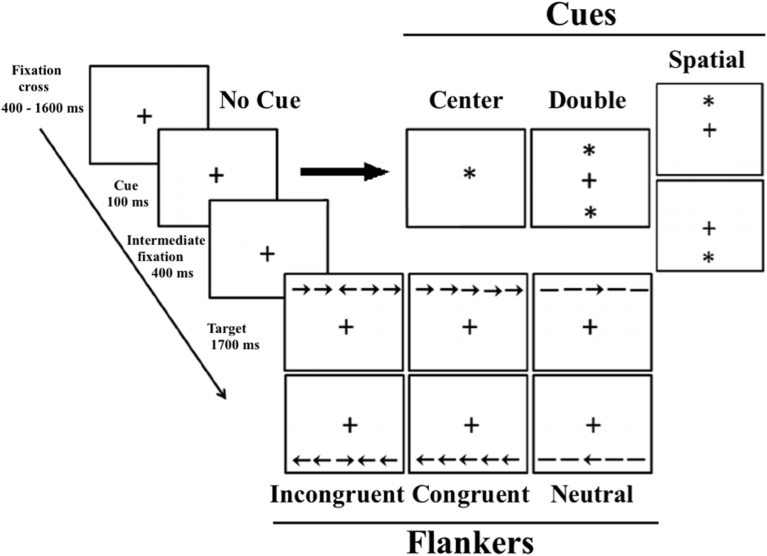
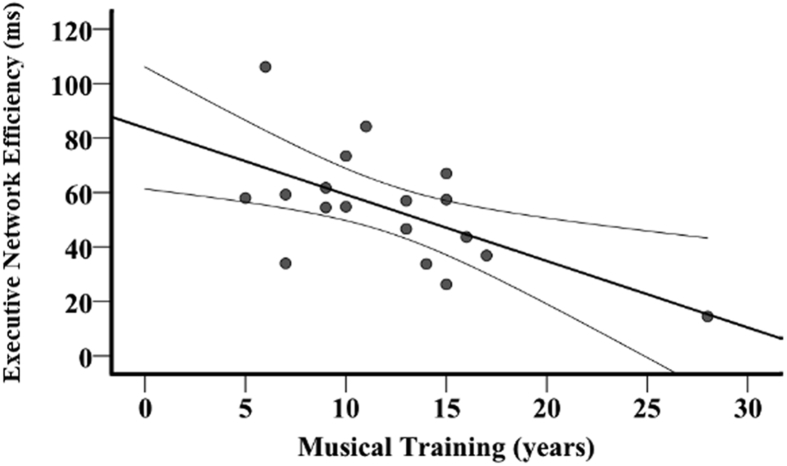
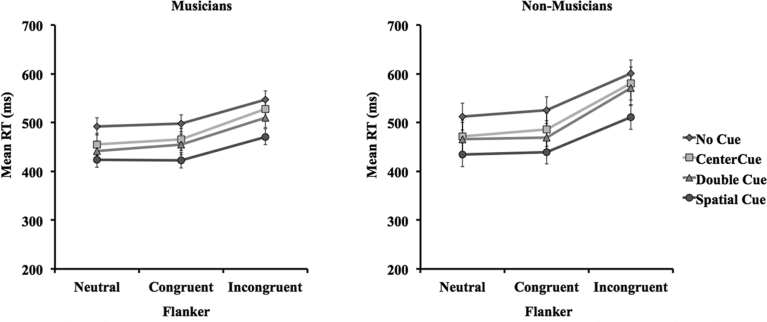
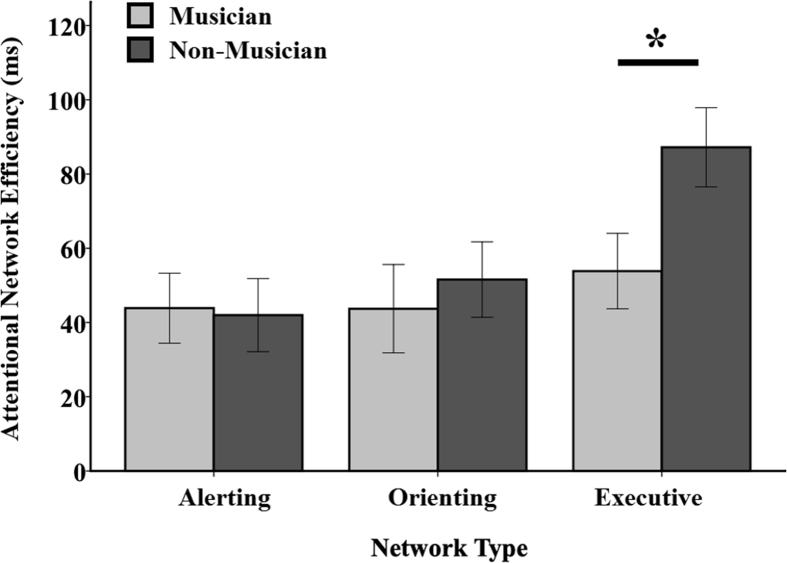
Music is a complex and properly human skill. Previous studies indicate that systematic musical training induces specific structural brain changes and improves audio-motor functions. However, whether these benefits can transfer into functional improvements of attentional skills is still little known. To shed light on this issue, in the present study we explored the relationship between long-term musical training and the efficiency of the attentional system. We used the attention network test (ANT) to compare the performance of the alerting, orienting and executive attentional networks of professional pianists against a matched group of non-musician adults. We found that musicians were significantly faster to respond across the ANT task, and that the executive attentional network was more efficient in musicians than non-musicians. We found no differences in the efficiency of the alerting and orienting networks between both groups. Interestingly, we found that the efficiency of the executive system improves with the years of musical training, even when controlling for age. We also found that the three attentional networks of the non-musicians were functionally independent. However, in the case of the musicians, the efficiency of the alerting and orienting systems was associated. These findings provide evidence of a potential transfer effect from systematic musical training into inhibitory attentional control.
音乐是一种复杂且具有人类特性的技能。先前的研究表明,系统的音乐训练会引起大脑特定的结构变化,并改善听觉运动功能。然而,这些益处是否能转化为注意力技能的功能性提升仍鲜为人知。为了阐明这一问题,在本研究中,我们探究了长期音乐训练与注意力系统效率之间的关系。我们使用注意力网络测试(ANT)来比较专业钢琴家与一组匹配的非音乐家成年人在警觉、定向和执行注意力网络方面的表现。我们发现,在整个ANT任务中,音乐家的反应速度明显更快,并且音乐家的执行注意力网络比非音乐家更高效。我们发现两组在警觉和定向网络的效率上没有差异。有趣的是,我们发现即使在控制年龄的情况下,执行系统的效率也会随着音乐训练年限的增加而提高。我们还发现,非音乐家的三个注意力网络在功能上是独立的。然而,对于音乐家来说,警觉和定向系统的效率是相关的。这些发现为从系统音乐训练到抑制性注意力控制的潜在转移效应提供了证据。