Durand Nisha, Russell Athena, Zubair Abba C
Transfusion Medicine, Department of Laboratory Medicine and Pathology and Center for Regenerative Medicine, Mayo Clinic, Jacksonville, FL 32224, USA.
J Clin Med. 2019 Apr 11;8(4):497. doi: 10.3390/jcm8040497.
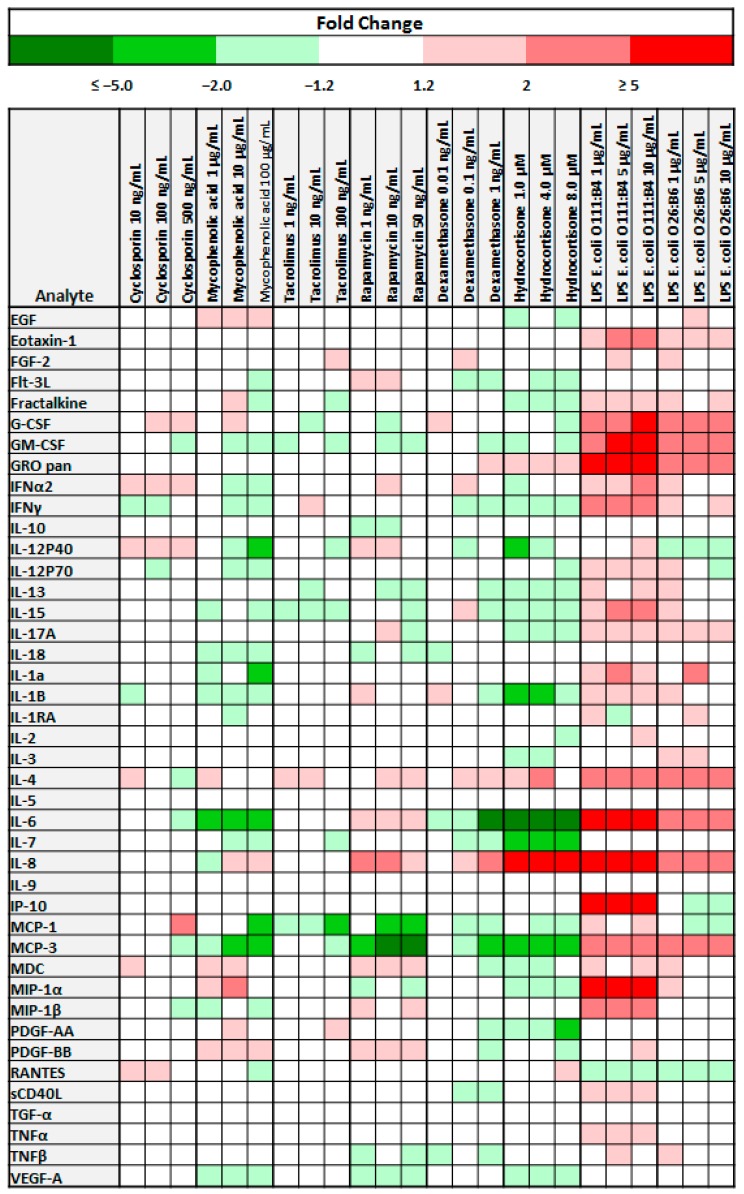
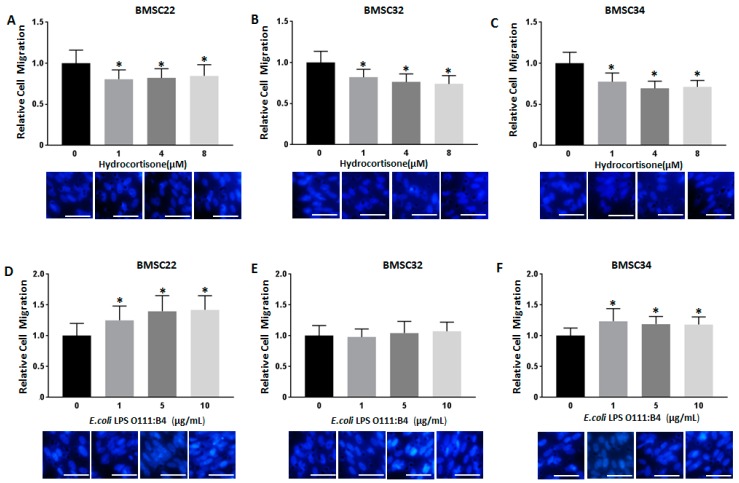
Mesenchymal stem cells (MSCs) are becoming an increasingly popular therapeutic option among patients with a broad range of ailments to modulate immunity and induce regeneration. The majority of patients receiving these MSC therapies are on concurrent medication or have ongoing infection. In the present study, we examined the effect of immunosuppressive drugs and lipopolysaccharides (LPS)/endotoxins on the secretory profile, migration towards site of injury, and suppression of lymphocyte proliferation of bone marrow-derived MSCs (BMSCs). Generally, LPS coculture augmented the secretory capacity of BMSCs while exposure to immunosuppressive drugs resulted primarily in no change or attenuated secretion, with some cases of increased secretion, dependent on the cytokine assayed. Among the immunosuppressants evaluated, Hydrocortisone had the most widespread inhibitory effect, while LPS from O111:B4 had the most potent stimulatory effect. In addition, we also showed that Hydrocortisone or LPS from O111:B4 affected the migratory and immunosuppressive capacity of BMSCs. Following simulation with Hydrocortisone, BMSC migration was attenuated, and immunosuppressive capacity against T cell proliferation was enhanced, however, the opposite effects were seen with LPS from O111:B4. Our data suggests that the clinical outcomes of MSC-based therapy are affected by the use of immunosuppressive medication or the presence of endotoxemia in patients.
间充质干细胞(MSCs)正成为越来越多患有各种疾病的患者调节免疫和诱导再生的热门治疗选择。大多数接受这些间充质干细胞治疗的患者同时正在服药或存在持续性感染。在本研究中,我们检测了免疫抑制药物和脂多糖(LPS)/内毒素对骨髓来源的间充质干细胞(BMSCs)的分泌谱、向损伤部位迁移以及抑制淋巴细胞增殖的影响。一般来说,LPS共培养增强了BMSCs的分泌能力,而暴露于免疫抑制药物主要导致无变化或分泌减弱,在某些情况下分泌增加,这取决于所检测的细胞因子。在所评估的免疫抑制剂中,氢化可的松具有最广泛的抑制作用,而来自O111:B4的LPS具有最有效的刺激作用。此外,我们还表明氢化可的松或来自O111:B4的LPS会影响BMSCs的迁移和免疫抑制能力。用氢化可的松模拟后,BMSC迁移减弱,对T细胞增殖的免疫抑制能力增强,然而,来自O111:B4的LPS则产生相反的效果。我们的数据表明,基于间充质干细胞的治疗的临床结果受患者使用免疫抑制药物或存在内毒素血症的影响。