Department of Neurology, College of Medicine, Hanyang University, Seoul.
Cell Therapy Center for Intractable Disorders, Hanyang University Hospital, Seoul.
Ann Neurol. 2018 Sep;84(3):361-373. doi: 10.1002/ana.25302. Epub 2018 Aug 31.
To assess the safety and efficacy of 2 repeated intrathecal injections of autologous bone marrow-derived mesenchymal stem cells (BM-MSCs) in amyotrophic lateral sclerosis (ALS).
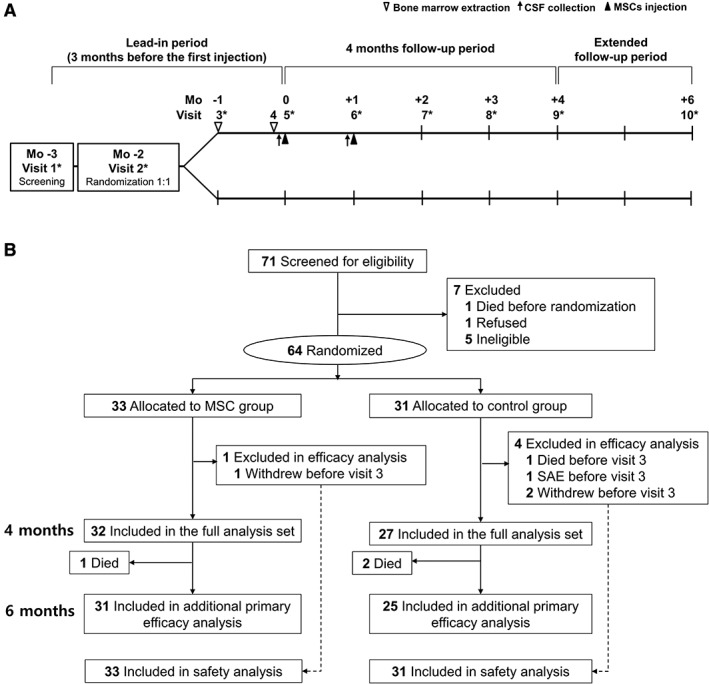
In a phase 2 randomized controlled trial (NCT01363401), 64 participants with ALS were randomly assigned treatments (1:1) of riluzole alone (control group, n = 31) or combined with 2 BM-MSC injections (MSC group, n = 33). Safety was assessed based on the occurrence of adverse events. The primary efficacy outcome was changes in Amyotrophic Lateral Sclerosis Functional Rating Scale-Revised (ALSFRS-R) score from baseline to 4 and 6 months postinjection. Post hoc analysis includes investigation of cerebrospinal fluid biomarkers and long-term survival analysis.
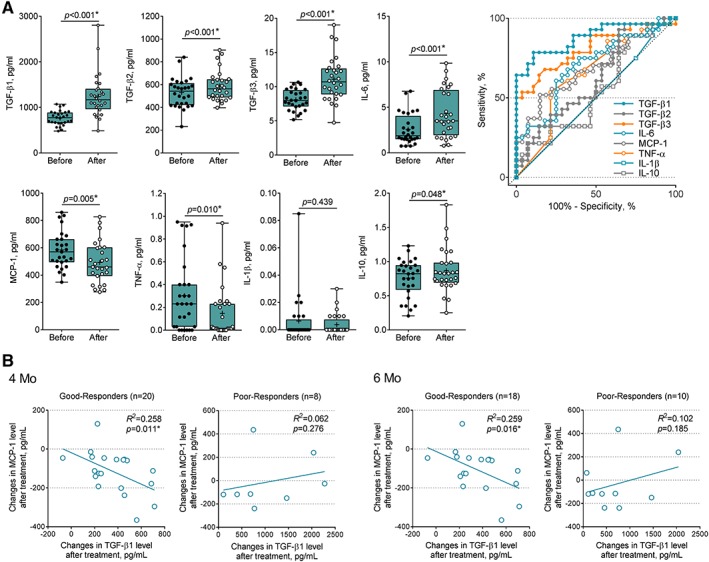
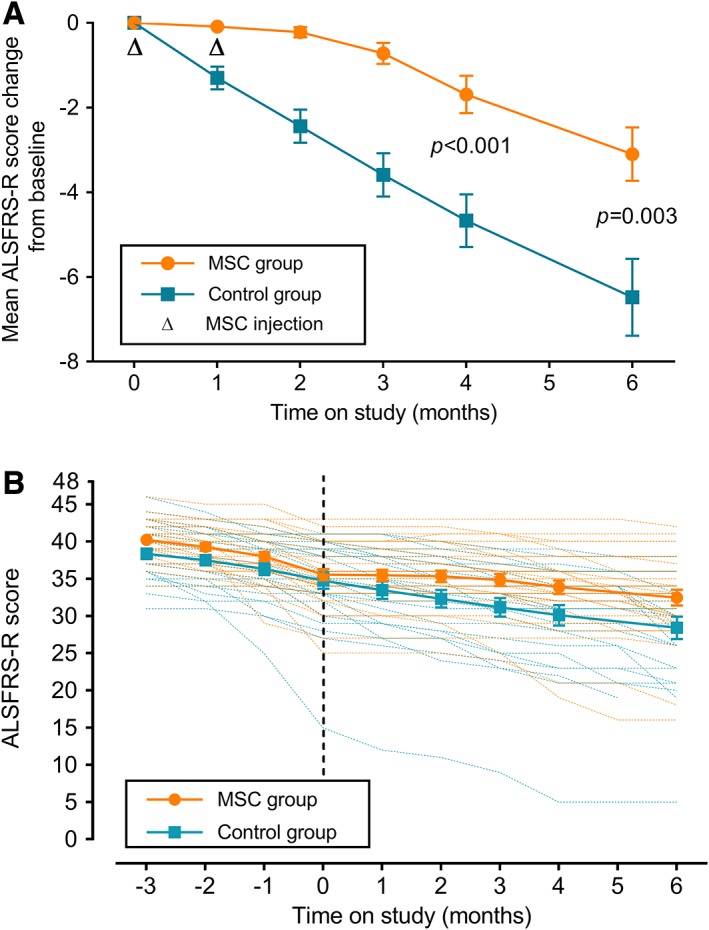
Safety rating showed no groupwise difference with absence of serious treatment-related adverse events. Mean changes in ALSFRS-R scores from baseline to 4 and 6 months postinjection were reduced in the MSC group compared with the control group (4 months: 2.98, 95% confidence interval [CI] = 1.48-4.47, p < 0.001; 6 months: 3.38, 95% CI = 1.23-5.54, p = 0.003). The MSC group showed decreased proinflammatory and increased anti-inflammatory cytokines. In good responders, transforming growth factor β1 significantly showed inverse correlation with monocyte chemoattractant protein-1. There was no significant difference in long-term survival between groups.
Repeated intrathecal injections of BM-MSCs demonstrated a possible clinical benefit lasting at least 6 months, with safety, in ALS patients. A plausible action mechanism is that BM-MSCs mediate switching from pro- to anti-inflammatory conditions. A future randomized, double-blind, large-scale phase 3 clinical trial with additional BM-MSC treatments is required to evaluate long-term efficacy and safety. Ann Neurol 2018;84:361-373.
评估 2 次鞘内注射自体骨髓间充质干细胞(BM-MSCs)治疗肌萎缩侧索硬化症(ALS)的安全性和有效性。
在一项 2 期随机对照试验(NCT01363401)中,64 名 ALS 患者被随机分配接受利鲁唑单药(对照组,n=31)或联合 2 次 BM-MSC 注射(MSC 组,n=33)治疗。安全性评估基于不良事件的发生情况。主要疗效终点为从基线到注射后 4 个月和 6 个月时改良 ALS 功能评定量表(ALSFRS-R)评分的变化。事后分析包括对脑脊液生物标志物和长期生存分析的研究。
安全性评分无组间差异,无严重与治疗相关的不良事件。与对照组相比,MSC 组从基线到注射后 4 个月和 6 个月时 ALSFRS-R 评分的变化均降低(4 个月:2.98,95%置信区间[CI] = 1.48-4.47,p < 0.001;6 个月:3.38,95% CI = 1.23-5.54,p = 0.003)。MSC 组促炎细胞因子减少,抗炎细胞因子增加。在良好反应者中,转化生长因子β1 与单核细胞趋化蛋白-1 呈显著负相关。两组间的长期生存率无显著差异。
在 ALS 患者中,重复鞘内注射 BM-MSCs 具有安全性,并可带来至少持续 6 个月的潜在临床获益。可能的作用机制是 BM-MSCs 介导从促炎向抗炎状态的转变。需要开展未来更大规模、随机、双盲、3 期临床试验以评估长期疗效和安全性。